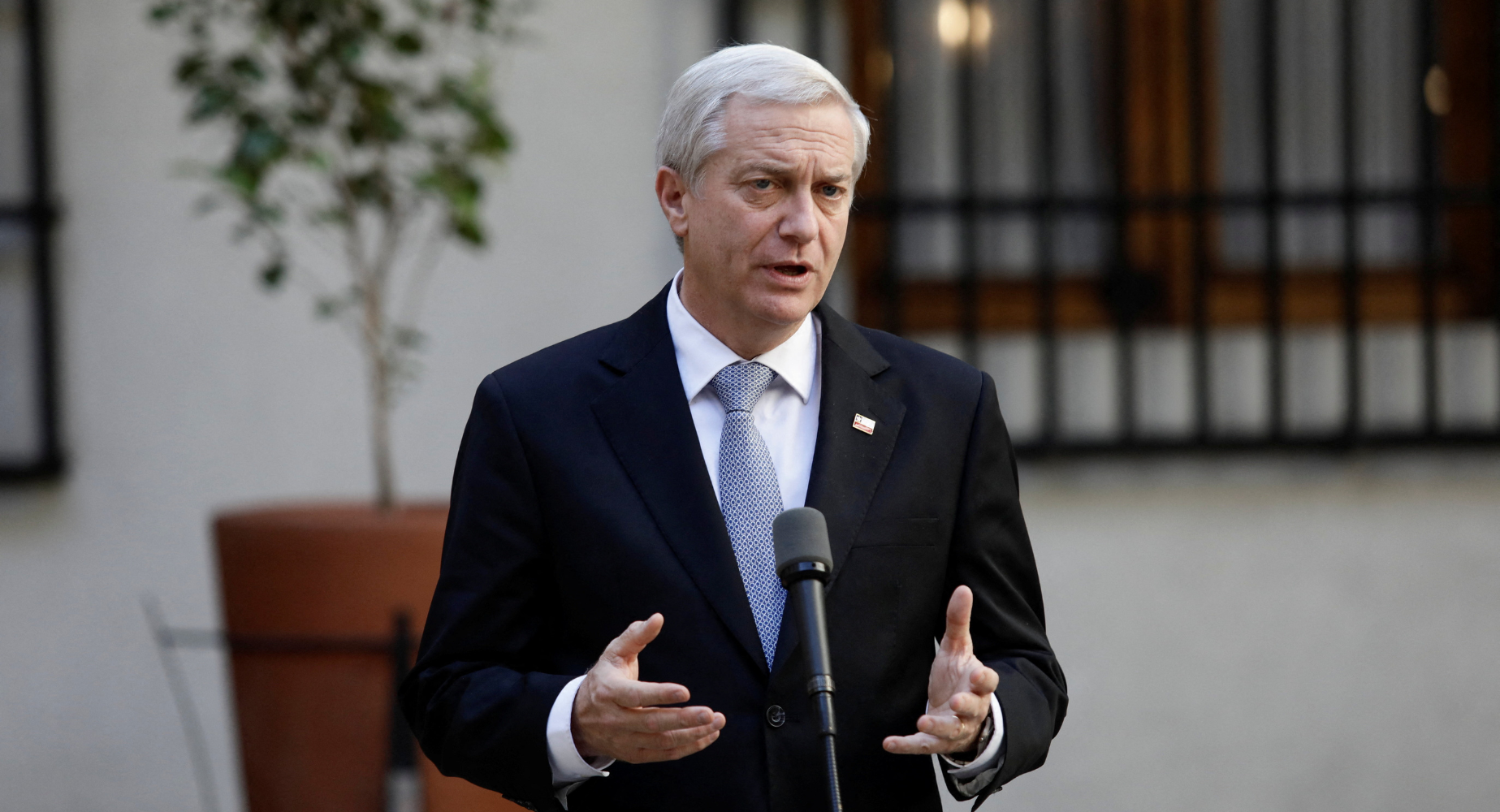
The resounding electoral victory on December 14 of conservative José Antonio Kast reflects the dissatisfactions of Chile, a country once poised to enter the ranks of the developed world but which in recent years has been stuck at the threshold.
His predecessor, Gabriel Boric, made the mistake of believing that Chileans wanted a true “refounding” of the country—a sharp, permanent move to the left. Kast would do well to not make a similar mistake in thinking the country has decisively moved to the right. Rather, Chileans want a country that works—on the economy, security, and social services. As Boric found out, Chile’s public has become less ideological (and less patient) and can turn on a politician who fails to deliver tangible results quickly.
Cracks in the Governing Consensus
Chile’s recent oscillation between left and right may mark the breakdown of a consensus which has existed for three decades, following the market-oriented reforms imposed under Pinochet. During these 30 years, Chile enjoyed remarkable economic growth under a series of center-right and center-left presidents. Poverty declined, social services expanded, and a new middle class began to emerge.
Economic growth slowed in the 2010s and strains began to appear. The reasons can be debated. On the right it was argued that President Michelle Bachelet, who had maintained moderate policies during her first term, 2006-10, abandoned these policies in her second term, 2014-18, imposing both higher taxes which discouraged investment and reforms tightening labor markets.
On the left, however, it was argued that the Chilean model of export-oriented growth based on natural resource industries was exhausted, and what was needed was state engagement in the economy and stimulus of domestic consumption through greater government social spending.
Whatever the causes, slow growth led to increased social tensions as Chileans saw the prospect of a comfortable middle class lifestyle receding. Resentments boiled over in 2019. For six months demonstrations and disruptions took place throughout the country in a so-called “social explosion,” putting center-right President Sebastian Piñera at risk of being forced to leave office early.
While most of the protests were peaceful, a violent core of militants destroyed monuments and churches and engaged in street fights with police, stunning those who had thought Chile was immune to internal violence. Piñera held on to his position, but was forced to call a constitutional convention, a longtime leftist demand.
A Leftist Experiment Gone Wrong
In December 2021, a student activist turned legislator, Gabriel Boric, unexpectedly gained the Presidency at the head of a coalition of “new left” parties, older center-left groupings which had previously been pillars of Chile’s consensus politics, and the Communist Party which had once been on the fringes of political life.
Once in office, Boric strongly supported the new constitutional convention, but the draft which it produced, with such elements as a separate judicial system for Chile’s indigenous peoples, strict environmental provisions, restrictions on property rights, and the abolition of Chile’s Senate, was roundly rejected by the public in a referendum.
Boric never recovered politically from this rough beginning. Lacking a clear majority in Congress he was unable to gain passage of a revenue-generating tax reform to fund his social agenda. His staff, drawn from the ranks of former student leaders, lacked experience; when crises and scandals arose, they were slow in responding.
Ultimately Boric read Chile wrong. The demands for economic redistribution and environmental justice which brought him to office faded. New issues emerged: anemic economic growth and rising crime. His administration let the conservative opposition take ownership of these issues, although in its last year it began to address them, supporting a modest reform of the permitting system for investment projects and creating a new Ministry of Security.
The Making of a Rightist
Kast is in many ways Boric’s opposite. Boric shot up from student politics to the national stage while Kast has a long history in national politics. He is the son of a German immigrant who became a successful businessman (and whose service in the Wehrmacht and enrollment in Hitler’s National Socialists at age 18 is often cited by his son’s opponents).
Kast, while a law student, supported the Pinochet government, appearing in a television spot supporting him in the 1988 referendum on his remaining in office. (Pinochet’s loss in that referendum led to his departure and the return of civilian rule.) An older brother, deceased, served in the Pinochet government as Labor Minister, Planning Director and head of the Central Bank.
Kast was active in the Independent Democratic Union and became a member of the Chamber of Deputies in 2002, remaining in office for 16 years where he was known mainly for social issues such as opposition to abortion and homosexual rights, features of his strongly conservative Catholicism.
He first ran for President in 2017, but was generally seen as a fringe figure. He ran again in 2021, losing to Boric but, with Chilean politics now more polarized, he became the standard-bearer of a broad conservative coalition. In 2025, Kast’s leftist opponent, Labor Minister Jeannette Jara, was from the Communist Party, helping Kast to a landslide victory by a margin of 58 to 42 percent.
In his 2025 campaign, Kast learned from prior mistakes. His 2021 platform was 204 pages long, with multiple detailed proposals; his 2025 equivalent was a mere 38 pages—focused on plans to reactivate Chile’s economy and improve public security.
It’s the Economy…
What can be expected from Kast? He has pledged to cut taxes on businesses, cut $6 billion in government spending in eighteen months and reduce the size of the civil service. But he has also promised to preserve and indeed improve Chile’s social safety net (e.g., reducing wait times at hospitals), seeking to rebut accusations that he is a mini-Javier Milei.
Kast is likely to want to stimulate investment, particularly in mining where Chile has a strong comparative advantage. Although some projects have gone forward, others have been stalled by the strict environmental enforcement of the Boric years (e.g., the $2 billion Domingo copper and zinc project).
… and Security
A pervasive sense that Chileans’ personal safety is endangered had a role in Kast’s victory, as home burglaries and carjackings have become more common. The Increasing presence of international narcotics cartels has also been felt, but eradicating them will be a long term project. Kast may provide new resources and seek to liberalize the police rules for the use of force—but in a country which still remembers the secret police of the Pinochet era, any moves in that direction will be controversial and neuralgic for the human rights community.
Linked in Chileans’ minds to crime has been immigration. Chile now has significant numbers of Venezuelans and Haitians, including many who entered illegally. While both border enforcement and rules for asylum have been tightened of late, Kast is likely to go further. He has spoken of digging a trench along Chile’s northern borders and has said he will return illegal immigrants to their countries of origin. But implementing a repatriation program may be difficult, as Chile lacks the United States’ ability to force its will upon potential recipient countries.
Joining the Global Right?
Foreign policy did not figure heavily in the campaign. However, Kast has links with other rightist leaders. In 2024, he visited El Salvador to observe President Bukele’s hardline policies on crime, and he has met with Argentine President Milei, who openly supported his candidacy.
Kast has not yet cultivated the close personal connection to President Trump that Milei has. This may be because Chile does not have important requests of the US. It does not need a financial bailout of the sort that Argentina has received, and the ten percent tariff placed in Chilean exports, while unwelcome, is at the low end of those imposed by the Trump administration.
Chile may feel pressure from the United States to limit its engagement with China, a crucial trading partner. Kast will have to tread carefully to maintain relations with both giants. He has visited Italy, and it has been suggested that he may seek the approach of Prime Minister Giorgia Meloni, who, without abandoning her hard right stance on many issues, has managed to maintain good relations with a wide range of international players.
A Mandate that Must be Carefully Managed
Kast will have to deal with the reality that he does not have control over Chile’s Congress. He can probably cobble together a working majority in the Chamber of Deputies, including deputies even further to his right and an ill-defined populist grouping which has recently emerged. And the Senate remains evenly divided. Kast has noted that as president, he will have considerable powers to enforce existing laws without seeking new legislation—which led to charges in the campaign of authoritarianism.
The left will portray Kast’s victory as a return to the past. But Chile, 36 years after its transition from military rule, has sufficient checks and balances to maintain its democracy. And Kast himself is not an “anti-politician” along the lines of El Salvador’s Bukele or Argentina’s Milei. He is a longtime veteran of parliamentary life who has never hidden his strongly conservative views but can be expected to pursue them in a democratic context.