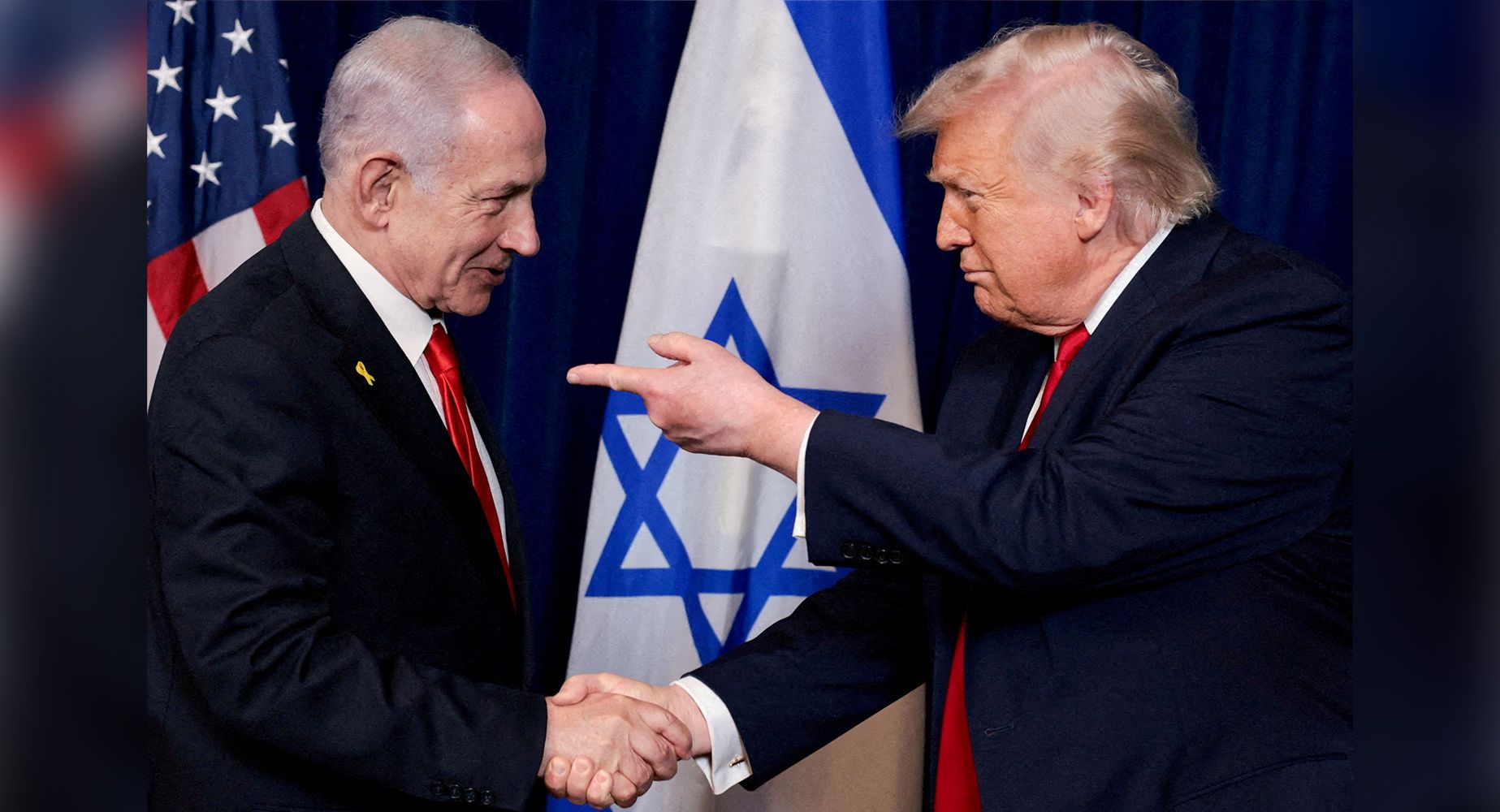
Is the Iran War a manifestation of the rise of the Clash of Civilizations as a dominant attribute of current international politics? This conception of a civilizational clash seems relevant to the current war in the Middle East. A Christian-majority state and a Jewish state cooperate in a joint war against a country ruled by an extremist Islamist (Shiite) regime. Moreover, the Trump administration is influenced by the conception of the Clash of Civilizations in additional global political contexts. Seemingly, we have here the fulfillment of Samuel Huntington’s theory from three decades ago that such a clash will shape global politics. Still, I’ll argue here that the picture is more nuanced as the Trump administration’s version of the Clash of Civilizations differs markedly from the original Huntingtonian one. In addition, both conceptions have serious limitations in their application to global politics.
Samuel Huntington published his influential book The Clash of Civilizations in 1996 (an earlier short version was published in Foreign Affairs in 1993). Huntington proposed dividing the world into seven or eight civilizations on a cultural basis, closely related to a religious identity. The validity of such a division, and especially Huntington’s general prediction of the coming clashes among the different civilizations in the post-Cold War era, were subjected to a barrage of criticism, but that didn’t prevent his thesis from becoming widespread and influential. The book focuses especially on the possibility of a clash between the West and two rival civilizations: Islam and the Chinese civilization. Putting China aside, the current war in the Middle East seems to highlight the clash between the West and Islam: the leader of the West (the US) and a Western country (Israel) are waging an intense war against a radical Islamist regime.
However, the application of the Huntingtonian thesis of the Clash of Civilizations to the Iran War is problematic. While the Trump administration does seem to be guided by a ‘civilizational’ approach, it is markedly different from the original Huntingtonian one.
Huntington’s book was written in opposition to an alternative liberal thesis, which dominated the immediate post-Cold War era in the early 1990s. This opposing thesis was introduced in the famous article on “The End of History” by Francis Fukuyama. The article gained a large influence because it reflected the widespread belief in the West that with the end of the Cold War, humanity is going to endorse the principles of liberalism — democracy, human rights and free markets. Moreover, it seemed that all the ideological rivals of liberalism—such as Communism, Fascism and Nationalism—were ideationally defeated and no longer enjoyed mass support, in contrast to liberalism, which, according to Fukuyama, did enjoy mass support and therefore provided the common dominant ideational base for humanity. As a result, the spread of liberalism reduced the danger of conflicts and wars in the world.
In contrast to Fukuyama’s optimistic thesis, Huntington’s alternative approach argued that it is impossible to promote the Western liberal values in non-Western cultures. Such an attempt is only likely to aggravate conflicts, mainly in those cultures which are the least prone to accept liberal values, namely China and Islam. Huntington argues that these civilizations are collectivist—namely the loyalty to the group is stronger than individual rights. This is in contrast to the West, where the individual is at the center. This difference is explained by historical processes which took place only in the West and not in other cultures, most notably the Renaissance, the Reformation, the Industrial Revolution, and the French Revolution. A major outcome of these historical processes was the rise of liberalism and individual rights. Since these processes and revolutions didn’t take place in non-Western cultures, a huge gap emerged between the liberal West and other civilizations, which creates major obstacles to adopting liberal values and institutions.
Among large segments of Trump’s supporters, there is a powerful belief in a clash of civilizations, which similarly to Huntington views radical Islam and also (if to a somewhat lesser extent) China as major rivals of the West. Yet, there is a major difference between the Huntingtonian view of the clash of civilizations and the view of Trump’s supporters. For Huntington, the major problem confronting the West is the lack of preparedness of the Islamic and Chinese civilizations for liberalization, in contrast to the liberal perspective, which believes in the universality of the liberal tenets and their applicability to every culture. In contrast, for Trump’s supporters the clash of civilizations is based squarely on religious differences.
This difference of perspective stems from a different conception of what constitutes “the West.” From the Huntingtonian perspective, the West is identified with liberalism. Many of Trump’s supporters, on the other hand, identify not with the liberal West, but rather with “the Jewish-Christian Tradition.” Such a perspective leads to the idea that the West, and first and foremost the US, needs to confront radical Islam, which is perceived to pose an existential threat to it. The perceived threat is posed from without, most notably from the Islamic revolutionary regime in Iran, as well as from within, notably the waves of Muslim migrants to the West, mostly to Europe. According to the national security documents of the Trump administration published in late 2025, this mass migration to Europe threatens to bring about the “civilizational erasure” of Europe—unless it commits itself to stop it.
As for minimizing the role of liberalism as the common denominator of the West, Secretary of State and current National Security Advisor Marco Rubio underlined in his talk at the Munich Security Conference in February 2026 that the common denominator of Europe and the US emerged in the pre-liberal (and even anti-liberal) period of European colonialism. According to Rubio, the key shared Euro-American element is their Judeo-Christian religious identity (although he only refers to Christianity in this speech) as well as their common ethnic origin. The Trump administration also supports the right-wing populist and anti-liberal parties in Europe, and it is working against the liberal European establishment affiliated with the EU. The right-wing populist parties tend to highlight the Christian tradition of the European continent. A key example is the support of the Trump administration for the illiberal-nationalist Victor Urban in the Hungarian elections of April 2026 (which he lost).
With the outbreak of the Iran War, the Christian dimension was expressed dramatically in the religious terminology of Secretary of Defense Pete Hegseth. Thus, he asked Americans to pray for victory in the Middle East “in the name of Jesus Christ.” Hegseth also likened the rescue on Easter Sunday of a missing American airman shot down over Iran to the resurrection of Christ, as the airman was rescued on the day Christians celebrate the Resurrection. Hegseth idolizes the Crusades, which provide an historical precedent of a supposed “clash of civilizations” between Christians and Muslims. In his book “American Crusade” Hegseth argues that these bloody medieval wars in the Middle East were justified because they saved Christian Europe from the onslaught of Islam.
While Hegseth’s language may seem extreme, he is certainly not alone in his views. President Trump has similarly asserted that God supports the Israeli-US war against Iran. Many of Trump’s Christian supporters tie US nationalism with religious virtue. They see themselves as combatants in a holy war that aims to roll back secular and pluralist values and establish the US as a fundamentally Christian nation.
The Civilizational approach can provide an explanation of some key variations in the foreign policy of the Trump administration: the growing split with Europe and Ukraine in contrast to a rapprochement with Russia and the very close relations with Israel. The rising split in NATO during the Iran War might be mainly accounted for by different political and military approaches to the war. Yet the ideological split between the civilizational conception of the conflict by the US administration versus the liberal approach of Europe based on international law, at the minimum, deepens the political gap between the parties.
Such a gap between Civilizational and liberal approaches may also account for the growing split between Europe and the Trump administration with regard to Russia and Ukraine. The sympathy that the administration shows toward Russia is influenced by realpolitik and transactional considerations (to bring about a split between Russia and China; to make deals with regard to Russian natural resources). Yet, it seems that it is also influenced by the Trump administration’s perception of Putin’s Russia as seemingly representing a Christian tradition which advances “traditional values” such as the centrality of the Church, in addition to other traditional values such as the heterosexual family and the homeland. In contrast, the democratic character of Ukraine (even if imperfect) in contrast to the authoritarian regime in Russia, doesn’t constitute a sufficient reason in the eyes of the Trump administration to provide full support for Ukraine—in contrast to the policy of Biden’s previous liberal administration.
The Civilizational logic also partly explains the US support for Israel, culminating in the joint war against Iran. A key portion of Trump’s supporters, notably the Christian Evangelicals, perceive Israel as fighting on the civilizational front line on behalf of the Judeo-Christian civilization against radical Islam. Israel, in this view, protects the Judeo-Christian world and therefore it is imperative for the US to support Israel almost unconditionally. The current American ambassador to Israel—Mike Huckabee, who is a Christian Evangelical —is a loyal representative of this approach, one that no American ambassador to Israel exhibited under previous US administrations. The political support of the Evangelicals for Trump‘s administration is one of the major reasons why the administration tends to endorse their views on Israel.
At any rate, there are limits to the Clash of Civilizations approach, either in the Huntingtonian version or the Evangelical one. A large share of the world’s conflicts take place not between civilizations but within them. For example, a major conflict within the Chinese civilization is between China and Taiwan; the Russia-Ukraine war takes place within the Slavic-Orthodox civilization; and there are quite a few bloody conflicts within Islam such as the recent or current civil wars in Libya, Syria, Yemen, Iraq and partly also Lebanon. Even in the current Iran War, we may note the large-scale Iranian firing of missiles and drones at the Muslim Gulf states. Indeed, many more casualties were caused in recent years as a result of the intra-Islamic wars than as a result of the Clash of Civilizations.
In sum, the conception of the West as based on a “Judeo-Christian tradition” reinforces the alliance between the Trumpist USA and Israel against radical Islamist Iran. This conception also provides some of the reason for the current US policy toward Russia, as well as for its support of the populist-nationalist right in Europe, notably in the context of their opposition to mass migration.