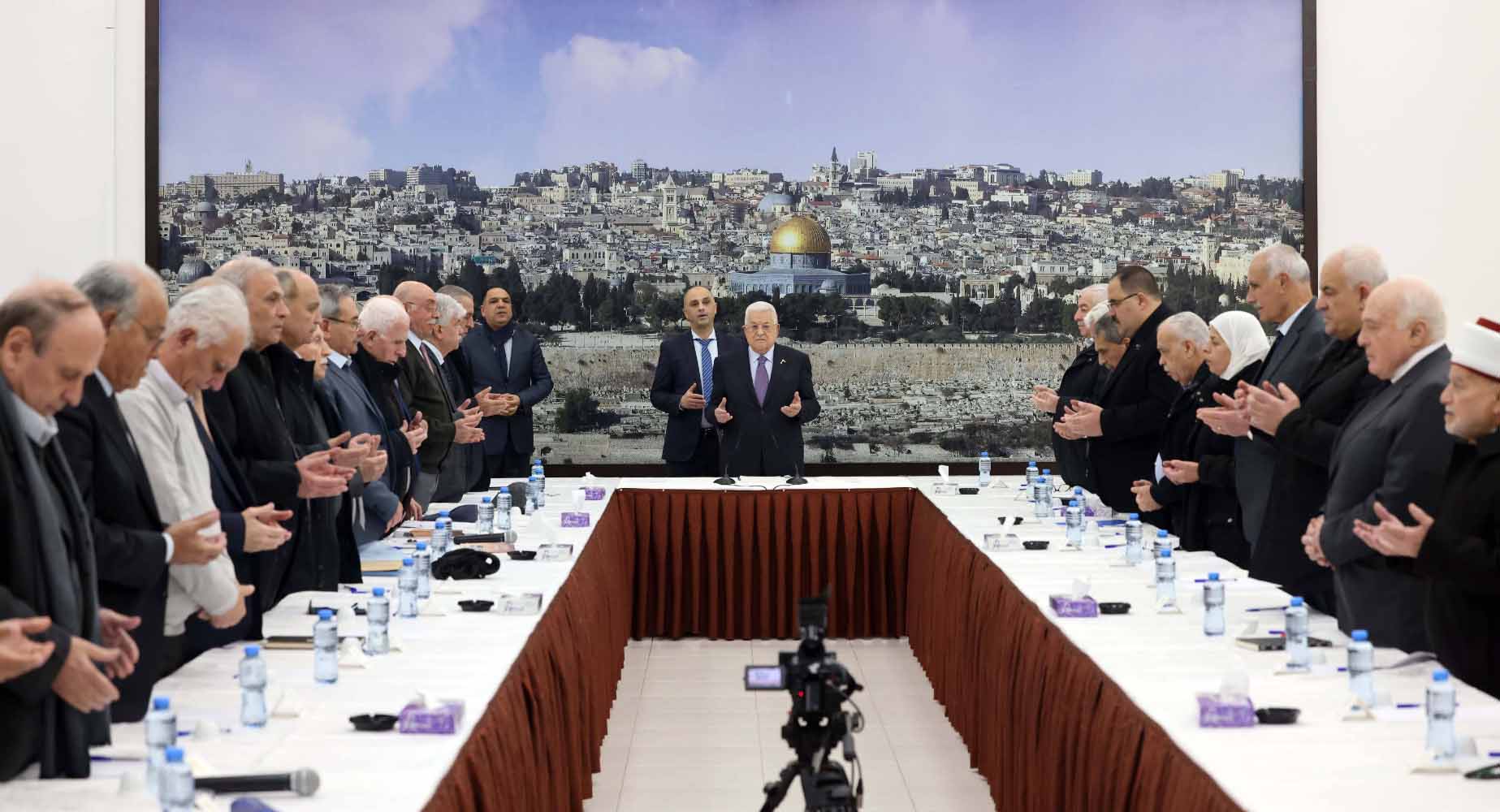
When the UN General Assembly voted overwhelmingly in favor of Palestinian statehood in September 2025, with only 10 against and 12 abstentions, it appeared that the diplomatic balance had tilted toward a Palestinian state. Yet nothing of substance followed – no borders of the Palestinian state were recognized for instance.
This gap between rhetorical solidarity and actual policy is the starting point for a more sobering conclusion: in practice, the project of creating an independent State of Palestine is on indefinite hold. A status quo of continuing Palestinian autonomy on the West Bank and eventual international supervision of Gaza is the most likely endgame of the war launched by Hamas in October 2023.
Several trends underlie this conclusion: the Abraham Accords, Israel’s rightward shift, the weakening of Palestine’s patrons, and finally the radicalization by Hamas of Palestinian narratives, which are opposed by international law and even Islamic jurisprudence.
The Abraham Accords and the Reordering of Priorities
The Palestinian question is no longer the organizing principle of Middle Eastern diplomacy. The Abraham Accords — normalization agreements between Israel and Muslim-majority states — have inaugurated a different logic.
For the United Arab Emirates, Bahrain, Morocco, Kosovo and Kazakhstan, relations with Israel promise access to advanced technology, security cooperation against Iran, investment flows, and closer ties with Washington. These regimes are acutely aware that their populations sympathize with the Palestinians; they therefore pay a rhetorical price for continued engagement with Israel.
For Israel’s neighbors with long-established peace treaties – Egypt and Jordan – the Gaza war has not led to changes in their priorities. Despite the humanitarian catastrophe in Gaza, neither Egypt nor Jordan opened its frontiers to a large-scale influx of refugees.Their reluctance is partly rooted in history. Jordan, in particular, remembers the near-civil war of 1970, when the PLO challenged the Hashemite monarchy. Both governments fear that importing a large population of traumatized Gazans could result in a radicalized politics and armed networks that they cannot fully control.
Nevertheless, they have chosen to manage that domestic discontent rather than mortgage their strategic interests to the fate of the Palestinian cause. This reflects a classic realist calculation: state survival, regime security, and material gains take precedence over ideological solidarity. In liberal internationalist terms, it also signals a preference for incremental economic and diplomatic integration over maximalist demands for a “just solution” as a precondition for normalization. The Palestinian issue has not disappeared from official communiqués, but it has been compartmentalized. The implicit message: we support your rights, but we will not sacrifice our own national projects to secure them.
As more Muslim-majority states quietly move along this path, the leverage that the “Arab position” once held diminishes. Israel is less isolated, less dependent on Palestinian acquiescence for regional acceptance, and therefore less susceptible to pressure to concede statehood.
Israel’s Rightward Shift
The October 7, 2023 Hamas attack caused a major shift in Israeli public attitudes towards a Palestinian state. Israelis saw not only the mass killings of Israeli civilians but also widespread support for this attack among Palestinians on the West Bank.
The views of rightwing Israeli leaders such as Itamar Ben-Gvir were strengthened. They see the conflict as an existential zero-sum contest in which the Palestinians seek to replace Jewish sovereignty “from the river to the sea.” In this worldview, Palestinian national aspirations are not a partner for compromise but a threat to be neutralized. In the Israeli political center, which in prior times has supported a two-state compromise, support for negotiations has collapsed.
These positions are anchored in deep historical trauma. The Holocaust has imprinted a narrative of “survival at all costs” on Israeli political culture. The post-1948 expulsion and flight of Jews from Arab countries has reinforced a sense that Jews cannot rely on the goodwill of surrounding societies. The resulting mindset is that security cannot be traded for goodwill or legal promises.
Within such a framework, the idea of a sovereign Palestinian state adjacent to Israel is perceived by most Israelis not as a step toward peace but as a potential staging ground for future attacks. Every rocket and suicide bombing reinforces this perception. The moral space for acknowledging Palestinian claims is narrowed; the political space for any leadership willing to take risks for compromise has almost vanished.
Weakened Palestinian Patrons
Historically, the Palestinian movement relied on regional backers to offset its material weakness. Today, those backers are constrained.
Iran, the principal patron of “resistance” groups, is facing severe internal crises: economic stagnation, demographic pressures, infrastructural decay, and mounting popular discontent. Its resources and legitimacy are eroding, and succession uncertainty at the top of the regime compounds elite caution. Iran can still arm non-state actors and inflame rhetoric, but it is in no position to wage sustained, high-intensity war with Israel on behalf of the Palestinians.
Other traditional supporters are preoccupied or weakened. Syria remains shattered by civil war; Iraq is fragmented; Lebanon’s state is hollowed out. Turkey, Qatar, and others may offer financial and diplomatic support, but none are willing to confront Israel militarily.
At the level of great powers, the United States remains the only actor with real leverage over Israel—and it has repeatedly used that leverage to manage, not transform, the conflict. The cost–benefit calculus of major powers leans toward crisis management and alliance maintenance, not toward coercive diplomacy for Palestinian sovereignty.
Land, Law, and Religious Narratives
The charge against Israel of genocide has become a central feature of contemporary discourse surrounding Gaza. Legally, however, genocide requires a “specific intent” (requiring a State or organizational plan) to destroy a national, ethnic, racial, or religious group in whole or in part. Whatever the moral judgment on Israel’s conduct, the strategic objective articulated by Israeli leaders has been the destruction of Hamas as a fighting force and the reassertion of control, not the physical annihilation of the Palestinian people.
The core struggle remains one over land, sovereignty, and security, not an ideologically driven campaign to remove either Israelis or Palestinians from the earth. Religious narratives interact with this territorial dispute in complex ways. Religious Zionists draw on biblical promises to support their claim to the land. Less widely noted in Muslim discourse is that the Qur’an itself records a divine grant of the Holy Land to the Children of Israel, as in Qur’an 5:21: “O my people, enter the Holy Land which Allah has destined for you.” At the same time, the Qur’an and the Prophetic tradition strongly condemn tribalism (`asabiyyah) and unjust killing, emphasizing that legitimacy depends on justice and piety rather than ethnicity.
From the standpoint of Islamic jurisprudence, the tactics adopted by groups like Hamas — suicide bombings, deliberate targeting of civilians, use of human shields — sit uneasily with the classical prohibitions on killing noncombatants and spreading terror indiscriminately. These methods have also undermined international sympathy for the Palestinian cause, reinforcing Israeli security narratives and complicating efforts to invoke international law in Palestinians’ favor.
The End of a Project, Not a People
What, then, does “the end of Palestine” mean analytically? It does not mean the disappearance of the Palestinian people, culture, or identity. Palestinians have demonstrated a remarkable capacity to sustain their identity. Rather, it points to the likely suspension of the state-seeking project on the territory “between the river and the sea.”
The great majority of the Palestinians in the West Bank in this scenario would remain under the governance of Palestinian Authority, in effect with autonomy but without full self-determination. A future Palestinian state in the West Bank and Gaza would await Palestinians’ ability to create the institutions underpinning such a state living peacefully alongside Israel.