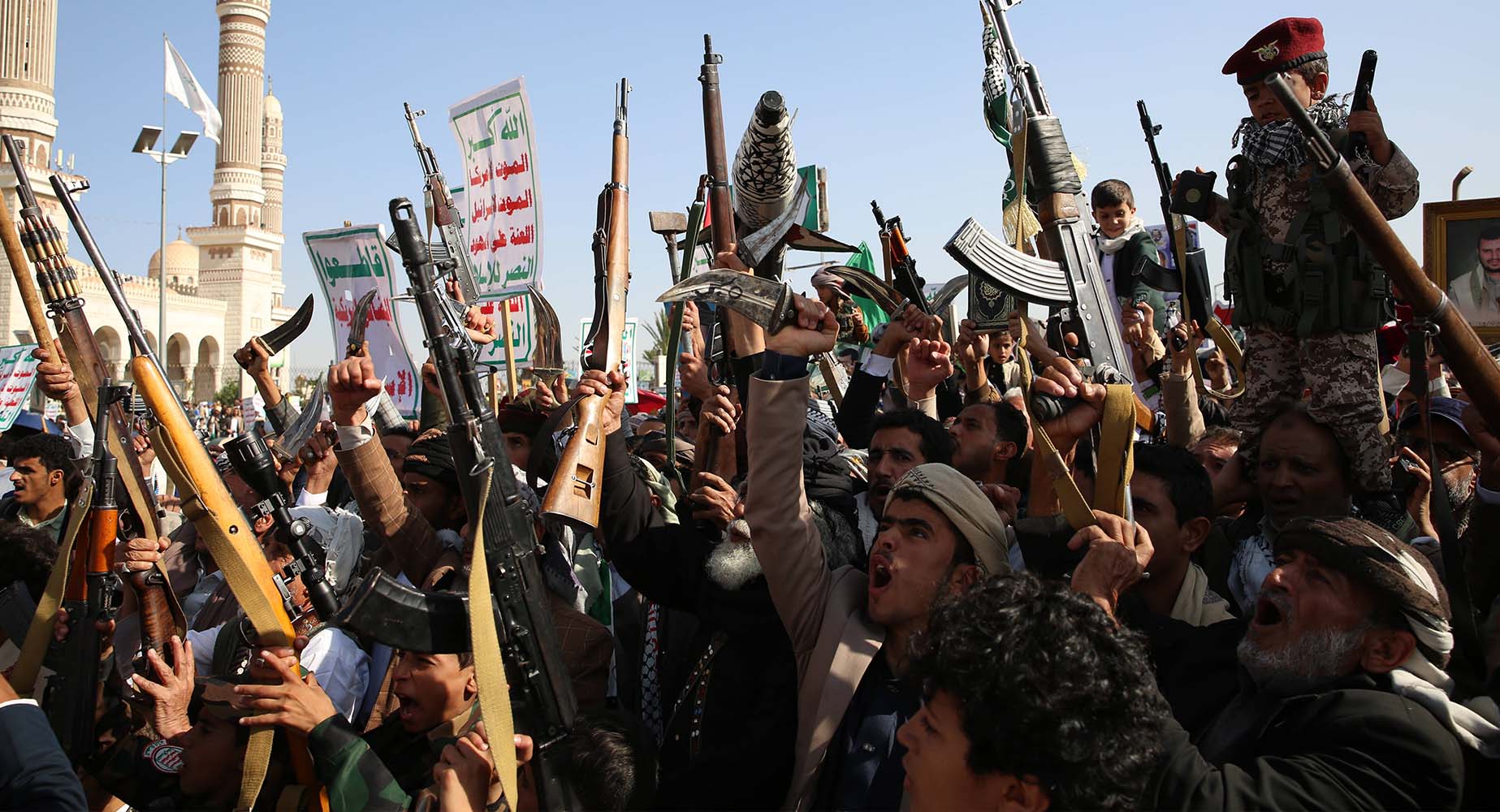
For years, Yemen has been misread in Washington and beyond as a peripheral conflict driven primarily by Gulf rivalries, regional egos, or tactical miscalculations among partners. This interpretation is not only incomplete—it is strategically dangerous. Yemen is not a sideshow of Middle Eastern politics; it is a frontline theater in a broader struggle over whether transnational extremism, ideological militancy, and hybrid warfare will be allowed to reshape the regional order.
Yemen’s war is not a simple binary contest between the Houthis and their opponents. It is a conflict in which ideological movements, terrorist organizations, and state-backed militias increasingly converge—not because they share beliefs, but because they share enemies. This convergence, more than any regional rivalry, explains the persistence of violence and the repeated failure of conventional diplomatic frameworks.
This is not a claim of a formal alliance in the classical sense. Rather, it reflects a dangerous unanimity of interests. Sunni jihadist networks, Iranian-backed militias, and Islamist political actors are operating in overlapping theaters, exploit the same security vacuums, and increasingly target the same adversaries—most notably U.S. forces, Western interests, and the emerging regional security architecture. In Yemen, ideological contradictions are routinely subordinated to tactical utility.
It is within this framework that the role of Islamist movements operating under political cover must be confronted—most notably the Yemeni Islah Party, widely recognized as the local manifestation of the Muslim Brotherhood. While often portrayed as a conventional political actor within Yemen’s internationally recognized government, Islah’s ideological lineage and operational behavior raise profound security concerns that cannot be separated from Yemen’s chronic instability and the resurgence of extremist networks.
In recent years, al-Qaeda in the Arabian Peninsula (AQAP) has increased its operational activity in southern governorates such as Shabwa, exploiting fragmented security arrangements and permissive environments. Intelligence assessments point to weapons transfers, logistical facilitation, and political protection networks connected to Islah-aligned structures, particularly those emanating from Marib. Whether through intent or negligence, the outcome is the same: extremist actors regain operational space, rebuild capacity, and reassert influence.
At the same time, the Houthis—firmly embedded within Iran’s regional strategy—have escalated their attacks targeting U.S. military assets, commercial shipping, and critical maritime routes in the Red Sea and Gulf of Aden. These operations are not isolated acts of defiance; they represent calibrated actions within Iran’s doctrine of indirect escalation. What makes Yemen uniquely dangerous is that Sunni jihadist networks and Shiite revolutionary militias are no longer mutually exclusive threats. When the objective is destabilization, ideology becomes secondary.
This convergence carries direct consequences for U.S. national security. Yemen has quietly evolved into a testing ground for how far hybrid actors can go in threatening American forces, disrupting global trade, and eroding deterrence—without provoking decisive consequences. The lesson drawn by extremist organizations and their sponsors is clear: fragmentation creates opportunity, and ambiguity invites escalation.
It is within this strategic context that the debate over designating the Islah Party as a terrorist organization must be understood. Such a designation would not be symbolic. It would represent a necessary recalibration—one that removes political legitimacy from ideological movements that function as enablers of violence rather than agents of stability. It would also force a long-overdue reassessment of how political Islam operates in fragile states, where the boundary between governance and militancy is often deliberately blurred.
Crucially, this step would align Yemen with a broader regional security framework that has already demonstrated tangible results: the Abraham Accords.
These agreements did more than normalize relations between Israel and several Arab states; they established a state-centric model of cooperation grounded in shared security interests, counterterrorism coordination, and economic integration. They explicitly rejected transnational ideological movements in favor of sovereign accountability and pragmatic statecraft. Led by the indefatigable Jared Kushner, the Abraham Accords reshaped the strategic map of the Middle East by proving that realism, courage, and leadership can replace stagnation and perpetual conflict.
The Abraham Accords were never intended as a closed chapter, but as an evolving strategic framework—one capable of expanding to arenas where peace has long been denied. As the architects of this historic realignment continue their exceptional work across multiple and demanding files, Yemen should not be overlooked. For centuries, the Yemeni people have been a pillar of the Arabian Peninsula, shaped by commerce, maritime exchange, and a profound cultural heritage. They are not the authors of the extremism imposed upon them. They deserve a future of peace, dignity, and integration into a regional order that rewards stability over ideology and life over perpetual conflict.
Yemen’s geography makes it indispensable to this emerging architecture. Integrating Yemen into a security paradigm informed by the Abraham Accords would isolate extremist actors, reduce ideological competition within the anti-Houthi camp, and prioritize governance models rooted in stability rather than mobilization.
This has direct implications for Israel’s security. Iran’s strategy relies on multi-front pressure—from Lebanon and Gaza to Syria, Iraq, and increasingly Yemen. The Yemeni theater extends this pressure southward, threatening Israeli-linked maritime routes and reinforcing the logic of encirclement. The convergence of Sunni extremist networks with Iran’s axis in Yemen reflects a broader regional pattern: when the objective is destabilization, ideological coherence becomes irrelevant.
Against this backdrop, the U.S. national security team at the White House deserves clear recognition for the consequential work it has undertaken. Through professional judgment and strategic resolve, it has designated multiple branches and affiliates of the Muslim Brotherhood as terrorist organizations—closing loopholes that long allowed ideological extremism to operate under political cover. Equally critical to this effort has been the role of the U.S. Treasury Department, whose work in tracking, disrupting, and sanctioning illicit financial networks is indispensable. Without Treasury’s ability to follow and choke off the flow of dirty money, no counterterrorism strategy can succeed. It is a central—and often underappreciated—pillar in the fight against global terrorism. In doing so, the National Security Council and its interagency partners have demonstrated that counterterrorism policy must be guided by realities on the ground, not by narratives. This approach goes beyond defending American interests; it reaffirms a core principle of international order—that terrorism and ideological extremism, regardless of sect, narrative, or branding, must not be normalized or accommodated.
Yemen is not a conflict of egos. It is a test of whether the United States and its partners can move beyond outdated assumptions and confront the realities of modern hybrid warfare. The choice is not between imperfect partners; it is between confronting extremism structurally or allowing it to metastasize under political cover.
The path to peace in Yemen will not come from managing rivalries. It will come from dismantling the ideological ecosystems that sustain violence, isolating those who enable terrorism, and embedding Yemen within a pragmatic, state-centered regional order. These are not radical propositions. They are necessary ones—and they will determine whether Yemen remains a fault line of instability or whether it becomes part of a more secure Middle East.