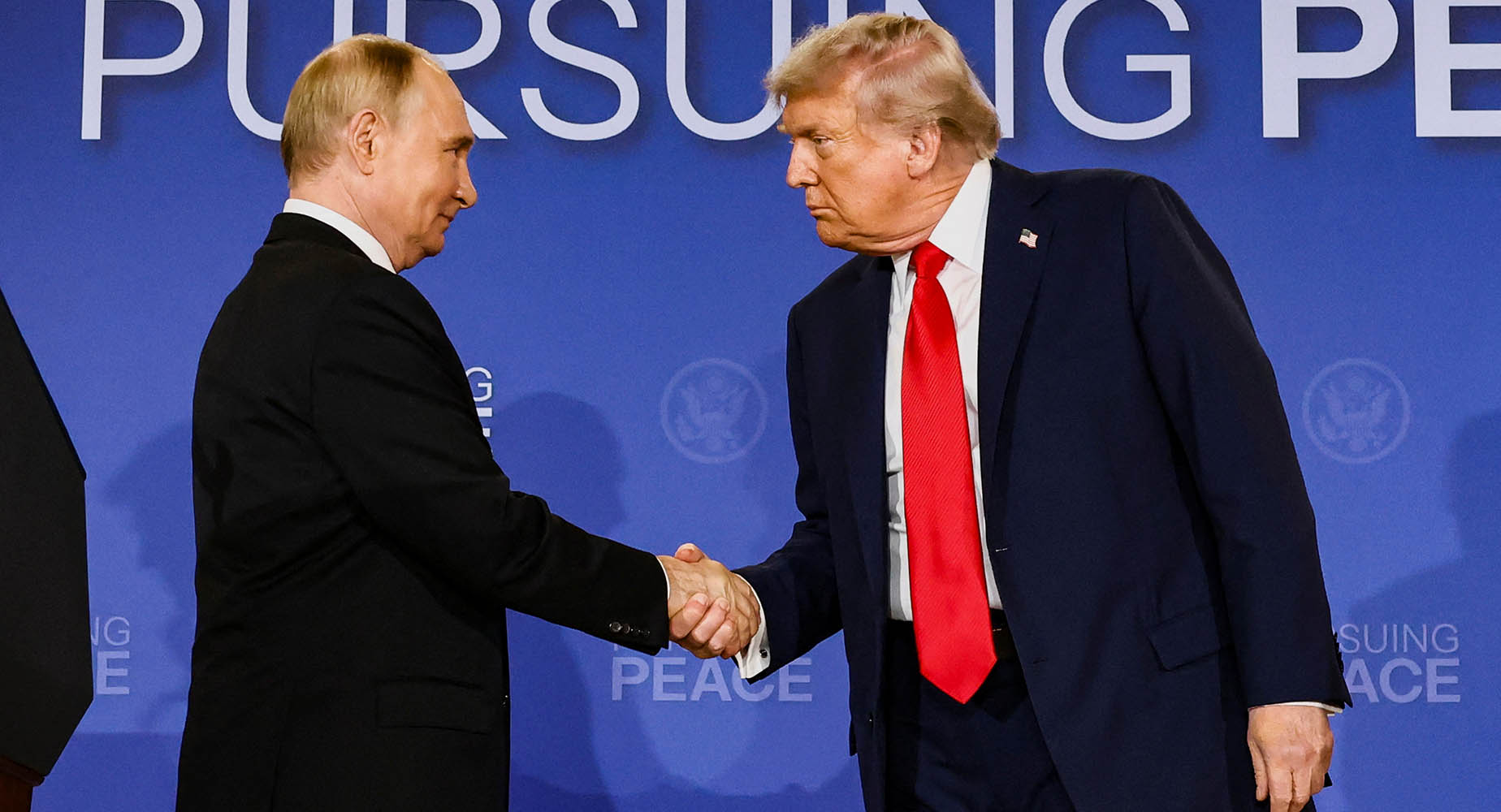
President Donald Trump returned to the White House promising to end the war almost instantaneously. That has proven far harder than the slogan suggested. Still, the President did manage to end or de-escalate several other conflicts in a relatively short period of his second term, and he can still add one more success to that record. But only if the White House shifts from trying to “befriend” Russia into a deal, and instead continues imposing costs that make games unaffordable.
Recent diplomacy shows what is possible when pressure and engagement move in tandem. In January and February 2026, the United States helped broker trilateral talks between Ukraine and Russia in Abu Dhabi, hosted by the UAE. Those talks, while far from a final settlement, produced substantial prisoner exchanges and a framework for further negotiations, with Washington proposing to host the next round, likely in Miami.
The informally set deadline of June 2026 as a target to reach a peace agreement is reachable, if one wild card is played now. Thus, President Trump can save many more lives.
It is the bipartisan Sanctioning Russia Act, co‑sponsored by Senators Lindsey Graham and Richard Blumenthal. The bill would impose sweeping secondary tariffs and sanctions on countries and firms that continue to buy Russian oil and gas, effectively weaponising access to the U.S. market against Russia’s remaining energy customers.
Graham has stated that President Trump has “greenlit” the legislation and that it would give the White House “the most powerful economic weapon yet to end this war.” If Congress were to pass this bill around 22 February, it would send an unmistakable signal and materially accelerate the re‑routing of global energy flows away from Moscow.
Treasury Secretary Scott Bessent has recently suggested that the pace and depth of additional U.S. sanctions will depend on the trajectory of the talks. Russia appears to be exploiting this approach, dragging out negotiations while seeking to seize Donbas before next winter. By that time, the United States will have entered the midterm election cycle. A real peace in Ukraine—if achieved earlier—would constitute a major political victory for U.S. political elites, rather than a problem deferred into the election year.
Here is where President Trump has already shown the right instinct. The Treasury recently announced sanctions targeting major Russian oil entities and a sweeping set of vessels and facilitators tied to oil exports—explicitly aimed at Russia’s primary revenue stream. This is the correct center of gravity.
Europe is moving in the same direction. The European Commission has adopted a new sanctions package focused on Russian seaborne crude exports and the services that enable them—insurance, shipping management, and port-adjacent support—while also targeting additional shadow fleet vessels. The package adds 43 more ships, bringing the listed total to around 640. That is exactly the type of scalable pressure that directs diplomatic energy the right way.
The new package of restrictions from the EU involves the introductionof sanctions against third-country ports that provide services to tankersinvolved in shadow trading. This is a very powerful signal and blow. Sofar, the list includes ports in Georgia and Indonesia. But if othercountries violating the sanctions end up on it, then there would be noneed to wait for Senators Graham and Blumenthal’s bill to be passed. The restrictions would be felt immediately by the violators.
Since February 2022, Russia has earned roughly $450 billion from global fossil-fuel exports. About $190 billion of that has been tied to EU purchases. This means Washington still has leverage not only over Moscow, but its partners across the Atlantic.
The move with India was another brilliant example of the White House. Faced with U.S. pressure over its swelling purchases of discounted Russian crude, New Delhi has agreed to diversify suppliers, increased imports of U.S. and Gulf oil and LNG, and shown more willingness to discuss price caps and transparency on re‑exports.
The possibility of imposing additional duties and tariffs on countries thatfacilitate the gray import of dual-use goods, industrial machinery, polymers, and chips into Russia remains unused. The Kazakhauthorities have so far been unable to explain the reasons for the sharpincrease in imports of technological equipment into the country and thelarge turnover of funds in the IT sector since the start of the war inUkraine. Imports to Georgia, Armenia, and Azerbaijan, which share a border with Russia, have risen sharply. Intermediaries in Turkey and theUAE are actively involved in the supply chains for technologies andcomponents for the production of missiles and communicationsequipment. Russia continues to purchase and import all of this in hugequantities, using the territories of other countries as transport andlogistics hubs and banking systems to make payments. Closing ports andgray imports would put enormous pressure on Putin. And on China, without direct confrontation. Beijing, which is Moscow’s rear base forsupplying resources, technologies, and equipment that are critical to thewar, would be physically unable to handle all the logistics of directdeliveries. And it would have to drop the mask of ignorance andostensible neutrality.
This approach is much more promising than just another round of attempts to befriend Russia, which always end with the same result. Hence, the reverse‑Kissinger strategy is a delusional idea. The original U.S. opening to China worked because the Sino‑Soviet split was already deep and structurally rooted; Washington exploited an existing rift, it did not create one.
Today, Russia’s dependence on China is a regime‑survival choice. Trying to woo Moscow with concessions risks a double loss: the United States would not pull Russia out of China’s orbit, and it would push key allies in Europe and Asia to hedge more aggressively toward Beijing.
Meanwhile, the human cost of “talks without leverage” is mounting. The U.N. Human Rights Monitoring Mission in Ukraine reported that 2025 was the deadliest year for Ukrainian civilians since the full‑scale invasion, with 2,514 killed and 12,142 injured—a 31% increase in civilian casualties compared to 2024.
The trend continued into early 2026: in January alone, Russia launched one of the largest combined strike waves of the war, using roughly 70 missiles and more than 400 drones in a series of attacks aimed at Ukraine’s energy grid and heating infrastructure.
Ukrainian officials estimate that since October 2025 Russia has disabled or destroyed about 8.5 gigawatts of generation capacity—nearly half of typical national power demand. Ukrainians increasingly refer to this strategy as “coldocide” (genocide by cold): the deliberate use of winter, energy deprivation, and blackouts as tools of civilian coercion.
More pressure from Washington will create the right frame given the situation on the battlefield. Data compiled by independent analysts show that in 2025 Russia gained only about 0.77% of Ukrainian territory—measurable on a map at an enormous human and economic cost. Still, it is far short of any decisive breakthrough.
Ukrainian and Western intelligence estimate that Russian monthly casualties routinely exceed 40,000–50,000 killed and wounded. January 2026 marked the first month in which Russia mobilised fewer soldiers than it lost at the front. Kyiv, for its part, openly states that its objective is to surpass 50,000 Russian combat losses per month to push Moscow toward meaningful negotiations.
Thus, the key to the “quick peace” that President Trump spoke of lies not in the Kremlin’s words and assurances, but in its accounting. If Washington and Brussels manage to permanently cut off Moscow’s financial arteries by the summer of 2026, the US president will get his main geopolitical trophy and trump card in the elections. And Europe and Ukraine will gain peace. In such a scenario, it will not be the result of concessions to the aggressor, but a consequence of the mathematical impossibility of continuing the war. The time for persuasion is over; it is time for an economic sentence that can save thousands upon thousands of lives.