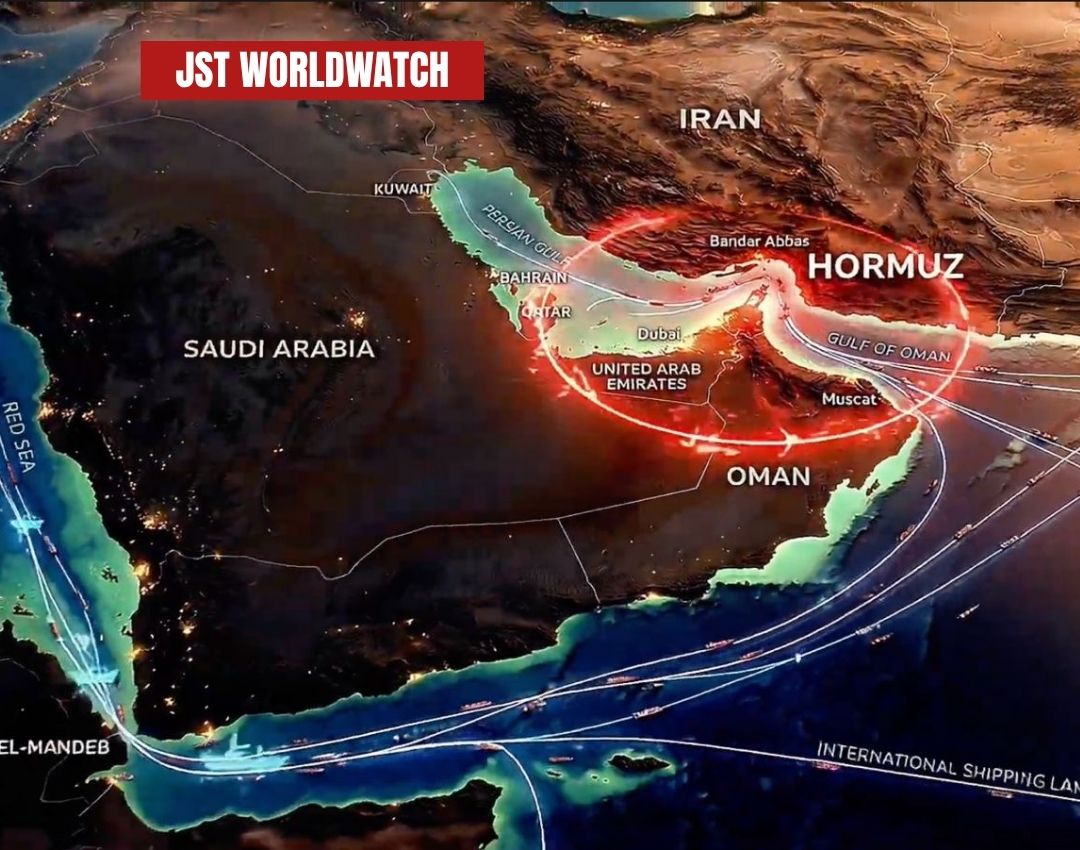
Matt Reisener, Senior National Security Advisor at the Center for Maritime Strategy and former Senior Program Manager for the Middle East and North Africa at the National Democratic Institute, offers a clear assessment in the Jerusalem Strategic Tribune of the possible consequences of the war with Iran.
He argues that if this regime succeeds in its gamble over the Strait of Hormuz, the balance of power in the Gulf will change.
The reason is clear: the Strait of Hormuz is not only a passage. It is a bargaining chip, a legal test, and a geopolitical fault line.
Can Iran Really Control the Strait of Hormuz?
by
May 2026
Recent Articles
Trump’s Realist Strategy on Ukraine
“If they don’t make a deal, it’s just gonna get worse,” Donald Trump said matter-of-factly of Ukraine last month as a new round of high-level negotiations pivoted from a multilateral meeting in Oslo to private discussions in St. Petersburg between Vladimir Putin and Trump’s negotiating duo Steve Witkoff and Jared Kushner. Neither this flying diplomacy […]
Europe Must Become Strong and Avoid Moscow’s Trap
Russia’s sudden willingness to involve Europe in peace negotiations over Ukraine is not a change of strategy. It is an attempt to turn negotiations on ending Russian aggression into negotiations on the future of the European security order. Europe and Ukraine need their own parallel strategy, built around the creation of a joint defense platform. […]
Beyond Tariffs and Technology:
China, the United States, and the Contest for Global Legitimacy
China, the United States, and the Contest for Global Legitimacy
Donald Trump’s May visit to Beijing and Xi Jinping’s reciprocal visit to Washington in September were widely discussed in terms of tariffs, semiconductors, supply chains, and artificial intelligence. Yet the rivalry between the United States and China is also playing out in less obvious places: American sanctions on Iran, arguments over Gaza, and even a […]