It needs to shift gears promptly if it doesn’t want to lose the next one too
Israelis were feeling like dreamers, to quote the Psalmist, at the start of the latest Iran campaign. It wasn’t just the devout among them who were waxing euphoric. Despite the peril of its predicament—scrambling for cover from incoming missiles and drones—the Israeli public was exhilarated by the mandate to defang its Islamist nemesis once and for all. An inconclusive outcome leaves Israel to a worse fate than had it not embarked on this endeavor. Prime Minister Benjamin Netanyahu’s wager on President Donald Trump’s commitment to deliver “complete victory” has backfired disastrously.
Amplifying the famous “don’t” of his immediate predecessor, who cautioned Israel’s adversaries not to exploit its vulnerability after the October 2023 Hamas massacre, Trump elevated cooperation between the United States and Israel to unprecedented heights. Operation Epic Fury found American and Israeli troops embedded within each other’s headquarters, implementing joint battle plans through a potent division of labor. Trump’s contention that “Israel never talked me into the war with Iran” has not quelled rampant speculation that Netanyahu’s intercession was paramount in the U.S. decision to strike.
The advent of unique circumstances, including a severely debilitated Iranian axis and an extraordinarily amenable American president, provided a virtually irresistible window for Netanyahu to gamble at crushing Israel’s archenemy. Having seized that opportunity, he now confronts a grim reality: failure in the quest to “remove the existential threat posed by the terrorist regime in Iran” portends the unenviable prospect of a rematch—against a resurgent Iranian axis—but with drastically depleted levels of U.S. support for Israel. The adamant refusal of Iran’s leadership to comply with Trump’s initial demand for their unqualified surrender underscores the plausibility of that eventual showdown.
While Washington and Tehran engage in tenuous negotiations to end the conflict, Jerusalem, by Netanyahu’s own admission, finds itself sidelined. Precedent teaches that any deal which preserves Iran’s capability to develop nuclear arms, even in the remote future, will trigger alarms for Israel. Other red flag issues are similarly in play. Meanwhile, the steady erosion of its popularity among the U.S. electorate warns that Israel—already strained by years of war and political strife—must prepare for the backing of its indispensable patron to recede. Employing practical measures to bolster its domestic resilience and foreign relationships will help Israel to alter this trajectory and mitigate the risk of facing Iran next time from a position of weakness and isolation.
Iran Down, But Not Out
When hostilities erupted in Iran on February 28, Israel was basking in its status as a “model ally” of the Trump administration, conferred by the Pentagon’s 2026 National Defense Strategy. That privileged position came with benefits. “If [Hamas] don’t disarm, we will disarm them,” Trump pledged last October, endorsing Netanyahu’s prerequisite for progress on resolving the Gaza situation. The Prime Minister forecasted “quick and decisive action” to defeat Iran and “usher in an era of peace that we haven’t even dreamed of.”
Over three months have passed and that wish has yet to materialize. Aligned in their declared intent to prevent Tehran from acquiring a nuclear weapons capacity and to create conditions for the Iranian people to claim their freedom, Trump and Netanyahu dispatched an air armada to pound strategic targets across Iran. Supreme Leader Ali Khamenei and multiple layers of Iran’s senior defense command were eliminated, together with military and, subsequently, civilian installations. Yet, the crisis endures unabated—from Israel’s perspective certainly—with actual peace not visible on the horizon.
It was inevitable that cracks would emerge between the U.S. and Israel, for which Iranian belligerence is a much higher-order affliction than for the more distant and formidable United States. Trump’s almost singular emphasis on denying Iran the ability “to obtain a nuclear weapon” discloses lesser regard than Israel for hazards such as Iran’s ballistic missile program and network of regional proxies which endanger Israeli interests. “When [the Israelis] have different objectives, they’ve pursued them,” Defense Secretary Pete Hegseth conceded ten days into the war. “Ultimately, we’ve stayed focused on ours.”
This divergence of priorities generated tangible consequences. Hegseth’s remark came one day after the Trump administration instructed Israel to quit its attacks on Iranian energy facilities. More recently, Israeli media reported that Trump—after an eleventh-hour phone call from Turkish President Recep Tayyip Erdoğan—ordered Netanyahu to scrap an elaborate Mossad scheme for an invasion of armed Kurdish factions that was designed to trigger a full-scale insurrection and topple Iran’s theocratic regime. “I call all the shots,” Trump notified the Financial Times on June 7, “[Netanyahu] doesn’t call the shots.” That truth was demonstrated on the following day, when Netanyahu aborted a massive raid on Iran after Trump told him to “be careful, or you will be on your own very soon.”
U.S. and Israeli forces enjoyed major tactical success in neutralizing elements of Iranian power, including naval, air, land-based and nuclear-cycle assets. However, Iran’s rulers stood defiant. A robust Iranian Revolutionary Guard Corps fleet continued choking traffic in the Strait of Hormuz, where a parallel American blockade was not expected to subdue Iran, according to the CIA, until at least August. Tehran retains about 70 percent of the missiles and 75 percent of the missile launchers in its pre-war arsenal. And its nuclear program has incurred only limited damage, while Iran’s 972-pound stockpile of uranium enriched to 60 percent—sufficient to construct ten nuclear bombs, per the IAEA—has not been extracted.
Not only does Netanyahu’s ambition to eradicate the mortal threat to Israel from Iran remain unfulfilled, but Iran’s official stance has become far more resistant to compromise since the elevation of Khamenei’s son Mojtaba to his father’s post. The ongoing battle of attrition left Trump wondering aloud “when are [the Iranians] going to cry uncle.”
Pulling the Plug Prematurely
Throughout the conflict, Trump administration messaging has been inconsistent and, at times, even contradictory. Hours after CBS News aired Hegseth’s assessment on March 8 that “this is only just beginning,” Trump proclaimed instead that “I think the war is very complete, pretty much.” White House insistence that Epic Fury was crafted “to ensure [Iran] never acquired a nuclear weapon” seemed to belie Hegseth’s earlier boast—at the conclusion of Operation Midnight Hammer in June 2025—that the U.S. had “obliterated” Iran’s potential to fashion such a device. That rhetorical chaos has confounded architects of Israeli policy, whose functional latitude is impacted directly by Trump’s calculus.
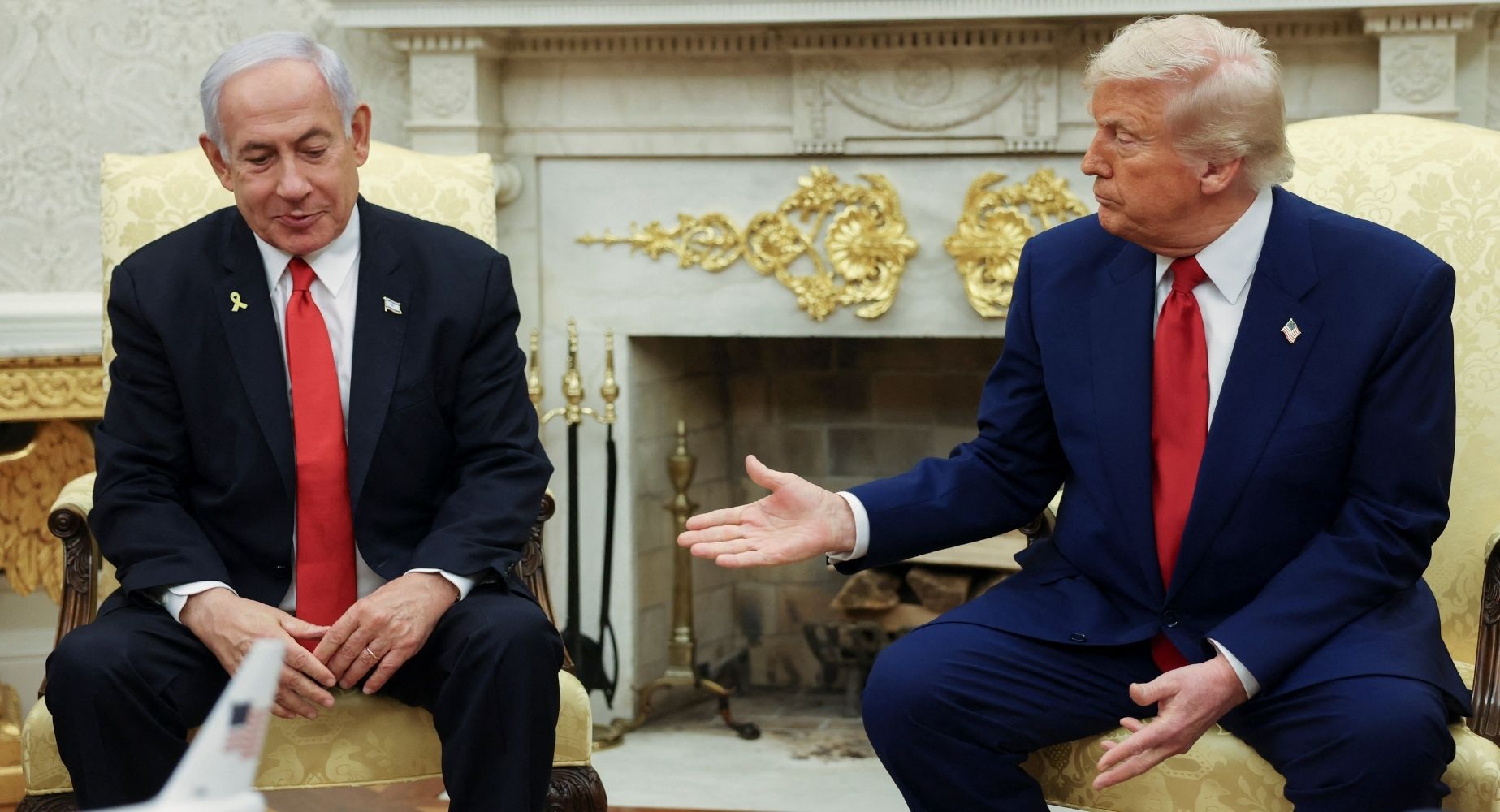
Netanyahu has characterized his rapport with Trump as “full coordination between us, no surprises,” but the hierarchy between them is explicit: Israel has been a junior partner to the U.S.-led effort. “They’ll do what I tell them,” Trump described his arrangement with the Israelis to Time Magazine. “They’ve been a good team player. They’ll stop when I stop.” The problem for Israel is that Trump, since his parameters for terminating the Iran mission reflect U.S. prerogatives, has compelled Netanyahu to desist from combat before achieving Israel’s own goals.
The strangling effect of Iranian aggression toward Israel—”Iran is fighting us on a seven-front war,” Netanyahu has expounded—has sustained a resounding majority of Israelis who still approve of the offensive and are prepared to suffer its fallout. That contrasts starkly with the 64 percent of Americans who believe that Trump was wrong “to go to war” with Tehran. For them, being less exposed than Israelis to Iranian assaults on their personal safety, the drawbacks of force deployment in that region far exceed its perceived advantages at present.
Trump’s pivot to a deal gives precedence to that negative sentiment and to considerations befitting the station of the U.S. as a superpower. The losses of American servicepersons and hardware, as well as the hefty price tag—estimated as “closer to $29” billion by the then-Pentagon comptroller on May 12—and rising inflation attached to the military action are forbidding deterrents. The administration has also been influenced by the havoc visited upon global markets and shipping routes and, pointedly, U.S. allies that are fearful of Iranian retaliation. After repeated entreaties from Arab rulers, including those whose kingdoms have been in Iran’s crosshairs, to halt the campaign, Trump informed a group of them on May 23 that “an Agreement has been largely negotiated.” (His assertion that a separate call with Netanyahu that day “went very well” rang false.)
What began with a display of overwhelming strength and bravado to bring Iran’s regime to heel has meandered reportedly if fitfully, toward an underwhelming accommodation: a memorandum of understanding that restores access to the Strait of Hormuz, with the U.S. lifting both its siege of Iranian ports and sanctions prohibiting Tehran from selling oil. Meanwhile, Iran, even as it denies relinquishing control of the Strait, will maintain its nuclear status quo, deferring discussion of all issues pertaining to its nuclear program and stockpile of highly enriched uranium—issues which were, arguably, the core motivation for Epic Fury—until the next, 60-day phase of the talks. The infusion of billions to its emptying coffers will supply sustenance for its terrorist clients. And the legitimacy of Iran’s Supreme Leader, about whom Trump once said “we have to make sure it’s somebody that’s reasonable to the United States,” and his theocracy survives intact.
None of this is heartening to Netanyahu, who told 60 Minutes in May that the war is “not over because there’s still nuclear material… to be taken out of Iran… still enrichment sites that have to be dismantled… proxies that Iran supports [and]… ballistic missiles that they still want to produce.” A plurality of Israelis, about two-thirds of whom think that “ending the war does not serve Israel’s security interests,” concur with him. Unfortunately for them, once Trump—who does not want a stalemate with Iran to cloud the upcoming U.S. midterms—declares the time for fighting over finally, Israel will find its hands tied. Trump will be reluctant to reengage kinetically and an emboldened Iran, flush with new resources and grievance, will be lying in wait.
Trapped Between a Rock and a Hard Place
Israel has no match for its collaborative alliance with Washington. The U.S.-sponsored Abraham Accords have advanced Israel’s integration into its home region. Amid escalating international hostility to Israel—a unanimous European Union voted to impose sanctions on Israeli settlement chiefs and groups on May 11, after Hungary withdrew its previous veto—the U.S. has also provided unrivalled material and diplomatic cover for Israel’s pursuit of its foes in Gaza, Lebanon, Iran and elsewhere. The future of that patronage is in serious doubt.
Notwithstanding his periodic appeals on behalf of a pardon for Netanyahu, Trump already has waning patience for Israel’s prime minister. “You’re f**king crazy,” a U.S. official summarized Trump’s words to Netanyahu on June 1. “You’d be in prison if it weren’t for me.” Tellingly, the president is exhibiting a degree of ambivalence toward Israel as well, interjecting to restrain the Israel Defense Forces from operating freely. Tehran has capitalized on that impediment to deepen its synergy with Hezbollah, which it seeks to insulate from Israeli reprisals.
More ominously, Trump has kept Netanyahu at arm’s length while the U.S. administration weighs sweeping concessions to Iran that could jeopardize Israel’s welfare and leave it with no recourse. The maneuverability that was available to Israel in 2015—when opponents of the Joint Comprehensive Plan of Action worked to mobilize kindred spirits on Capitol Hill—is gone. Trump wields ironclad discipline over his Republican caucus and his vindictiveness ensures zero tolerance for any lawmakers—or Israeli leaders—who resist him. Netanyahu “will do whatever I want him to” on Iran, Trump announced confidently on May 20. Whoever succeeds Trump in the White House will, in all likelihood, be even less sympathetic to Israel’s concerns.
Epic Fury catalyzed a watershed moment, driving the alienation of American public opinion from Israel. Suggestions that Netanyahu goaded Trump into challenging Iran have fed into a profoundly polarized debate, aggravated by social media, over the direction of the U.S.-Israel relationship. The fact that 91 percent of the U.S. electorate blames the steep rise in fuel prices on the Iran war has fixed their anger on those judged responsible. Thus, a Pew Research Center poll conducted this spring discovered that 49 percent of Americans over 50 hold somewhat or very unfavorable opinions of Israel, with that figure skyrocketing to 74 percent among the 18-34 age cohort. The trend away from identification with Israel is unambiguous and transcends partisan lines.
Multiple demographics within the divided Republican Party are increasingly critical of Israel. Members of its America First legion have led the charge. According to Tucker Carlson, a conservative commentator and frequent Oval Office visitor, Israel has “definitely lost its morality.” Steve Bannon, a former senior advisor to Trump, asserted after the June 2025 airstrikes against Iran that Israel “drew us into a war they knew they couldn’t finish” and should not be considered a U.S. ally. Their feelings are shared evidently by Trump’s non-MAGA voters, only 29 percent of whom told Politico in April that they “support Israel and approve of the actions of its current government.” Those voices will grow louder surely in the event of a poor Republican showing in the November election. Evangelical Christian backing for Israel has also diminished, with 69 percent of under-30 adherents who favored Israel to the Palestinians in 2018 falling to under 34 percent in 2021.
The outlook is even darker vis-à-vis the Democratic Party, where many accuse Netanyahu of sabotaging the Obama and Biden presidencies. A Quinnipiac University survey found last August that 77 percent of Democrats believe Israel committed genocide in Gaza. Comparisons of Israel to an apartheid state have migrated from the progressive fringes of the party into mainstream discourse. Those attitudes were manifest in the U.S. Senate on April 15, when 36 and 40 Democrats voted, respectively, to take up measures against the sale of BLU-110A/B bombs and Caterpillar bulldozers for use by the IDF. When the next U.S. president enters office in 2029—no matter which party he or she represents—Israel could be left to confront its existential problems alone.
Better Luck Next Time
Whether U.S. talks with Iran culminate in a comprehensive deal—in which Israel is guaranteed to have no faith—or the war resumes, “complete victory” will remain elusive. Nor can there be any expectation that Tehran’s Islamist regime will suddenly abandon its core ideology of annihilating both America and the Jewish state. In order to repel persistent threats from Iran and adjacent theaters, Israel needs urgently to boost its internal fortitude and external footing.
The first order of business for Israel—where an election is slated to be held in the coming months—is to optimize public cohesiveness and perseverance, as key components of its national security. Controversial reforms, which sparked mass protests prior to the war, and inflammatory speech are undermining the unified resolve of Israelis and should be jettisoned. Greater transparency and accountability within the executive and legislative branches will inspire confidence in government, which has faltered in its duty to protect and provide for its citizens in wartime. Tighter message discipline from Israeli officials will prevent the self-defeating effects of grandiose promises and irresponsible statements.
In parallel, Israel should take concrete steps to enhance its capability to prosecute battle. These should include the formation of a professional commission of inquiry to study—and more crucially, rectify—shortcomings of Israel’s political and military echelons which facilitated the October 2023 debacle. Augmenting the indigenous manufacture of essential munitions will expand Israel’s operational autonomy. Wholesale Haredi exemptions from conscription inflict a severe personnel deficit and devalue the sacrifice of Israelis who do perform IDF service. That policy should be replaced with an equitable system which enlarges the ranks and improves morale.
On the world stage, Israel’s ledger of good will—which cultivates the foreign relations that reinforce the country’s safety and prosperity—is in serious overdraft. Israel should invest toward maximum engagement, resorting to counter-boycotts in only extreme cases of intractable hostility to Israeli imperatives. Strengthening the rule of law to ensure unbiased enforcement, while simultaneously safeguarding minorities, will reduce friction with states that have denounced Israel’s record in these regards. An effort to complement its prowess on the battlefield with concerted diplomacy at the negotiating table will not only lock in hard-won gains by the IDF, but also validate Israel’s credentials as a peace-seeking nation.
Israel will need to manage its ties with the U.S.—its foremost benefactor—judiciously if it harbors hope of retaining its substantial support. Indications that Israel plans to scale down its receipt of direct military aid from the U.S., pivoting instead toward joint technological ventures, calibrate sensibly with prevailing disdain in Washington for foreign aid packages. As the spirit of bipartisanship flails violently, Israel should take pains to avoid appearances of playing favorites, which would only confirm its dubious standing as a premiere wedge between Republicans and Democrats. Maintaining productive dialogues on both sides of the aisle and demonstrating sensitivity for different viewpoints will help Israel to nurse its alliance with the U.S. back to health.
Closer to home, Israel should buttress its partnerships with other regional countries, many of which have been antagonized by Iran as well. Israel’s Gulf allies—with whom contacts have survived and even flourished throughout the war—should not be taken for granted. The publicity that Netanyahu gave to his apparent visit to the UAE in March, and which elicited an explicit denial from Abu Dhabi, was one example of an unhelpful intervention that could derail the Abraham Accords. It would be equally advisable for Israel to build bridges to additional neighbors, such as Saudi Arabia. The cost of difficult concessions on the Palestinian track for this purpose would be repaid to Israel multifold through a new, coordinated response to the primary threat of Iran. Israel’s nightmare scenario might thus be averted, even if the dream of “complete victory” never comes to fruition.