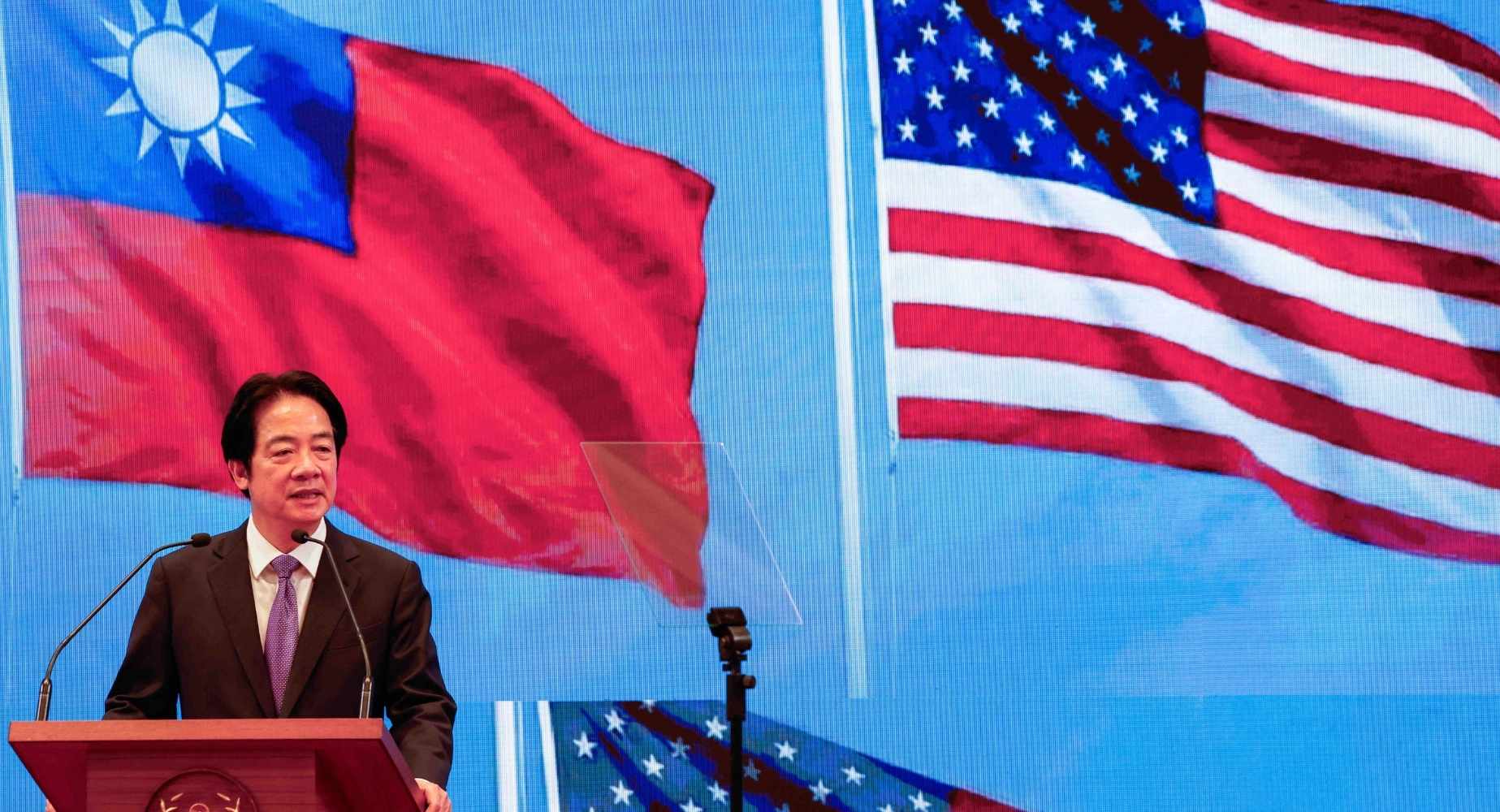
What is Taiwan to the United States? Is the security of that beleaguered island a peripheral issue for the US, in which the stakes would be too low to risk nuclear escalation in a fight with China? Or does the defense of Taiwan bear directly on the American way of life?
The answers to these questions could shape the future of US nuclear force posture and nonproliferation policy. If the stakes riding on Taiwan are not high for the US, then it might make sense for Washington to pull back its nuclear umbrella from regional allies like Japan and South Korea and encourage them to build their own nuclear weapons. But if the stakes are indeed high enough to run grave risks, then Washington should reinforce its nuclear forces to reassure allies of America’s support and discourage friendly proliferation.
To address these questions, some analysts have suggested that Taiwan is not Berlin—that is, Taiwan is not worth the enormous risks that Washington ran to preserve West Berlin outside of the Soviet orbit during the Cold War. But this analogy gets things backward: Taiwan is even more important to the US than Berlin was, not less. And given the potential implications of this analogy for US nuclear force posture and nonproliferation policy, it deserves closer scrutiny.
During the Cold War, successive American presidents risked nuclear war to keep the free half of Berlin free. Sitting nearly 100 miles inside the heart of the Soviet empire in Eastern Europe, West Berlin stood as a beacon of freedom whose loss would undermine America’s leadership of the Free World. And though American presidents understood that the divided city was an indefensible albatross—indeed, one that in narrow military terms made more sense to offload than to defend—they repeatedly risked nuclear escalation to preserve its integrity. As a political symbol of the US commitment to Western Europe, the city was just too important to lose.
This explains why President Harry Truman launched a 15-month, round-the-clock airlift after Joseph Stalin blocked the land routes into Berlin. It explains why President Dwight Eisenhower insisted during the Berlin crisis of 1958 that the US must be willing “to push its whole stack of chips into the pot.” And it explains why, when the Soviets tried to squeeze the city for a third time in 1961, President John F. Kennedy called 148,000 reservists to active duty. Indeed, in the event that the crisis spiraled into general warfare, Kennedy’s advisors even developed a nuclear “first strike” plan to destroy the Soviets’ nuclear retaliatory force.
But Taiwan is no Berlin. In the Cold War, NATO may well have survived the loss of West Berlin in one form or another because the US remained Western Europe’s only counterweight to Soviet aggression. What’s more, the alliance would have become more defensible post-Berlin, as a Berlin contingency was the only scenario in which NATO would have had to mount a suicidal conventional offensive deep into the Soviet bloc. Losing Taiwan, by contrast, would make America’s alliance system in East Asia less defensible, maybe even untenable. It would signal a calamitous political and military defeat for the US.
In narrow military terms, a Beijing-dominated Taiwan would be devastating for America’s forward position in East Asia. It would allow Chinese attack submarines to base out of the island’s Pacific-facing coast and more readily choke off America’s maritime access to Japan and the Philippines. Beijing basing sensors, air forces, and air-defense assets on Taiwan would do the same while threatening America’s ability to conduct its own air operations in support of allies. Thus, even if Taiwan fell by means other than brute force, America’s forward position in East Asia would be far more precarious than it is today. Over time, the US military might even find itself boxed out of the region altogether.
In political terms, a Beijing-dominated Taiwan would leave Japan and the Philippines in the darkening shadow of a predatory Leninist regime. The loss of Taiwan might therefore lead Tokyo and Manila to accommodate China and create distance between them and Washington. Both allies might come to doubt the wisdom of relying on US support, and this tension could deal a fatal blow to transpacific relations over time. Years down the road, an America shorn of allies might even find itself on the back foot in waters closer to home. By that point, Beijing will have pulled the Asia-Pacific into its orbit and restructured the region’s political economy to serve its interests.
The US should adjust its nuclear force posture to reflect America’s immense stakes in Taiwan. If Washington is ill-prepared to face down nuclear threats in a Berlin-type crisis, Beijing might be emboldened to provoke one in the first place. Anxious allies, moreover, might take their nuclear defense into their own hands and develop independent nuclear weapons, which would divert badly needed resources away from improving their respective conventional forces. Friendly proliferation would also increase the risk of inadvertent escalation should a standoff over Taiwan occur. A more crowded nuclear world, after all, is one in which there are more nuclear triggers and more pathways to nuclear use.
Right now, China fields nuclear-capable missiles that can hold all of East Asia hostage, yet the US deploys no offsetting regional capability. This asymmetry might convince Beijing that the US nuclear umbrella is uncoupled from its allies and that the region is safe for both crisis risk-taking and conventional war-making. To offset China’s regional nuclear advantage and reassure its allies of the US security guarantee, Washington should ensure that its next-generation nuclear-armed sea-launched cruise missile, now in development, deploys at the earliest possible date. Washington should also explore the feasibility of a theater-range hypersonic missile that could conduct conventional and nuclear operations from Guam. And if Tokyo is interested in a nuclear-sharing arrangement—in which the US maintains custody of its nuclear weapons in peacetime, but transfers them to allies in crisis or wartime—Japan could operate dual-capable hypersonic missiles from that island.
Taiwan is of immense importance to America’s security and prosperity. It is for this reason that Washington should broaden its regional nuclear options and discourage the friendly proliferation of nuclear weapons. Analogies to the Cold War are valuable not because the stakes between Taiwan and Berlin are the same, but because they are different: the stakes are even higher in today’s new cold war with China.