Twelve lessons on how (not) to fight evil
Recently, Russia carried out yet another series of attacks on the cities all over Ukraine – from Lviv to Sumy and from Kyiv to Odesa killing dozens of civilians. In the village of Radushne in the central Ukraine one Russian missile killed three generations of a family, including seven children and one toddler. With failures on the battlefield and driven by specific geopolitical shifts, the Kremlin has intensified its campaign of civilian terror.
The threat extends far beyond Ukraine. Russia in its aggression against Ukraine has formed Moscow-Tehran-Pyongyang axis of evil which already poses an existential challenge to Western security. Should one more Asian capital join this row, the danger will become critical. Especially, considering the depletion of the U.S. military stockpiles due to the war in Iran – long awaited step by totalitarian states. The West can no longer afford hesitation; it must internalize the lessons of Ukraine and decisively prepare for the broader confrontation ahead.
Surviving the winter
This year, Ukrainians have survived one of the harshest winters ever. A surge in Russian strikes began in November 2024 following the U.S. presidential election. Weaponizing severe frosts, Moscow targeted energy infrastructure, leaving millions without heat, electricity, or water. Over three winter months, missile and drone attacks killed at least 500 civilians, including nearly 100 children.
There were two major reasons why Ukrainians were brought on the verge of survival this winter – and the civilized world still hasn’t found a recipe to deal with either of them. The first one is the weather – it was the coldest winter since the Russian full-scale invasion. The second one is the Russia itself, which became even more aggressive in its genocidal war on Ukraine.
However, there were other factors, both externally and internally, which on the one hand, aggravated the situation and on the other – helped Ukraine survive.
External Drivers: Four Escalating Factors
- Termination of the U.S. soft power. USAID has played a crucial role in a broad variety of sectors, including in strengthening infrastructure (the number of generators along supplied in the first years of the Russian full-scale aggression was over 1,600, of cogeneration units – over 90), establishing anti-corruption institutions, empowering local governments and civil society fighting for integrity in the country from national to local levels. No surprise that the dismantlement of the USAID was widely celebrated not only in the Kremlin, but by corrupt officials all over Ukraine. In response, those were European governments and grassroot initiatives – who stepped in to fill the vacuum by delivering generators and funding civic programs.
- Termination of the U.S. hard power. American assistance under Joe Biden was far from sufficient for the Ukraine’s victory, but crucial for the country’s survival. While the numbers of this assistance differ due to their complicated process of allocation (most of this money stayed in the US covering expenditures for the weapons sent to Ukraine), we are talking here about up to $120 billion. Under Donald Trump this amount fell to… almost zero. Washington has still provided weapons to Ukraine, but under purely commercial approach and those were – once again – European countries who have saved the situation paying for these weapons under PURL initiative. For example, the European countries covered from 70% to 90% of all air defense ammunition, including PAC-3 missiles for Patriots, paying critical role in shielding Ukrainian cities.
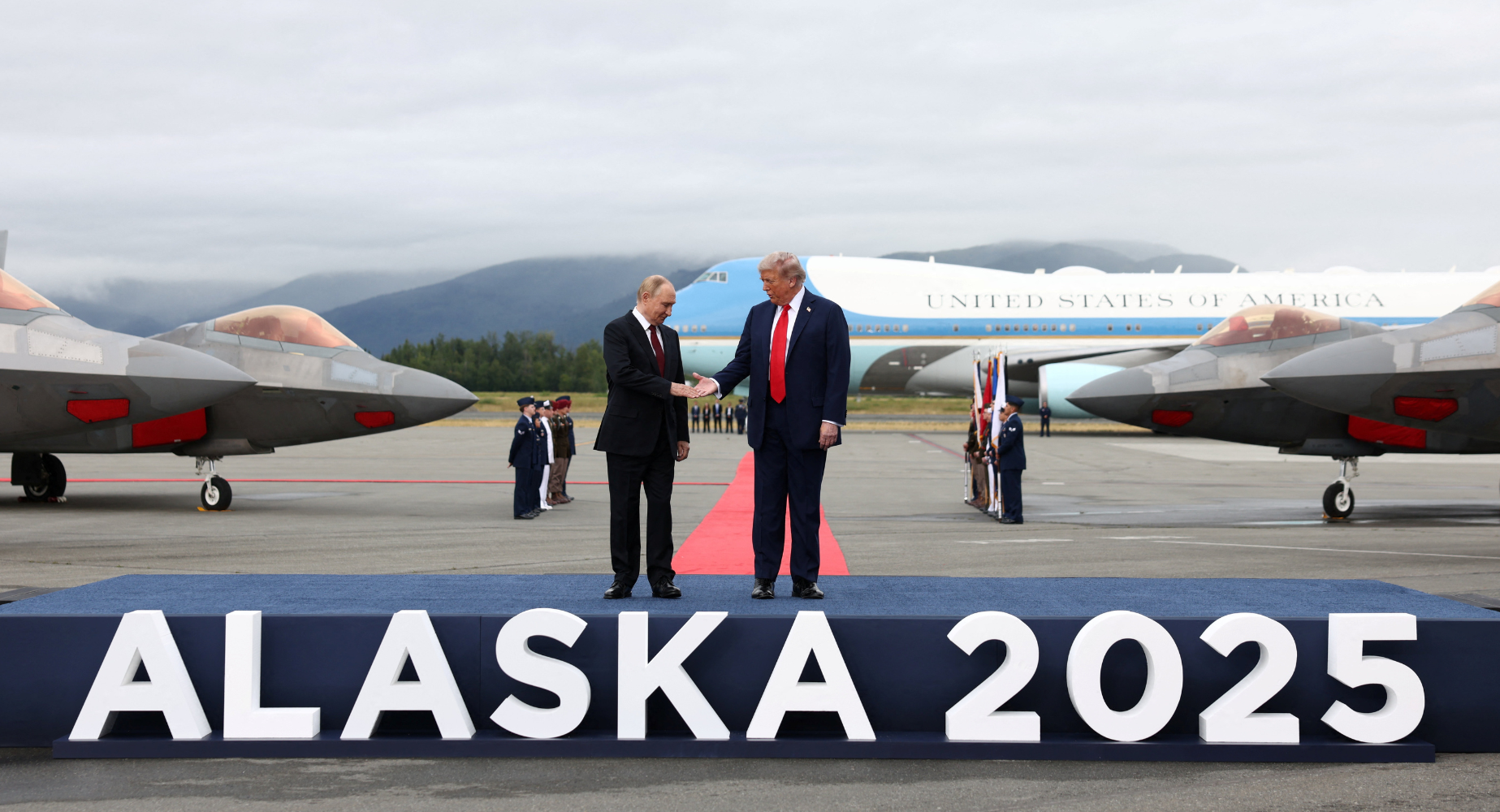
- The spirit of Anchorage. The humiliating red carpet layout on the American soil before the war criminal and dictator Vladimir Putin became another huge victory for Moscow and a symbol of the new epoch. It de-isolated the Kremlin from communication with only authoritarian countries and send a signal that the Russian atrocities can be accepted in the West.
- Sanctions relief. While sanctions on Russia under Joe Biden presidency were weak, they were still slowly but gradually ruining the Russian economy. The partial lifting of sanctions by Donald Trump provided the Kremlin with renewed capital to fund the ongoing aggression.
Internal Lessons: Four Pillars of Domestic Resilience
- Military defense. The Armed Forces of Ukraine served as the primary shield against total infrastructure destruction. The country’s booming defense sector has become another factor of resilience.
- Infrastructure decentralization. Centralized heat and power plants remain vulnerable, predictable targets while decentralized systems proved essential. Kyiv is a great example here – right bank of the city, heated by nearly 200 localized boiler houses, fared far better than the left bank, where the destruction of two major heat and power plants left tens of thousands of households without heating for weeks during the coldest period of winter.
- Local governance. Decentralization, one of the most successful reforms carried out after the Revolution of Dignity, redistributed many powers and competences from the central to local level. It has helped strengthen capacity of local communities which played crucial role in overcoming consequences of the Russian attacks.
- Institutional integrity. Big money often attracts big corruption. This was the case in Ukraine when millions of citizens sitting without heating and electricity were shocked to learn about the corruption on the highest level of authorities exactly in the energy and defense sectors. Fortunately, following the Revolution of Dignity Ukraine established one of the most elaborate systems of anti-corruption institutions in the world which have been supported since by civil society and numerous Ukrainians who rallied in their defense. This system hasn’t helped yet to eradicate the corruption completely, but they managed to reveal and stop the most outrageous corruption schemes.
Thus, here are major lessons for the West: investing in defense capabilities and incorporating Ukraine’s operational insights; developing decentralized infrastructure; strengthening local communities and civil society; and securing institutional transparency and integrity which have a direct link to the national defense.
Four Imperatives for Lasting Peace
Vladimir Putin has viewed the Anchorage message as an opportunity to expand his imperialistic war. The next winter might become even more difficult for Ukrainians. And the threat is much broader. The Russian missile which landed recently less than 50 km from the Polish city of Lublin can be only first step in the Kremlin’s warfare on the EU and NATO. To avoid the worst-case scenario, the West should strongly stick to the following rules:
- Reject appeasement. The civilized world should have learnt this lesson some 90 years ago when steps to satisfy imperialistic whims of one dictator, in particular, by ceding lands of other countries resulted in the Second World War. Today, we observe attempts to repeat those shameful pages of the world history with potentially much more horrific consequences.
- Apply the force. It has been over 1,640 days of the Russian ‘three-day special military operation’ to occupy Ukraine. There is one major reason why Ukraine is still standing – the refusal of Ukrainians to be subjugated and strong response to the Russian invasion from the Armed Forces Ukraine. The language of force is the only language the aggressor understands. Moscow has repeatedly threatened with the harshest reaction for the Ukraine’s resilience, including nuclear attacks, on many occasions – if Western tanks or F-16 jets are supplied to Ukraine, if the Ukrainian Army crosses the border or if the Russian territory is attacked by air from Ukraine. Had Ukrainians fallen to this blackmail, the country would be already mostly occupied. Instead, Ukraine received almost all possible types of weapons from the West, the Armed Forces of Ukraine were present for nine months in the Kursk region of the Russian Federation and Kyiv is attacking the Russian territory daily thousands of kilometers deep. This is the reason of the failure of the so-called Russian ‘special military operation’, not the weakness which would have had quite the opposite results.
- Secure unity and sanity. The Kremlin is working hard in both directions – securing unity of the authoritarian countries and sowing discord in democracies resulting in the rise of the extremist parties – whether right- or left-wing – as well as anti-Ukrainian sentiments and xenophobia. In the face of the existential threat, the civilized world must secure unity and sanity of their political elites.
- Pave the road to sustainable peace. The history teaches us that Russia – whether it was called The Russian Empire, USSR, or Russian Federation – has always been an empire with aggressive expansion being an essence of its existence. Giving up Ukrainian territories will become a signal for Moscow to continue and broaden its expansion. Moreover, if Russia after this war remains in its current borders – it will be only a matter of time when the empire attacks again and the next victim will not necessarily be Ukraine. Thus, by reaching some kind of ceasefire agreement we may solve the situation for the nearest future but leave the problem for our children. The approach to the solution should be uncompromised, bold and clear – just like demonstrated by the Armed Forces of Ukraine. The West should abandon its fears and taboos and work on the only sustainable solution – decolonization of the Russian empire through cooperation with pro-independence movements of the captive nations and regions of the Russian Federation to reach the win-win-win scenario.
- Geopolitical win eliminates a persistent existential threat from the Russian empire to international stability.
- Freedom win enables captive nations to restore their identity and build normal independent states.
- Economic win establishes direct commercial ties with newly independent states, bypassing the central extraction of wealth used to fund Moscow’s corrupt regime and its imperial warfare.
Ukraine has already demonstrated that scenarios once deemed impossible are entirely achievable. To avert a global catastrophe and build sustainable peace, the civilized world must act on these lessons now. The ultimate question remains: who will step forward to lead – a hesitant United States, a newly rearming Europe, or Ukraine itself, the hardened champion on the front lines of freedom?