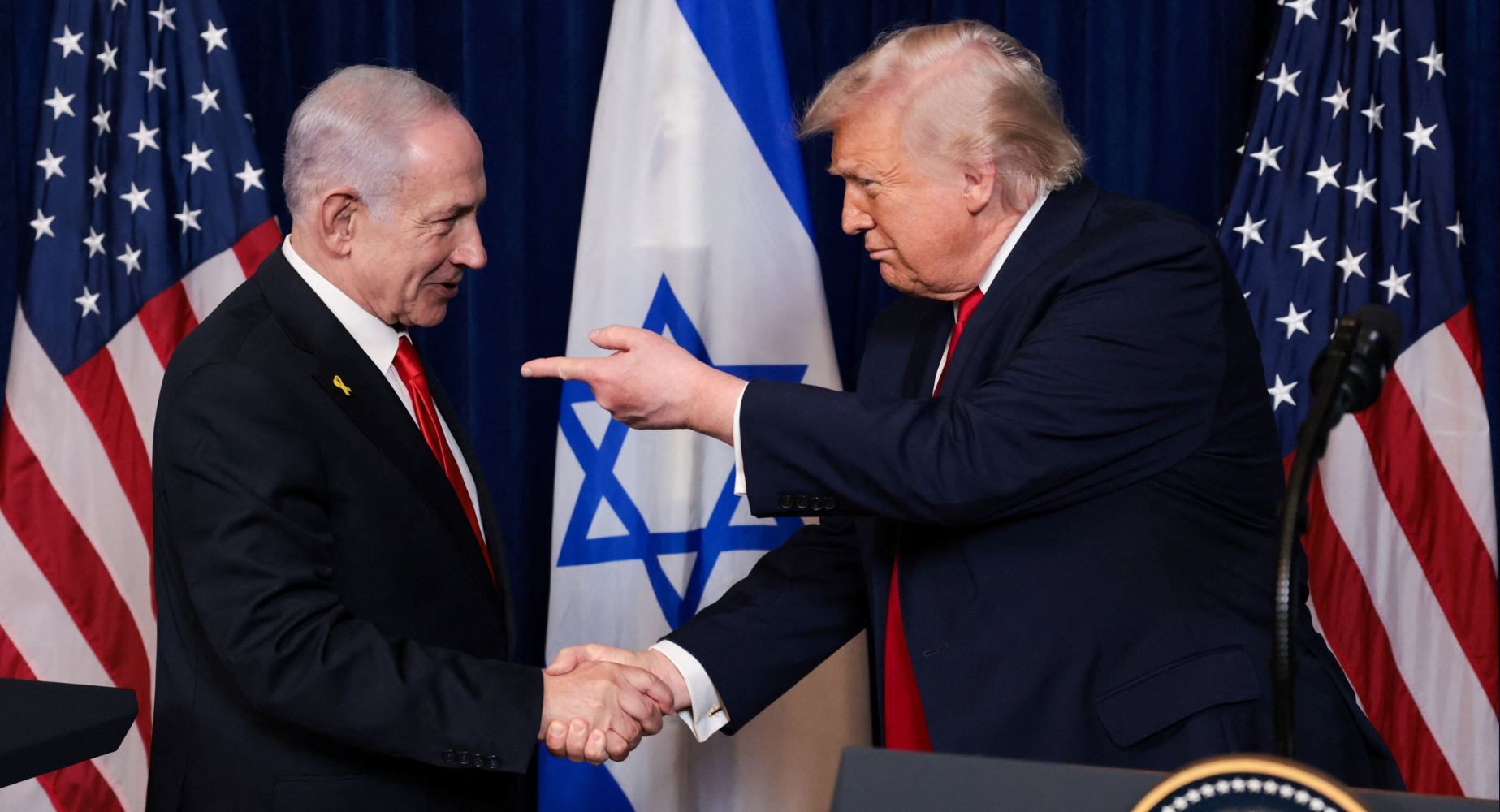
The result of the US midterm elections – as well as the manner and timing of President Donald Trump’s announcement that he agreed with Prime Minister Binyamin Netanyahu to terminate the financial aid package to Israel – have changed the dynamics of the special relationship: it is still there, but Israel’s public and political standing in America has been significantly degraded. Vice President J.D. Vance was quick to ascribe the Republican collapse, at least in part, to the position towards Israel. This must alert all Israelis in policy positions to the danger of further erosion: it requires a systematic rethinking of current policies and positions, and need to have a bearing on the efforts to put together a new government after the latest, inconclusive elections. The “Genocide” lie needs to be actively refuted; Israel’s traditional strategy of bipartisanship in Washington must be resurrected; the alienation of American Jewry needs to be reconsidered; and the case for going after Iran’s nuclear ambitions should be restated in terms that do not bear the stamp of personal and political interests.
The Rout and its Roots
Though not entirely unexpected, the results of the American midterm elections – and the timing and manner of President Donald Trump’s announcement he would terminate the financial aid package to Israel – did come as a multi-faceted shock to Israelis across the political spectrum. In combination, these developments changed the nature of the special relationship overnight. This reflects a profound sea change in American political realities. Overt hostility towards Israel, tinged by distinctive anti-Semitic tropes – which not so long ago would have fatally ruined a candidate’s career – became normative in some races. Indeed, Trump’s announcement, on the very day of the midterm elections, came to be seen as a bid to fend off the onslaught by the likes of Abdul el-Sayed, the Senator-elect from Michigan (suspected in Egypt of harboring Muslim Brotherhood sympathies) rallying against the aid package as “taking away food form our children”.
While the “blue wave” favored also many moderate (and Jewish) Democrats, it was the anti-Israeli narrative that seemed to dominate the discourse. Worse, it was given currency by Vice President J.D. Vance, who counted the war in Iran and the position towards Israel as cardinal reason for the Republicans’ rout (while fending off any suggestion that excessive anti-migrant measures, close to his heart, had anything to do with it). In a span of two years, since the 2024 election, Israel’s political stockin America – to quote a blunt phrase by a keen Israeli observer of US policy, Kobby Barda – went from golden to garbage.
Four reasons can be said to be at the root of this rout:
- Careless language on Gaza: In terms of Israel’s image and standing, aspects of the government’s conduct bear some of the responsibility for the ability of the lie about “genocide” to take hold, even beyond the confines of radical progressives and campus mayhem. War is hell, all the more so against a large terror organization hiding among civilians. The suffering in Gaza is real. But this was already true back in 2024, a year into the war, with none of the present political damage evident in the American political scene. Thus, the burst of anti-Israel sentiments, in America (and Europe), can largely be attributed to what happened since then: namely, to certain short-term actions and to reckless statements by members of Israel’s ruling coalition, particularly in the early months of 2025. These have fed the accusation of deliberate starvation and genocidal intent, even when reality on the ground did not sustain such accusations, In fact, today’s practices are quite different than the imagery of starvation: there is an institutional structure bringing together Israeli, American, Arab and European officers and officials (the CMCC, now renamed the International Gaza Support Center) which works from Israeli soil and ensures daily supplies. Initial efforts are underway to implement UNSCR 2803. But not enough has been done, to say the least, to undo the damage and turn around public perceptions. More recently, rampages by radical Israeli nationalists in the West Bank added further fuel to the fires already burning.
- In part, at least, some of the most careless statements on Gaza – their timing was indicative, coming shortly after the Trump Administration took office – reflected a sense by some within the governing coalition that Israel may be enjoying an unprecedented level of unconditional support from the President Trump (if not always from all in his administration). Moreover, it seemed for a while as if his ideas about the future Gaza may chime with those of nationalist Israelis. Then came the American decision to join Israel in striking Iran, first in June 2025 (“Midnight Hammer”) against the nuclear facilities) and then in close coordination in “Roaring Lion/ Epic Fury” in 2026. The Netanyahu government abandoned the traditional care taken by Israel to maintain bipartisanship as a basis of policy in Washington. In the early stages of the war, Israel still appealed to both sides: in response to the horrors of October 7, more 400 Representatives from both sides of the aisle in the House voted to express support and solidarity. But as it pinned its colors to Trump’s banners, and used this in Israeli domestic politics, the Israeli Government was drawn deep into the American political game at a critical junction – amidst one of the most polarized campaigns in history.
- This in itself put many American Jews in an uncomfortable position, with a distinct majority among them traditionally attached to the Democratic Party. While often attached to Israel by ties of personal and communal links, friendship and family, they found it difficult to process the images generated by the war, and equally difficult to hear Israelis eulogizing Trump. But in addition to these strains, the Israeli governing coalition – with the two Ultra-Orthodox parties holding the balance of power in the Knesset – took up positions that amounted to a rejection of the legitimacy of the Jewish non-Orthodox denominations – Reform and Conservative. The annulment in 2016 of an agreement already concluded with their leaders – to assign these movements their own place of prayer near the Wailing Wall with the government’s approval – can be seen as a watershed event: an act, it was said at the time, akin (for Israel) to sawing off the branch it was sitting on.
- Finally and decisively, on Iran, neither the Israeli government nor the Trump Administration managed to translate into bipartisan (and global) support what should have been the straightforward case that the regime in Tehran, which has butchered its own people in January 2026, must be broken or at least forced to give up its nuclear ambitions. Clearly (as the editorial page of the JST regularly strove to explain), an Iranian break to the bomb constitutes an active threat to all Americans and to the world at large – insofar as it would ignite a global firestorm of proliferation which could endanger all life on earth. Instead, it was made to look like an combination of a Trump caprice and an Israeli parochial (or worse, political) concern. Following the horrors of January 2026, action against Iran should have been as legitimate as was action against Iraq’s invasion of Kuwait in 1991, or against Qadhafi’s brutality in 2011. But neither the Israeli nor the American leadership were able to shed off impact of polarization and build bridges of understanding as to why it was vital to stop Iran at this time.
What Can be Done?
These lessons should have a bearing on the composition and purpose of the new Israeli government, if a path can indeed be found (given the inconclusive nature of the election results on October 27) to the creation of a stable coalition. They should also inform the policies of any future government. In practice, this must involve the following corrective measures and policies:
- Striving with the US to energize the efforts to implement UNSCR 2803, so that alongside the vital need for security in Israel’s border areas (which the resolution acknowledged), and for the disarming of Hamas, work is also being done to offer people in Gaza a better future, with new construction, a reformed education system, healthcare and economic opportunities.
- In the same vein, firm action needs to be taken to rein in, and punish, those elements who rampage against Palestinians in their homes and fields in Judea and Samaria, challenging governance and ruining Israel’s reputation and standing worldwide.
- Restoring – almost resurrecting the dead… – true bipartisanship in Congress, based on the replacement of the Foreign Military Financing package with other, cooperative and mutually beneficial modes of cooperation, military and civilian (under the SPA – Special Partnership Act – of 2013); and giving new meanings to the US obligation, under law, to sustain Israel’s Qualitative Military Edge. While some anti-Israeli firebrands are bound to be heard more loudly than ever, the abolition of the FMF should go a long way (as indeed it was meant to do) towards neutralizing their pressure: and neither Hakeem Jeffries nor Chuck Schumer – while often critical of Israeli policies – are hostile to the very essence of the special relationship (notably, African Americans have been less likely to be swayed by wild anti-Israeli rhetoric; whereas Schumer has long seen himself as a friend of Israel, albeit a worried one).
- In this context, working to build new bridges with the major components of American Jewry: the strategy of relying instead on the Evangelist communities proved to be an insufficient guarantee of support. This would require, in turn, and adjustment of internal attitudes in Israel towards the non-Orthodox denominations.
- Finally, if Iran still needs to be stopped by force from going for the bomb, the case should be made not by political voices which have grown suspect, but by the professional authorities – from the intelligence community to the IAEA – who can truly convey what is at stake. If as a result of internal divisions, in America and Israel, this challenge will remain unresolved, the world is bound to become a much more dangerous place for all.