Grand Strategy has been elegantly defined by John Lewis Gaddis and others as the dynamic relationship between national goals – which can aim high – and the constraint of resources, which are always finite. For the leaders of Israel in its younger years, essentially seeking the stability necessary for resurrecting an ancient but dispersed nation, this has come to be represented by a short, sharp (and for some in the West, almost unpronounceable) triad: Harta’ah, Hatra’ah, Hachra’ah – Deterrence, Early Warning, and a Decisive Outcome. The first meant that Israel’s enemies should think twice before they challenge it on the battlefield; the second meant that any plan to do so anyway should be detected well ahead so that a reserve-based military could be put on alert; and the third – that such an army must win a victory quickly and overwhelmingly so as to be able to release the reserves back to their place in the fast-growing economy.
The goals were straightforward – sheer survival, in what was assumed to be an inherently hostile environment. However, the tools were more complex and nuanced. Deterrence is essentially a psychological construct in the mind of an adversary. Early Warning, while resting upon Israel’s impressive intelligence collection, ultimately relies on the interpretation of an adversary’s intentions, and hence on highly subjective factors; and a «victory» can easily emerge as the most elusive of the three, when faced with an adversary whose notions of what constitutes «victory» are very different than ours. Thus, 59 years ago, Israel’s crowning military achievement – the dramatic result of the Six Day War – was actually the consequence first of a failure to deter the Fatah terrorists and their Syrian backers, and then the failure to predict Gamal Abd al-Nasser’s adventurist foray into Sinai. Moreover, despite the utter defeat of three Arab armies, the «decisive outcome» (Hachra’ah) did not prevent Nasser from resuming warfare along the Suez Canal not long afterwards. The War of Attrition was then followed in 1973 by an Egyptian and Syrian offensive, once again casting doubts about all three pillars of the national defense.
Thus, in recent decades, several more grand strategy pillars were added to the edifice – supplementing, not replacing, the first three. Israel came to rely, in varying degrees, upon an informal but firm alliance with a superpower – the United States – with their cooperation culminating in the Epic Fury/ Roaring Lion combined arms operations in 2026. For this to be possible, Israel also took to the regional diplomatic field, signing peace treaties with Egypt in 1979, Jordan in 1994, and the Abraham Accords partners (UAE, Bahrain, Morocco) in 2020. If in the 1950s it was the periphery of the region that Israel sought to befriend – the Shah’s Iran, Kemalist Turkey, the Ethiopian monarchy – the strategic pillar of alliance and alignment is now firmly based on key relationships at the heart of the region.
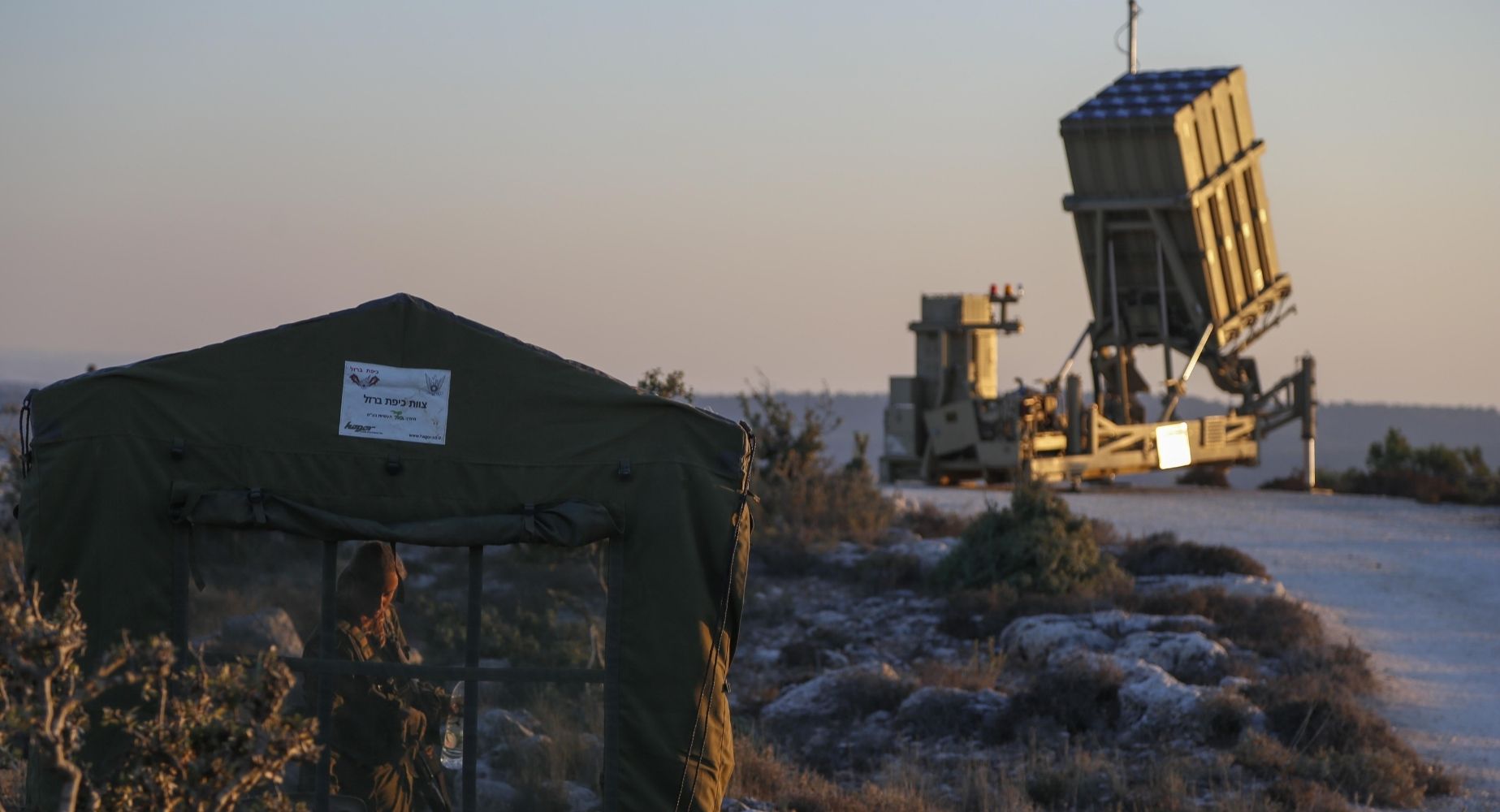
Another pillar, long neglected but now vital (not least, because of the bitter lessons of 7 October 2023) is Hagana, defensive measures: most significantly, since 2012, the use of the layers of missile defense (Iron Dome, David’s Sling, Arrow) to foil attacks. Israel had taken measures to block penetration through tunnels: and yet it turned out to be frighteningly easy for the marauders to breach the Gaza border defenses. It is therefore necessary at this stage for the IDF to build up stronger defensive positions on all active borders, both within the Gaza Strip and in the North, to neutralize such threats.
As October 7 proved, technological superiority is not the answer to all challenges: but it does constitute at this point in history a pillar of primary importance for Israel’s future. It is based on a remarkable synergy between national security interests and the stronger points of a surging national economy, driven by high technology and rising to the first rank of international leaders in a number of key fields. Contrary to the predictions of scholars, the defense effort did not sink the Israeli economy – it lifted it.
A final, seventh pillar, established in 1981 by then Prime Minister Menachem Begin when Israel struck Saddam Hussein’s nuclear project (and thus referred to as the begin Doctrine), is the determination to prevent Israel’s committed enemies from ever having a military nuclear capability. This was implemented against Bashar Assad’s Syria in 2007, and is now at the center of the ongoing campaign against Iran, including the Rising Lion Operation in June 2025 (joined by the US Midnight Hammer at its last stage) and then in the war launched by both Israel and America on 28 February 2026.
There are clearly elements of continuity for Israel’s decision makers now looking into the future. Deterrence is still the ultimate goal. Early warning, or more broadly, intelligence dominance, remains an existential requirement. Hamas, Hizbollah and Iran were dealt heavy blows, although the notion of «absolute victory» remains as elusive as ever. Defences have been improved. At the level of military cooperation – as well as the civilian-military coordination on the humanitarian conditions in Gaza – the IDF is working more closely than ever with its American counterparts. Advanced technology still gives Israel not only a strategic edge, but also a massive position in the fast-growing global market for military procurement.
And yet when all components of Israel’s complex new realities, largely generated by the three years of war and by the world’s responses to them, are put together, it is clear that the nation is in dire need of re-tooling its grand strategy. The next government – since Israel faces a decisive parliamentary election this fall – would need to break old patterns, adjusting its goals to its emerging resources, and its tools of implementation to the new challenges.
Above all, Israel now shoulders a transformative role in regional affairs. It is not a «hegemonic power», as some Israelis fancy themselves to be, and some regional enemies allege it seeks to be – but it is certainly a strong catalyst for change and a firm friend to those who stand with it. To carry this forward, further weakening the Iranian regime (and fatally wounding it, at some point down the road?), and at the same time deterring other would-be Islamist forces, Israel must shed off the assumptions about a stabilized region, and focus on sustaining a powerful profile for years to come.
This, in turn, involves three interconnected changes in foundational policies:
1. At the level of external relations, the time has come (as Prime Minister Binyamin Netanyahu has openly stated several times in recent months), Israel – with a GDP per capita higher than Japan of even Germany and a remarkably robust inflow of dollars, driving the Shekel up – to shed off gradually the dependence on the US taxpayer and the annual Foreign military Financing. This would also alleviate the complexities generated by the rise on the far edges of both left and right in US politics of a virulent anti-Israeli chorus.
2. In terms of regional policy – which by necessity includes attitudes towards the unresolved Palestinian question – Israel may need to alter its present course, which if carried through may well reduce or even preclude a future solution: and as it prepares to end Hamas rule in Gaza, by force if necessary, it needs to attend to the need for legitimate and workable alternatives.
3. All this requires a much broader national consensus, as well as a new disposition in terms of burden sharing. Ben-Gurion built a military based on rapid mobilization of the reserves – but also on equally rapid de-mobilization once «hachra’ah», decisive outcome, has been achieved. Since 2023, however, reservists have been serving for prolonged periods, some killed, many wounded, and the country is swept by anger over the refusal of one specific (large and growing) segment of society – the «Haredi», ultra-Orthodox – to even contemplate military service.

Thus, whatever the specific outcome of the fall elections (one is reminded of both Niels Bohr’s adage – «prediction is very difficult, especially if it’s about the future» – and Prime Minister Harold Wilson of Britain’s assessment that «A week is a long time in politics»), the present political and strategic set-up in Israel would need to change. Recent disagreements with President Trump over Lebanon, retaliation, and a possible deal with the IRGC regime in Iran point to the need to accelerate the process of reducing dependence upon the US (but still seeking to enhance coordination with it). On the Palestinian front, a strategically oriented coalition government may feel obliged to modify some of the present team’s practices. And internally, it seems increasingly impossible to keep in the same harness political parties which represent those who serve and sacrifice (the modern Orthodox sector more than most) alongside those who represent the sector that refuses to do so.