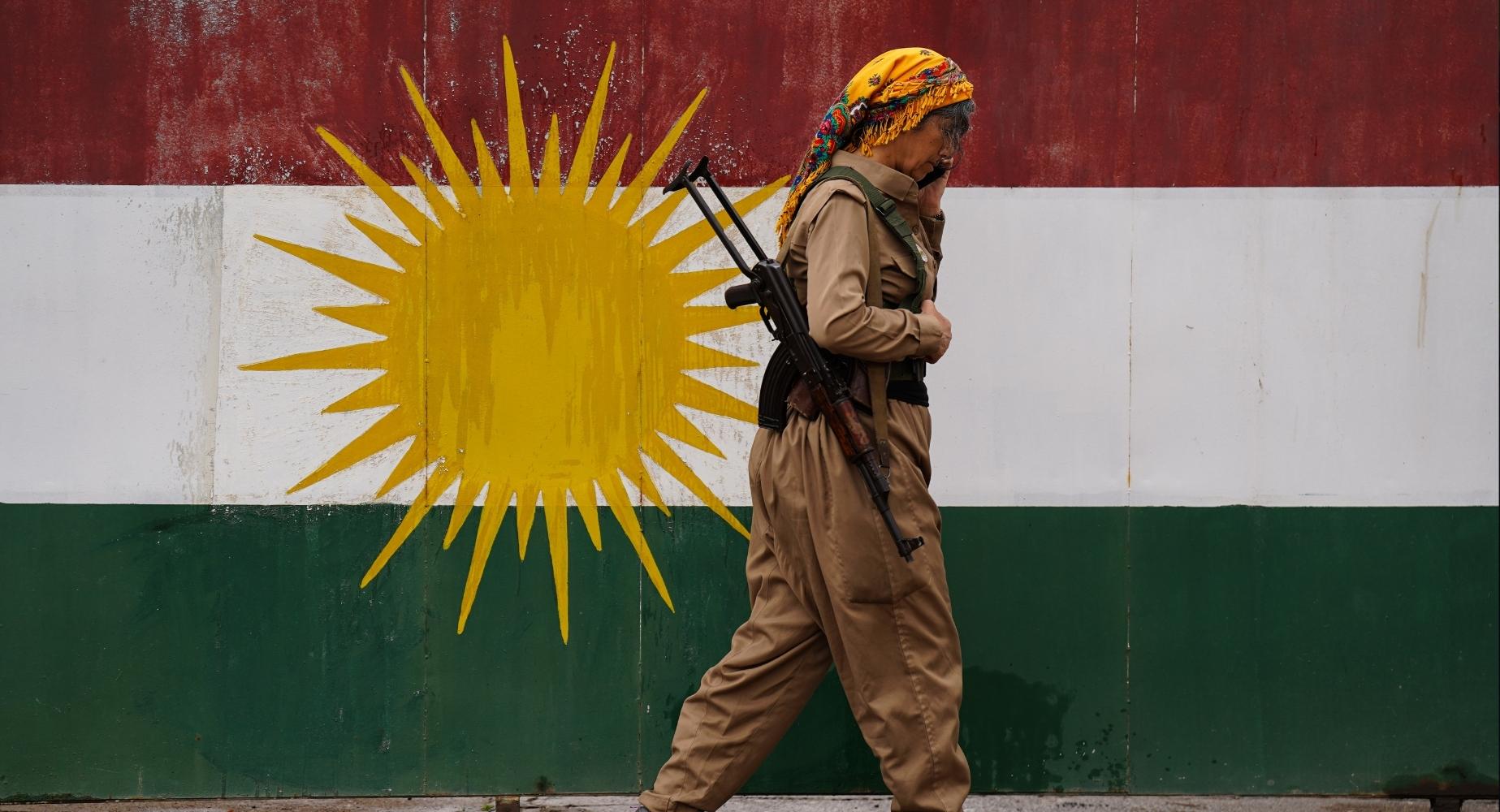
Media attention has recently focused on Kurdish fighters from various armed factions with different political views and their potential battle against the clerical regime in Iran. However, many observers barely reflect realities on the ground, ignoring Kurdish agency, perspectives, and expectations. To address these, the Kurdish Forum at the Moshe Dayan Center (MDC) and the Alliance Center for Iranian Studies at Tel Aviv University hosted a webinar last week with leading Iranian Kurdish figures, including General Hussein Yazdanpana of the Kurdistan Freedom Party (PAK), Ahvan Ciako of the Kurdistan Free Life Party (PJAK), and Fariba Mohammadi of the Komala Tailor Organization. Despite several attempts from Turkey to cancel the event over alleged links between Kurdish representatives and the Kurdistan Workers’ Party (PKK), the MDC director rejected this intervention, reaffirming the center’s autonomy and academic commitment to dialogue. The Kurdish speakers shared their views on challenging the clerical regime, envisioning a post-Islamist era and potential collaboration with the U.S. and Israel. For her part, Dr. Liora Hendelman-Baavur, senior research associate at the Alliance Center for Iranian Studies, stressed that the Kurds are a central part of Iran’s democratic challenge. However, portraying the Kurds solely as a ground force against the regime ignores the significant divisions among various Kurdish factions. This portrayal not only shifts the burden of conflict escalation onto Kurdish civilians but also reinforces the security narrative that Tehran employs to justify its repressive measures. In light of these concerns, the Kurdish speakers emphasized their proactive policies, the formation of a new coalition, and their inclusive approach to engaging with various Iranian populations. These mechanisms aim to promote unity and address the grievances of all ethnic groups affected by the regime’s repression.
Throughout their history, Kurds have stood at the crossroads of competing Ottomans and Qajars, as well as modern nation-states and external powers. In all these cases, Kurds have repeatedly been used as “boots on the ground,” only to be abandoned when their strategic value declined. The latest example of such a case is that of Rojava Kurdistan in Syria. Despite its decisive role against ISIS, the Kurdish forces there were abandoned when global powers aligned with anti-Kurdish actors. Consequently, the Kurds’ inability to maintain territorial and military advantages by January 2026 has rendered their future in Syria uncertain. Nevertheless, there is one case where the Kurdish national movement did succeed in turning tactical alliances into lasting political gains, namely the Kurds of Iraq. They have managed to establish strong autonomy in post-Saddam Iraq. In the war that is raging now in Iran, the Kurdish forces are once again under scrutiny, with American and Israeli policymakers considering their potential role against the Mullah regime. Yet it remains unclear how Kurdish actors will navigate their way in either a case of a regime collapse or its survival. Given their history of abandonment, the Kurds remain cautious, but they also recognize the strategic opportunities arising from the current weakening of the regime.
The Kurdish Position on the Islamic Regime
Kurdish representatives unanimously reject the Iranian regime as illegitimate, citing decades of repression and marginalization, especially towards women and minoritized populations. They also highlighted systemic corruption, arguing that public resources have been diverted to finance proxies abroad, expand missile capabilities, and advance the nuclear program, rather than address the Iranian needs. In their views, the regime has failed to respond to economic hardship and popular grievances while violently repressing the Iranian masses. They noted that Kurds, who have been denied cultural, linguistic, and democratic rights, seek self-determination. With thousands of experienced fighters, Kurdish forces present themselves as defenders of their own cause and contributors to a broader democratic struggle in Iran. Acknowledging past division, the Kurdish representatives emphasized their efforts to overcome fragmentation. In response to Kurdish demands for unity, they outlined their national alliance and a common vision for a decentralized, federal, and democratic Iran. All three speakers said that Kurds would seek local self-governance while participating in an inclusive governance in Tehran.
Potential Collaboration with the U.S. and Israel
All speakers stated the willingness of Iran`s Kurds to cooperate with the U.S. and Israel in countering the regime. As for Israel, they highlighted the shared historical experiences of persecution faced by Kurds and Jews and argued that such cooperation could contribute to democratization in Iran and the broader Middle East, in line with the spirit of the Abraham Accords. When speaking on possible cooperation with the U.S., they stressed that it must be both strategic and practical. They underscored the need for adequate military support to enable Kurdish forces to operate effectively and protect civilians, including access to advanced defensive technologies, such as anti-drone systems, as well as the establishment of a no-fly zone. These measures, they argued, are essential not only for confronting regime forces but also for preventing retaliatory attacks against Kurdish civilians. They also stressed the importance of securing formal political recognition for Kurdish rights in any post-regime settlement. At the same time, they firmly rejected accusations of separatism, which they view as narratives used by both the Iranian regime and certain monarchist factions under Reza Pahlavi to delegitimize their demands. Their goal is not secession but meaningful inclusion within a democratic framework. They also made clear that they do not support replacing the current regime with another authoritarian system, such as a nationalistic monarchy, that reproduces similar patterns of repression. Concurrently, they warned of external threats, particularly from Turkey, whose policies toward Kurdish groups could escalate tensions and undermine stability in the region, especially against the background of Ankara’s close ties with Tehran.
The Role of Kurdish Forces in a Post-Regime Iran
Evaluating the speakers’ addresses and reflecting on the historical experiences of the Kurdish people leads to several conclusions. First, Kurdish forces have consistently proven to be reliable and pragmatic partners. Given their organizational capacity, territorial presence, and long-standing role in resistance movements, they are well-positioned not only to challenge the regime in peripheral regions but also to catalyze broader mobilization across Iran. Second, their role should be understood not only in military terms but also as a potential driver of political transformation. Kurdish leverage extends beyond “boots on the ground” to shaping future power structures in ways that could prevent the re-emergence of centralized authoritarianism. Third, meaningful engagement by the United States and Israel is crucial, not only to counter the current regime while minimizing harm to civilians, but also to shape the “day after.” For Israel in particular, Kurdish advances carry strategic significance, given the geographic position of Kurdish regions at the intersection of hostile regimes and territories that have historically enabled both Shiite and Sunni militant networks targeting Israel. Without credible partnerships, Kurdish actors, especially after their recent experience in Rojava, will approach external powers with caution to avoid the risk of renewed marginalization and potential massacres. Finally, a stable post-regime Iran will require genuine democratization that recognizes the political agency of Kurds and other minoritized populations, which together constitute tens of millions. Ensuring their representation and rights is not only a matter of justice but also essential for a democratic and stable Iran. Without such arrangements, a power vacuum could lead to instability, fragmentation, or even civil war, threatening both Iran’s territorial integrity and broader regional security.