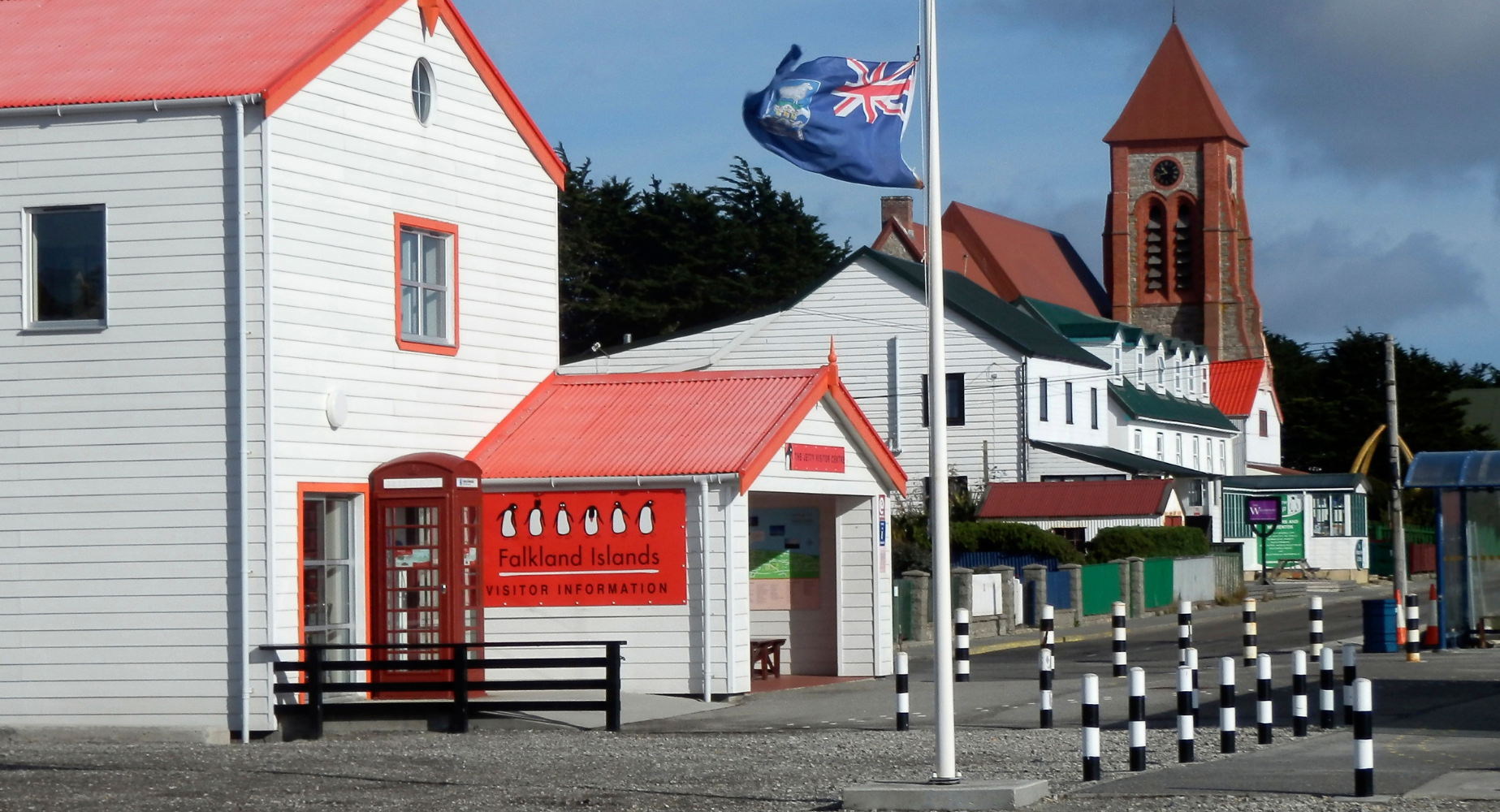
In a world with no shortage of hotspots, the Falklands Islands have surprisingly reappeared as a point of international tension. Argentine President Javier Milei, who until recently had largely avoided raising this longstanding point of grievance, has returned to this rebarbative theme as his popularity wanes and he contemplates a tough campaign for reelection.
Milei appears to be encouraged by remarks made by President Trump, who, aggrieved by British reluctance to support his actions against Iran, has suggested that he might move away from the traditional U.S. neutrality on the issue of sovereignty over the Islands, which had long been under British rule—with the exception of a 74 day-long failed Argentine occupation in 1982. He has even offered to “settle” the dispute.
The issue has resurfaced even as a British-Israeli consortium looks to begin extracting oil from fields off the Islands; Milei is imposing sanctions against any firm assisting it—a not completely idle threat as Argentina itself is becoming a significant oil producer and user of related services. But the prospect of any military action remains remote, given the poor shape of Argentina’s armed forces (although much the same can be said about Britain’s).
Milei and Trump Discover the Issue
The Argentine decision to raise the issue of the Falklands (known as the “Malvinas” in Argentine parlance) has roots both in Buenos Aires and Washington. Milei, almost three years into his four year term, has faced political headwinds resulting from his implementation of tough spending cuts—an approach which he himself has dubbed the “chainsaw”—in an effort to bring down chronic deficits and inflation. While he gained praise from the International Monetary Fund and the U.S. Treasury, and at least initially, from Argentines themselves, his standing with the public has begun to suffer of late.
Good macroeconomic numbers, aided by Argentina’s emergence as one of Latin America’s leading oil producers, have yet to translate into more jobs and spending power. Milei has also been dogged by a corruption scandal involving his former chief of staff, whom he was slow to dismiss. This too has proved costly to his popularity, which now hovers around 35 percent. In this environment, he and his political aides have been casting around for ways to boost his standing.
Meanwhile, statements regarding the Islands unexpectedly have begun to bubble up within the U.S. government. On April 24, it was reported that Under Secretary of Defense Elbridge Colby had produced a memorandum suggesting that the United States’ policy of not taking a position regarding sovereignty over the Islands be reviewed, in response to Britain’s lack of support for its actions against Iran.
Then on August 28, Britain’s Daily Telegraph reported that a senior Defense Department official had raised this prospect again, this time linking it to Britain’s defense spending levels. This came as British Prime Minister Andy Burnham has announced that expenditures on “core” defense will rise to 3.5 of gross domestic product by 2035 as per NATO commitments, although it is not clear to what degree Britain will be increasing spending in the shorter term.
When first asked by a reporter about the Islands, Trump responded ambiguously, merely stating on August 31 that he always reviewed “every position” and that this issue was “one of many.” Then, on September 3, when a British journalist asked again about this issue, he turned to the Britain’s failure to support American military action against Iran, saying: “Your country was not there to help me,” creating the impression of a linkage between the two concerns.
And on September 12, while in Ireland, he went further, expressing doubts about Britain’s will to defend the Islands as it had in 1982, and suggesting that he would be “called in” to deal with the issue and would be able to “settle it out.” Unsurprisingly, the prospect that the United States might change its long held views was eagerly received in Argentina, where it led to banner headlines.
And even before Trump’s last comment, Milei went public in a September 3 televised speech on the Islands. Firmly reiterating Argentina’s claim, he noted that the United States was assessing its “historical position” regarding the Islands, and that Argentina was a “reliable partner and valuable ally.” He asserted that Britain “faced multiple crises on multiple fronts.” while Argentina was returning to prosperity under his leadership and was in a position to take diplomatic and economic steps to press its claim.
He raised the plans of a British-Israeli consortium to begin producing oil in waters off the Islands and said that any firm which assisted them would be subject to Argentine sanctions. (He subsequently even went so far as to announce that he would seek criminal charges against the consortium’s two member companies, although it is not clear how Argentina’s courts will treat such a case.). Milei also announced that funding would be made available for a long stalled project to construct a naval base at Ushuaia in Argentina’s far south, 400 miles from the Islands.
If his goal was to move national debate away from Argentina’s economic woes, it was a success, at least for a few days, as he received near universal praise from all elements of society. This marked a break from his past approach where he had played down the issue, stressing that there was “no instant solution” and even expressing hope that the Islanders would voluntarily join Argentina as it became more prosperous.
Black Gold in Cold Waters
To the extent that that there is any genuine urgency in Milei’s decision to raise the sovereignty issue (beyond his immediate need to divert attention away from his political difficulties), it is derived from the prospect of the Islands becoming an oil producer of some significance. A consortium consisting of British independent oil company Rockhopper Exploration (named for a penguin native to the Islands) and its Israeli partner Navitas Petroleum (which holds the majority share) are now preparing to go into production by early 2028 in the “Sea Lion” field 132 miles north of the Islands, twenty-two years after exploration first began.
The wealth that would flow from oil royalties could assure the economic self-sufficiency which the Islands’ 3,465 inhabitants seek, especially as overfishing by Spanish vessels has led authorities to suspend licenses to harvest squid, which in the past had been a principal source of income. With oil money coming in they would have little economic incentive ever to accept any transition to Argentine sovereignty, which Britain has made clear repeatedly will not happen without their consent.
By imposing sanctions on any company which seeks to provide services to the consortium Argentina is seeking to use the main economic tool at its disposal. It has become an oil producer of importance in recent years as the deposits in its “Vaca Muerta” shale formation have come on line, with 2026 production possibly averaging as much as one million barrels per day. The three global oil services companies, SLB (formerly Schlumberger), Haliburton, and Baker-Hughes, all present in Argentina, have promised to stay away from the Sea Lion field. However, the British-Israeli consortium has insisted that it will be able to go forward with its operations.
At one level Milei’s decision to go after the consortium is surprising given that one of its members, Navitas, is an Israeli firm. Milei has made clear his support for Israel which he has visited repeatedly since taking office and has characterized as a “strategic ally” of Argentina, with “shared values.” He has named his personal spiritual advisor, an Argentine rabbi, as ambassador to Israel and has announced plans (not yet implemented) to move his country’s embassy from Tel Aviv to Jerusalem. But it seems that in this case his desire to use the Falklands issue to rebuild his domestic political position has trumped his otherwise strong affinity for Israel.
War?
Both the Argentine and British positions are heavily conditioned by the 1982 war in which Argentina’s military government, facing severe economic and social pressures, mounted an invasion of the Islands under the mistaken assumption that Britain, having abandoned almost all of its empire, would not seek to recover them by force. However, Britain pulled together a task force of 127 ships which it sent 8,000 miles to the South Atlantic and was able to expel the Argentine occupiers. However, Argentine aviators were able to sink several British ships, endangering the operation.
Their successes remain a point of pride for Argentines despite the overall disaster of the invasion. And Britain, having paid in lives and treasure to uphold the Islanders’ right to remain under its sovereignty, is politically unable to abandon them. There have been periods in which tensions have eased, with Argentina pursuing policies which somewhat heavy-handedly had sought to woo the Islanders into accepting some kind of formula for a change in sovereignty. But these have alternated with ones, such as is the case at present, in which for domestic purposes, its demands are more crudely maintained.
Could this latest ratcheting up of tensions lead to a repeat of the 1982 war? It seems highly implausible. While Argentines revere those who died fighting and support their country’s sovereignty claim, there is no public interest in repeating this ill-fated adventure, while Milei has been clear that he is pursuing Argentina’s claim through diplomatic and economic means. And the reality is that Argentina’s armed forces are far weaker than they were forty-four years ago. Its army has shrunk to 35,000 men, two thirds of its size in 1982, while its navy consists of three aging destroyers and six corvettes with no aircraft carriers or functional submarines.
It has, however, begun to rebuild its air force, having taken delivery of six used F-16 Fighting Falcon fighters from Denmark, with eighteen more yet to arrive. Britain has four Eurofighter Typhoons on the Islands which should be able to meet any near term threat, but as more F-16s arrive in Argentina in the next few years, it may have to consider the unwelcome prospect of stationing more Typhoons.
But in the unlikely event that Argentina could gain air superiority and then transport an invasion force to the Islands, Britain might have difficulties in sending a task force to retake them despite the fact that its overall military spending far outstrips Argentina’s. Its navy, like Argentina’s, is far smaller than it was in 1982. While it has two relatively new aircraft carriers, they have been prone to breakdowns and issues with aircraft and weapons systems. Britain’s submarine force is similarly troubled, with all of its attack submarines currently under repair.
And although a rebuilding program is underway, it suffers from a shortage of the surface vessels which would be needed to screen its carriers. (It recently had to call upon French naval support when its base in Cyprus faced an attack from an Iranian-made drone.) And it should also be remembered that in 1982 Britain enjoyed intelligence and logistical support from the United States; given Trump’s recent statements, this cannot be taken for granted.
Regional Rumblings
Milei’s decision to raise the issue of the Islands anew also has regional implications. Although Latin American countries generally support Argentina’s sovereignty claim, their own commercial interests often take priority. A new maritime cargo route between Punta Arenas in far southern Chile and the Islands is supposed to begin in November. This raises the question as to whether Punta Arenas at some point could become a staging point to supply material in support of oil production in the waters off the Islands. (Comparable issues may arise regarding Montevideo, Uruguay, which Spanish vessels fishing in waters off the Islands have occasionally used despite a Mercosur ban on such activities.)
Also, even as the Falklands issue gains salience, Argentina’s relations with Chile are facing friction regarding the two countries’ far southern maritime borders. While the island of Tierra del Fuego is divided between Argentine and Chilean territory, under a 1984 agreement, the Strait of Magellan, which separates it from the South American mainland, is defined as Chilean territory up to its eastern end. Nonetheless, the head of the Argentine Air Force has suggested that the Strait was a matter of “sovereignty” and that Argentina was “bi-oceanic,” a remark that was echoed by Argentina’s foreign minister. Subsequently, the Argentine government was obliged to reiterate its commitment to the treaty.
Admittedly, events in the far South Atlantic, be they regarding the Falklands or the Strait of Magellan, do not compare in current significance with those in such locales as the Persian Gulf, the Red Sea or even the Panama Canal (regarding which Trump has shown great interest). And, as is so often the case, it is impossible to say how serious Trump’s recent interventions were.
But in an ever more turbulent world, no area seems too remote to have strategic importance. We have already seen how the Arctic, once considered relatively exempt from great power competition, has received a new focus with Russia’s Northern Sea Route opening, China declaring itself a “near-Arctic” state, and Trump coveting Greenland.
Might we see something comparable in the far end of the southern hemisphere? Chile, Argentina, and the Falkland Islands are all relatively close to Antarctica. (Punta Arenas and Ushuaia are already used to support scientific bases there as well as burgeoning tourism to the continent.) And both fishing and potentially oil production suggest that this part of the world may gain greater economic importance.
For now there is some breathing space, as mineral resource activity in Antarctica itself is prohibited under the 1991 Environmental Protocol to the 1959 Antarctic Treaty; however, the Protocol could be subject to review in 2048. Argentina, Chile and Britain all have overlapping territorial claims there, although they are now held in abeyance. Other states with claims include Australia, France, New Zealand and Norway. And while the U.S., Russia, and China make no claims—for now—they maintain scientific bases there.
While the diplomatic sniping which has gone back and forth regarding the Falklands and the Strait of Magellan falls well short of a major international crisis, it may prove to be a harbinger of more serious tensions in the far south of the world, with potential for great power involvement.