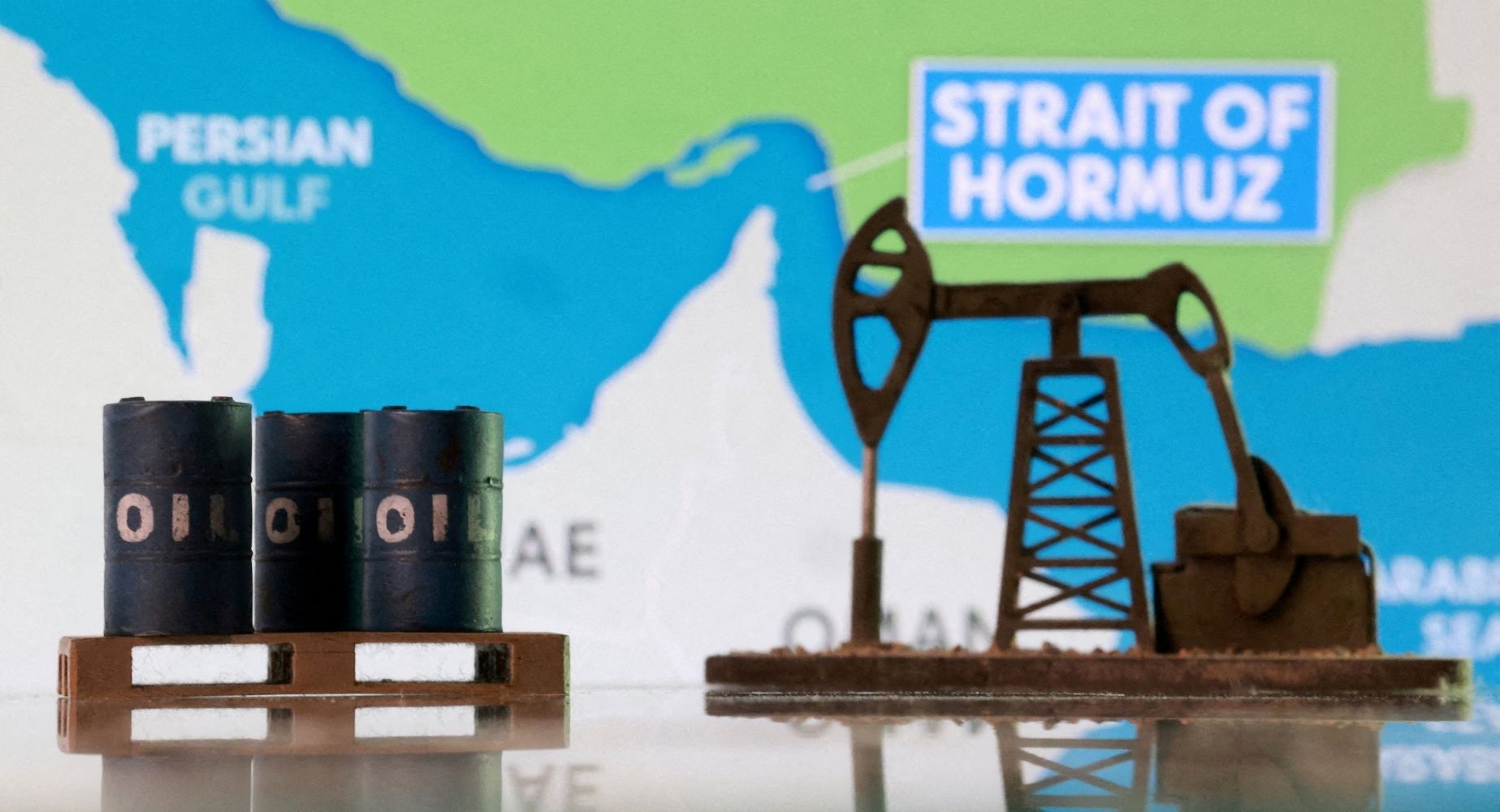
“Oil will be coming down … it went up a little but less than we thought. It’s going to come down more than anybody understands,” said a confident Donald Trump earlier this month, following news that the 32 members of the International Energy Agency (IEA) have agreed to release 400 million barrels of oil from their collective national reserves to compensate for the de facto block that the war with Iran has clamped on traffic through the Strait of Hormuz. That strategically important waterway accounts for the transit of about 20 percent of the world’s oil.
Iran’s counterstrikes have ravaged production facilities across the Gulf and produced scary images of tankers bursting into flames, with a total of 18 vessels hit – but none sunk – as of March 12 but no reported strikes since that date. Only a few maverick vessels have ventured through Hormuz, apparently undeterred by Iranian military action and unconstrained by corporate fears of loss or damage, though Iran has said that some vessels may proceed subject to certain conditions.
Many geopolitical analysts and media personalities – especially those old enough to remember the prolonged oil crisis of the 1970s and the surge in prices that resulted from the Iraq War – have embraced panic, fueling fears that the war will be the ever riskier and more expensive long-haul commitment. Some suggest that Trump may simply walk away from the conflict without meaningful resolution while energy prices, consumer costs, and inflation spiral to disastrous levels and tank his party in November. Disrupting energy supplies and forcing up prices appear to be the only viable form of resistance left to Iran. In his first statement since being installed as Iran’s new Supreme Leader, Mojtaba Khamenei declared that Hormuz will remain closed as a “tool to pressure the enemy.” Markets have been volatile. On March 9, the per-barrel price of crude oil spiked to nearly $120 in intraday trading before paring down dramatically. Iranian attacks on several more tankers and a lack of enthusiasm about the oil reserve releases drove the price of crude back up to nearly $100 by March 13, with anticipation that it would soon exceed $100. Gas prices are correspondingly higher throughout the world. An Iranian military spokesman claimed on March 10 that oil could soar as high as $200 per barrel and blamed U.S. action for having “destabilized” the region. Western analysts suggest that escalation – including a possible seizure of Kharg island, from which Iran exports almost all of its oil, would lead to further spikes.
The international left and its media accomplices gloat that the energy crisis – and strikingly not the wider war or the potential nuclear implications that in significant part caused it – could prove Trump’s final comeuppance. Failing to control the flow of energy, their hopeful argument goes, would defeat his attempt to topple Iran’s regime while his campaign promises to control inflation and address “affordability” will languish in the eight months leading up the 2026 midterms. Heavy Republican losses – a likely outcome if energy prices continue to soar – would turn over legislative initiative to the Democrats, block Republican attempts to codify their policies in law, and allow Democrat majorities to open investigations and possible prosecutions of the president and his allies, measures many Democrat officials have promised. In practical terms, the energy crisis alone could thus reduce Trump to a hamstrung presidency before he permanently exits elective office in 2029 and damage Republican hopes to hold the presidency thereafter. Vulnerable Republican incumbents in Congress are already reportedly fretting and calling for an off-ramp to hostilities, while nativist far-right Republicans who disclaim any foreign military operations are brimming with “I told you so” admonitions.
None of these critical camps is correct. Those haunted by ghosts of energy crises past would do well to stop cowering under their afghans and realize that the world energy map of 2026 is radically different from what it was in 1973, 1979, 2003, or even 2024. As was the case under Trump’s first administration, the U.S. has again reemerged as the world’s largest oil producer, a distinction it had last held in the 1940s. Since 2020, it has been the world’s largest net exporter of oil, with some analyses suggesting it achieved energy independence as early as 2013.
With vast domestic production now under way, regulations and other government impediment dramatically down, emergency supplies restored to pre-Joe Biden levels, and de facto control of Venezuelan oil, Gulfi oil politics just don’t hit the same, as the kids say. During the 1970s, when OPEC slashed production and key suppliers embargoed oil sales, prices spiked sixfold. After the Iraq War, the price of oil ballooned fivefold. In the first two years of the Biden administration, the per-barrel price of crude doubled. In all cases – none of which involved any disruption of oil flows out of the Persian Gulf – those top prices, adjusted for inflation, far exceeded anything we see now or are likely to see long-term. Even accounting for the closure of Hormuz and the Iranian attacks, a forecast by the U.S. Energy Information Agency released on March 10 predicted that crude would return to pre-conflict prices by late summer and then slope further down through the rest of 2026 and 2027.
The impressive-sounding volume of oil that IEA countries have pledged to release will only cover only about a quarter of the product bottled up by the hostilities, but additional releases are expected to come unilaterally from other nations. In an agreement made in February and augmented after hostilities began in March, OPEC agreed to increase oil production by about 11 million barrels per month. The U.S., meanwhile, is collecting tens of millions of barrels of Venezuelan oil in de facto tribute from that country’s seemingly compliant post-Maduro leadership, and U.S. oil companies will likely see the full or nearly full restoration of nationalized oil concessions there. Further measures to compensate for the frozen Persian Gulf oil shipments include a $20 billion wartime insurance program announced by the White House to encourage resumed shipments, a doubling of the amount of oil already flowing through pipelines that connect Gulfi oil fields to Saudi and Emirati ports beyond Hormuz, and a relaxation of sanctions against Russian energy exports that is already underway. India, notably, now has a U.S.-issued waiver to buy embargoed Russian energy products without consequences, while Trump has removed restrictions on the sale of Russian oil already dispatched on the high seas. U.S. gas prices are up about 30%, to $3.91 per gallon according to AAA as of March 20, but still range considerably lower than under Biden, when they reached an all-time high of $5.02, in the absence of war with Iran.
Following a broad G7 nation commitment to provide naval escorts to the tankers holed up in the Persian Gulf, French President Emmanuel Macron has ordered much of his country’s navy, including its only aircraft carrier, to take on that duty, while at least six other nations have answered Trump’s call to “come and help us” reopen Hormuz. The Trump administration has said that the U.S. will shift warships to convoy duty by the end of March, though other comments suggest this could happen sooner. News of the multinational effort fueled a U.S. stock market rally on March 16, accompanied by a three percent drop in oil prices.
In the intervening time, American forces will remain focused on combat operations, which continue to blast Iranian military assets of all types, with naval assets and drone and missile launchers featuring as prime targets, along with Iran’s remaining leaders and command-and-control facilities. According to CENTCOM commander Admiral Bradley Cooper, as of this week Iran had lost over 120 naval vessels, including at least 16 minelayers that could have seeded the Strait of Hormuz with potentially lethal explosive devices. In the first days of the war, U.S. strikes also destroyed Iran’s naval headquarters at Bandar Abbas. An estimated 60 to 90 percent of Iran’s land-based missile launchers have been destroyed, with the number of daily missile and drone attacks down by over 90% since Iran’s launched large-scale retaliatory strikes on the first day of the conflict.
Despite the headlines captured by the 18 international vessels Iran has so far succeeded in damaging, they make up less than two percent of the approximately 1,000 vessels holding position until friendly navies arrive to escort them through Hormuz, until Iran’s offensive capabilities are completely neutralized, or, it should not be ruled out, until Iran’s regime collapses or capitulates. In any of these eventualities, the Strait of Hormuz will become the world’s safest waterway and the world will only benefit.