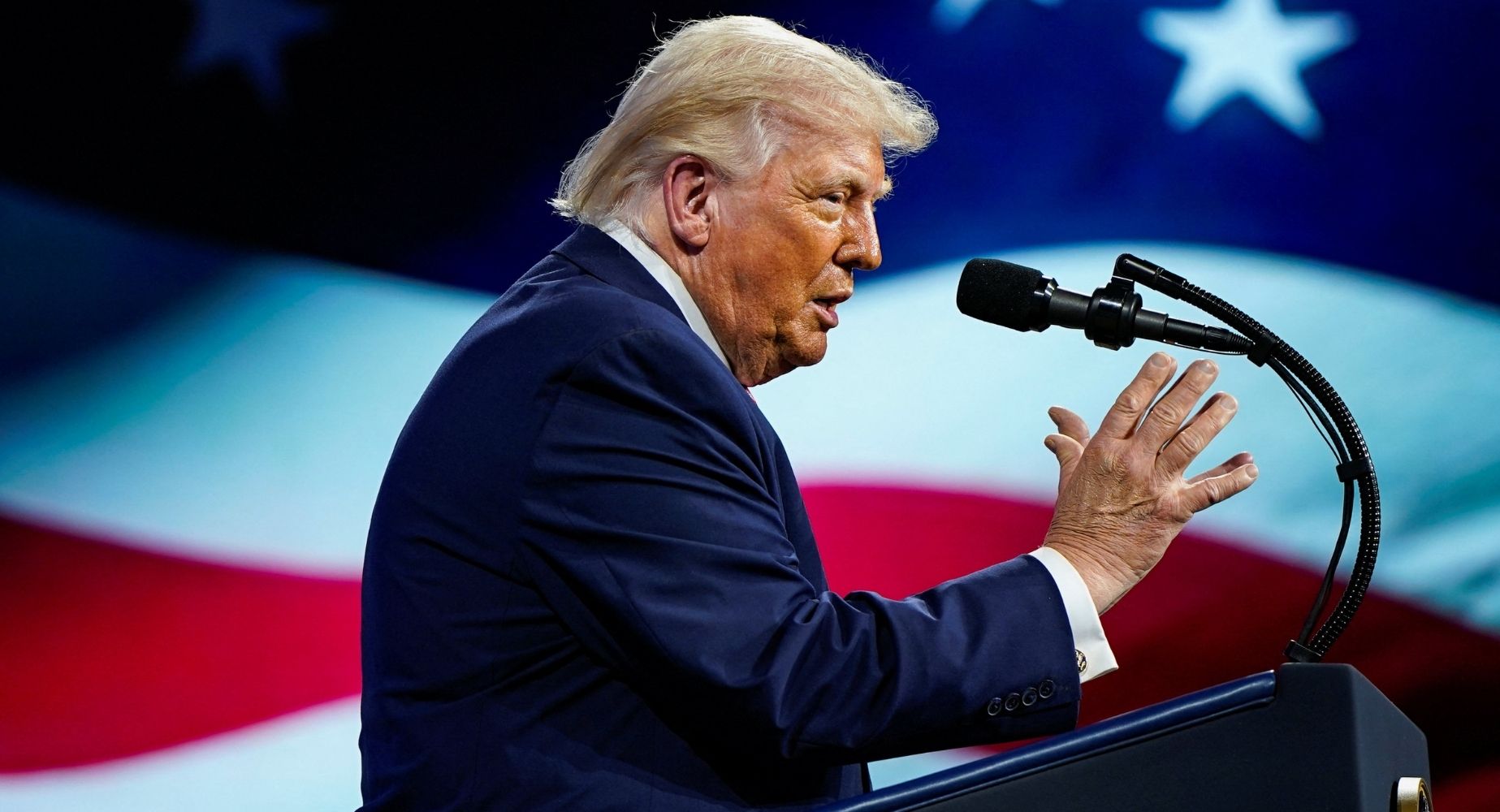
President Trump has made it clear that after what he views as success regarding Venezuela, he has his eye on effecting change in Cuba. But his Venezuela formula—using force to choke its economy and spark some changes within the ruling elite, to be followed by a foreign investment boom, while leaving a democratic transition for some undetermined future moment—may not be viable.
Perhaps U.S. pressure will lead to some musical chairs within its communist governing elite and the adoption of more investment-friendly policies, seemingly Trump’s top priority. But Cuba lacks the vast oil deposits which in Venezuela’s case underpin foreign investor interest, despite its uncertain political situation.
Trump may anticipate a flow of investment from the large Cuban community in the United States, as well as from American firms in the tourism sector. However, deal-making will be complicated by expropriation claims dating from the wave of nationalizations which Fidel Castro implemented after the 1959 revolution. And any effort at intense engagement with Cuba will be complicated by the web of restrictions which under the Helms-Burton Act cannot be waived unless a genuine transition to democracy is underway.
Trump’s Big Stick
Following the deployment of military and naval assets to the Caribbean, on January 3 U.S. forces captured the head of Venezuela’s regime, Nicolás Maduro. Since then, the United States has required that all payments for Venezuelan oil exports go to accounts it controls, to be disbursed back to Venezuela at its discretion.
The current Venezuelan leadership, headed by Maduro’s former vice president, Delcy Rodríguez, has gritted its teeth and learned to live with these conditions, which have led to the near total end to its subsidized oil shipments which had been vital to minimally fuel Cuba’s power grid and transportation system. This has led to a full blown energy crisis with repeated blackouts affecting the entire island. (It should be noted that even before the U.S. takeover of its oil exports, Venezuela’s shipments to Cuba had been decreasing as it grappled with its own economic crisis.)
And on January 29, Trump announced that owing to “the policies, practices and actions of the Government of Cuba (which) constitute an unusual and extraordinary threat… to the national security and foreign policy of the United States,” he was invoking the International Emergency Economic Powers Act to allow him to institute tariffs on any country that supplied it with oil. This has led to an end to shipments from Mexico, Cuba’s other main supplier of discounted oil.
The oil blockade is not absolute. Russia has sent two tankers to Cuba; Trump has announced that United States will not interdict them—thus avoiding a confrontation with a country that he has always seen more as a potential partner than an antagonist. But it would seem unlikely that Vladimir Putin, who has benefited from the Iran-related lifting of U.S. oil sanctions against his country, will want to do more than make token gestures of support for Cuba, an old ally. Also, the United States is allowing some limited amounts of Venezuelan oil to enter Cuba for “commercial and humanitarian” purposes.
What does Trump want? His statements are characterized by his usual combination of bravado and imprecision. He has dismissed Cuba has “very weakened,” saying that they have “no money, they have no oil, they have nothing,” and are a candidate for a “friendly takeover” which would be a “big honor” for him to undertake. Reportedly, there have been talks between Secretary of State Marco Rubio (or at least members of his team) and Raúl Guillermo Rodríguez Castro, the grandson of Fidel’s brother and successor Raúl. Trump has not made clear what he expects from Cuba, beyond stating that “I think can do anything I want with it.”
It has been reported that he has demanded the resignation of Cuban President Miguel Díaz-Canel, who is seen as a hardliner who is unwilling to make drastic changes in Cuba’s economic management. Cuba’s foreign minister has rejected any suggestion of such a resignation; however, Díaz-Canel himself has at least confirmed that negotiations are taking place, and that 94-year old Raúl Castro has the lead (presumably through his grandson).
No Bonanza Here
The demand for Díaz-Canel’s resignation suggests that Trump wants to transplant the to Cuba the three step approach he is taking in Venezuela. The first stage was “stabilization,” which was achieved with Maduro’s removal, followed by his succession by another member of the ruling elite who would be willing to accept further demands. This was to be followed by the “recovery” stage, in which Venezuela would open itself up to foreign investment, particularly as regards its huge oil deposits. The third stage, political transition, is to follow at some unspecified time, and in fact Trump says as little about it as possible although Rubio tends to be somewhat more forthcoming.
But they may be unable to repeat this model in Cuba. The oil blockade, if rigorously enforced, may indeed lead to a reshuffling within the leadership, especially if it appears that the lights may go out to the point where the military and security services are unable to function. And under those circumstances, earlier timid efforts at allowing the private sector to function could be dramatically ramped up.
But Cuba lacks any equivalent to the glittering prize that Venezuela’s oil presents. The pre-revolutionary economy depended heavily on tourism, and Cuba was a top destination for Americans until U.S.-owned hotels were nationalized and the embargo on trade and travel to Cuba was imposed. Will American hotel owners and tourists return? Certainly, Cuba, with thousands of miles of coastline and keys, still has enormous potential, of which only a small portion has been exploited by European firms. (With Cuba’s worsening crisis, this tourism has dramatically fallen off.)
But tourism investment could be slow in coming. Cuba will have to resolve its energy crisis and upgrade infrastructure—roads, airports, etc.—to accommodate a big American tourism boom. Tourism investment in Cuba thus is likely to be slower in coming and take more time to pay off than oil investment in Venezuela, and will require a measure of confidence in the legal regime and broader investment climate. And Cuba will have to compete with the well-developed “sun and sand” sectors already existing in Mexico, the Dominican Republic and elsewhere in the Caribbean which are popular with American vacationers.
And prospects for a revival of Cuba’s once enormous sugar producing industry would seem dim, given the decades of state mismanagement and disinvestment which have led the country to actually become a sugar importer. Thus, huge infusions of capital would be required at a time of low global prices. Any future investment would also be discouraged by the strict quota regime which the United States maintains on sugar imports.
The Cuban-Americans’ Role
It may be that Trump expects a wave of investment from the Cuban exile community centered in Miami. And the Cuban government has recently said that it will now permit such investment. However, Cuban-American businessmen, like any other investors, will look at the overall level of risk and prospects for returns that the island offers.
And, if Cuba remains under the control of the Communist Party, we could see a fracture within the exile community between those for whom a rapid return to democracy and accountability for the many crimes of the regime is primary and those who see business engagement as both potentially profitable and a useful first step to an eventual transition. Such tensions could slow exile investment down.
And added to this mix is the question of the homes and businesses of exile families which were expropriated by the Cuban government. Some will inevitably demand official U.S. support as they press for their return or for compensation, while one can only guess at the reaction of Cubans living on the island, who for decades have been propagandized to fear that they will be expelled from their homes should the exiles return.
We can also expect similar pressures from almost 6,000 American citizens and businesses whose property was seized, and whose claims are on a registry maintained by the U.S, government. There had been some discussions regarding a compensation deal during the Obama administration, which had sought to normalize relations with Cuba, which never reached a conclusion.
Huge Assistance Needs
Given that foreign investment may be slow in arriving, a Cuban government which has remade itself in ways more to Trump’s liking will need massive American assistance, as it seeks to begin the recovery phase. An immediate need will be for oil to power its fuel-starved power plants. Will the U.S. government be pressing Venezuela to return to providing Cuba with low cost oil even as it seeks to get its own economy back on its feet? Will it ask Mexico to do the same? Or will the U.S. itself feel obligated to itself provide cheap oil to Cuba to support the recovery process?
And immediate needs will extend beyond oil. Pharmaceuticals and medical equipment are in short supply as is food. And beyond these short-term concerns, Cuba’s infrastructure will require major upgrading. Besides their lack of fuel, Cuba’s electrical plants are obsolete and broken down. Highways, schools, hospitals—all the elements of a modern economy and society—are in desperate shape.
The extent of the task involved in reconstructing Cuba can be gauged by looking at the two reports from the early 2000s of the Commission on Assistance to a Free Cuba, chaired by then-Secretary of State Condoleezza Rice and Secretary of Commerce Carlos Gutierrez, and a series of analyses put out by the Cuba Transition Project of the University of Miami. These date from another period in which there was optimism regarding major changes on the island.
The former stated: “The U.S. government stands ready to help the Cuban Transition Government begin to address the immediate water, sanitation, health, food, shelter, and education needs of the Cuban people.” One of the latter’s documents, looking to the longer run, optimistically envisions “the gradual and orderly transition from a collectivist, centralized economy to a healthy market system economy, through systemic, natural growth and spontaneous expansion.” We have thus far not seen any comparable signs from the Trump administration that it recognizes the extent to which it may need to be directly involved in any future rebuilding of Cuba’s economy.
The Helms-Burton Roadblock
However, any U.S. engagement during a Cuban transition, whether it be through the provision of assistance or through encouraging trade and investment, will be heavily conditioned by legislation that governs U.S. policies, the most important of which is the 1996 Cuban Liberty and Democratic Solidarity (Libertad) Act, also known as the Helms-Burton Act, which put into law most of the provisions of existing U.S. sanctions on Cuba, which previously had been mainly imposed administratively and could be lifted at the president’s discretion.
The principal feature of the Act was to codify the embargo, severely restricting “trade and credit relations” with Cuba, which now cannot be suspended without Congressional consent (section 102) or if the President determines that a genuine transition government is in place; similarly it instructs the U.S. government to oppose Cuba’s entry into international financial institutions, i.e., the World Bank, the International Monetary Fund, and the Inter-American Development Bank, all potentially key sources of funding (section 104). Should Cuba be allowed to enter them anyway and loans be made, the U.S. contribution to these institutions is to be reduced accordingly.
It also creates a private right of action in U.S. courts for U.S. nationals to sue entities which “traffic” in property confiscated by the Cuban government (section 301). While the President was authorized to suspend this right, Trump is the first president not to have done so. There is already a case before the Supreme Court mounted by ExxonMobil over dock facilities in Havana which it had owned which have been used by Royal Caribbean Cruises.
What the Trump administration may find most problematic if it seeks to work with the existing communist leadership is the strict definition in the law of what a transitional government must look like for the President to be able to suspend the embargo (section 205). A transitional government must have “legalized all political activity,” “released all political prisoners,” “dissolved the Department of State Security,” “made public commitments to hold free and fair elections (within)… eighteen months… to be conducted under the supervision of international observers,” and be making “demonstrable progress… in establishing an independent judiciary.”
This high bar means that before developmental assistance (beyond basic humanitarian aid, which can go forward immediately), let alone private trade and investment, can enter Cuba, the communist regime will have to at least begin a credible effort to transform itself into a democracy, and for a definitive end to the embargo, the transition will have to have been completed (section 206).
Is There a Plan?
Trump has said that “Cuba is next,” once the confrontation with Iran has been resolved. (Venezuela in his mind seems to be well in the rear view mirror.) But Cuba presents a much harder problem than Venezuela. Even if the current regime is prepared to accommodate him to persuade him to lift his prohibition on third-country oil shipments, which is its most pressing problem, other painful realities will need to be faced—an energy sector that that will require significant U.S. engagement, broader humanitarian needs, the absence of a resource like oil which could jumpstart private investment, and U.S. legislation which will require a genuine transition to democracy, rather than a mere deal with the existing elite.
Fostering change in Cuba will require intense U.S. political and economic focus, not just the short term pressure tactics we have seen thus far. While Trump looks forward to the “honor” of solving the Cuba issue which has vexed his predecessors for decades we have seen no sign yet that he understands the full scale of what he may be embarking upon.