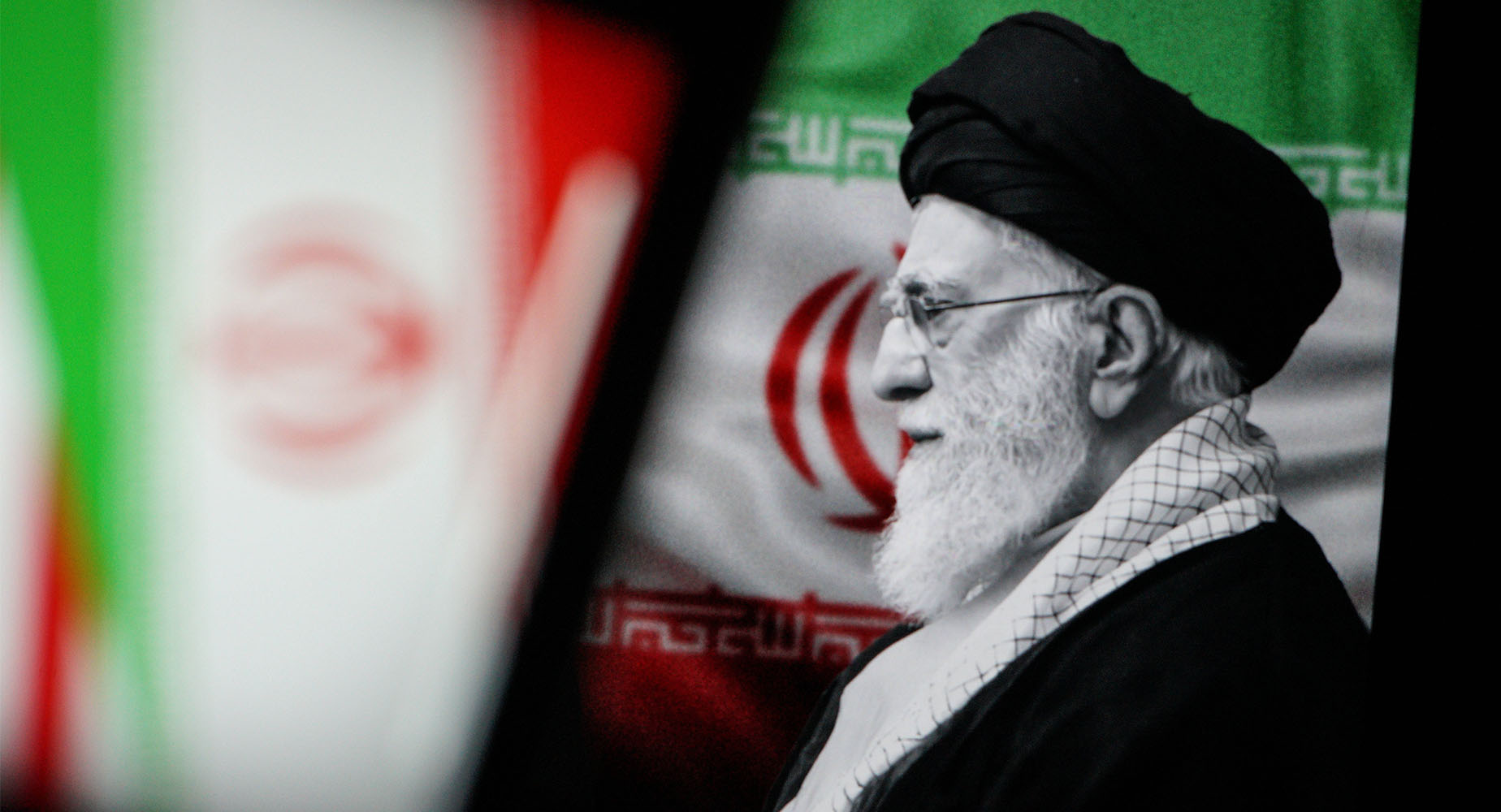
Among Iran hawks, there is confidence that talks between the United States and the Islamic Republic of Iran will collapse. Iran, they reckon, will reject the Trump administration’s demands, namely, disarmament of the nuclear program, missile program, and proxies. In his four decades of rule, Supreme Leader Ali Khamenei has never shown strategic flexibility, and analysts use this history to predict the future. This might still be true, but their confidence lacks important context: Khamenei’s strategy had always proven successful until last year.
The confident analysis is rooted in decades of studying Iran. The last time the Islamic Republic compromised on its core demands, it was after eight years of fighting Iraq. The concession also froze the status quo, namely, keeping the borders as they were. Iran gave up its greed for more territory. Ruhollah Khomeini was the supreme leader and an entirely different class of politicians his subordinates. A lot has changed since.
Most crucially, Ali Khamenei, an even more dogmatic figure than Khomeini, has as the supreme leader created a cult out of himself. The state took root, and the revolution appeared irreversible. Military commanders replaced the clerical establishment as decision-makers. After the war ended in 1988, Iran experienced uninterrupted economic growth and reconstruction.
Abroad, Iran became more aggressive. It built a proxy and satellite network, which killed hundreds of Americans in Iraq and Syria, a nuclear program, and conventional arms. The transnational assassination operations Iran began under Khomeini continued, and Iran hardly ever faced major pushback from the countries whose laws it was undermining, such as Germany, France, and the United Arab Emirates. Under Khamenei, Iran returned to hostage taking as a tool for revenue and diplomatic leverage, and Americans and Europeans acquiesced.
Over the last decade, Khamenei grew bolder. Iran participated in an ethnic cleansing campaign in Syria. Iran captured the Lebanese state and partially the Iraqi government. Its Houthi proxies attacked Saudi Arabia and the United Arab Emirates. It became more tyrannical at home. After the attacks of October 7, Israel began dismantling Iran’s proxies and satellites, but Iran did not pay a direct price. Iran upgraded its nuclear program, officially enriching at 60 percent and taking preliminary steps toward weaponization. It began supplying Vladimir Putin militarily in his quest to annex Ukraine. International inspectors also found traces of weapons-grade, 86 percent enriched uranium. Despite all this, Iran only faced sanctions, which it circumvented with impunity.
Iran’s diplomats had been negotiating under these conditions. What Khamenei and his regime care about, above all else, is survival. They are not a democratic state hurrying to leave behind a legacy. They have lifetime tenures and a view of politics just as long. Khamenei never conceded anything because he had no reason to.
Khamenei is an octogenarian, and octogenarians do not suddenly change. But if anything could change one, it is the year Khamenei has had.
The United States had previously attacked Iran to punish bad behavior, but never on its soil. Ronald Reagan attacked Iran at sea, and Donald Trump killed Qassem Soleimani in Iraq. For the first time, America attacked Iran, first by supplying the Israeli air force and then by bombarding the Fordoe nuclear facility. Furthermore, Iraq had invaded Iran on Khomeini’s watch. The Twelve-Day War was Khamenei’s first experience in power of active and prolonged hostilities. He spent the war in a bunker outside of Tehran, cut off direct communications with the outside world, and has made very few public appearances since. All evidence suggests that he is fearful for his life.
The January uprising should also caution him. The regime cracked down on the protests quickly, but it has come at a cost. In 2019, a much smaller-scale crackdown led to an internal revolt; many regime insiders objected to employing foreign proxies to kill 1,500 Iranians. One suspects that a massacre 30 times larger has further delegitimized Khamenei within the system. Anecdotal reports confirm this. Khamenei has been acting accordingly. The government is arresting and torturing reformist leaders.
In the past, Khamenei had accepted only tactical flexibility because his strategy had proven successful, and his ouster seemed out of the question. But Donald Trump and Israel finally called his bluff. And Venezuelan dictator Nicolas Maduro currently sits in a New York prison, an outcome nobody had expected, a fate Khamenei likely views worse than death but a possibility, however small.
For the first time, Khamenei is negotiating with the real possibility that a failure to agree to U.S. demands could lead to death or imprisonment. Regime change is also a possibility, which would endanger his family. His advisers have the same fears, and they might also give him a different counsel than before—even exerting pressure on him to drink the chalice of poison, to coin a phrase.
Retreat is a strategy. When Khomeini agreed to end the war, it was to rebuild the regime’s strength. He was not withdrawing his objectives. (Iran started its nuclear program in the 1990s, directed at Iraq, not the United States or Israel.)
The key question about the ongoing talks is whether this is the same Khamenei as a year ago, and whether this is the same regime as a year ago. In other words, whether they are capable of strategic flexibility without changing their political objectives, to retreat now and restart their programs once a more favorable U.S. administration is in power.