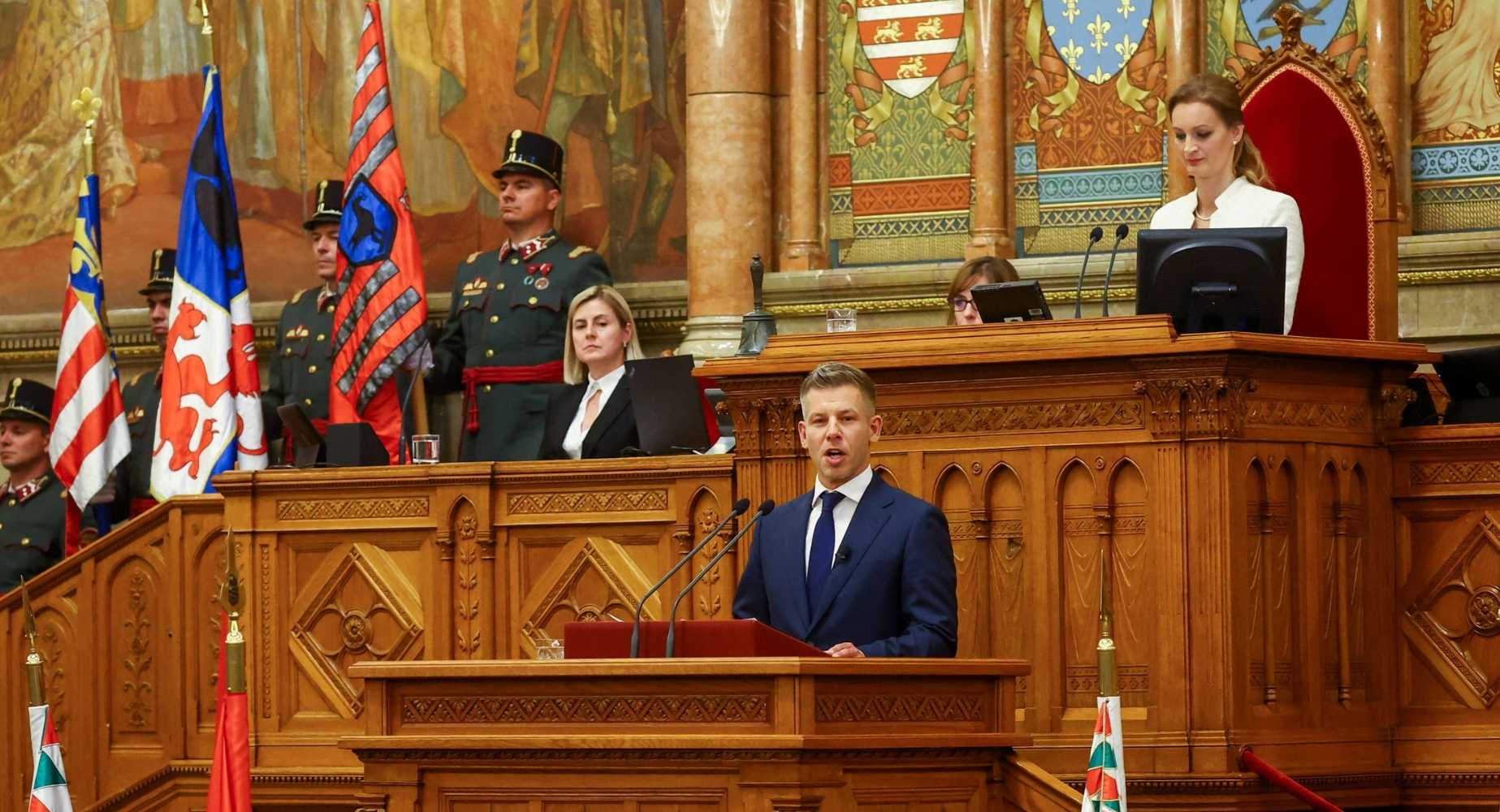
The new Hungarian Tisza government promises to adhere to the strict immigration policies of recent years. But what does the European Union have to say, since it imposed a heavy fine on Hungary for precisely those policies? And what can foreign workers expect, given that – according to preliminary statements – the new administration would significantly restrict their entry? The main dilemma now is how to turn political promises into reality amid the constraints of EU law, economic pressures, and domestic political expectations.
Many in Hungary believe that the European migration crisis is a “fabrication” or a “political construct” invented by the former Fidesz-KDNP government solely to keep people in a state of fear. While others may not put it quite so bluntly, the author himself participated in numerous private and public discussions where people were critical about why there is still so much talk about migration rather than education or healthcare.
Yet the issue of migration is so significant that it determines the outcome of elections on both sides of the Atlantic where a host of politicians turned it into a campaign issue, whether advocating for a more permissive or a more restrictive approach to immigration.
The world is on the move: according to a major comprehensive study by the International Organization for Migration (IOM), while in 1970, 84 million people – roughly 2.3% of the world’s population – lived permanently outside their country of birth, by 2024 this figure had risen to 3.7%, exceeding 304 million. All of this is closely linked to trends of globalization, intercontinental travel becoming increasingly easy and cheap, as well as cross-border employment and education. And that leaves aside the billions of people migrating between rural and urban areas within the same country.
Forced migration is also reaching record levels. According to United Nations High Commissioner for Refugees (UNHCR) statistics, 123.2 million people – one in every 67 – were forced to flee their homes and seek refuge in other parts of their country or across borders by the end of 2024, representing an increase of nearly 100% over the past decade. Given the erosion of the rule-based international system, which goes hand in hand with the spread of armed conflicts and a decline in funding for humanitarian crises, this trend is likely to continue in the future.
People in Hungary have been largely unaffected by the trend. The Fidesz government became a victim of its own objectives (or, viewed from another angle, success): as a result of its draconian measures, the majority of society has not faced the challenges posed by large-scale, predominantly irregular migration since 2015-16 and, to a lesser extent, the initial phase of the Ukrainian refugee crisis in spring and summer 2022. Many believe that calm is a natural state of affairs rather than the result of policy measures.
It is a mistake to assume that in a globalized world, in an era of large-scale migration, the situation will automatically remain unchanged. In Portugal, a country with an area and population similar to Hungary, 123,000 people – 1.3% of the population – were of foreign origin in the early 1990s, a figure not significantly different from current Hungarian data. As a result of an extremely permissive immigration policy, by 2024 this number exceeded 1.5 million, or 15% of the population. Equally telling is an example from the north. Finland had a mere 49 Somalis living there in 1990. Following the humanitarian resettlement programs of the 1990s (when Somalis fleeing the civil war in their homeland were brought in from refugee camps in Kenya) and family reunifications that generated chain migration, the Somali population now exceeds 28,000 – ranking fourth after Russians, Estonians, and the 31,000 Iraqis who arrived in a manner similar to the Somalis.
All of this is important because conventional wisdom in Hungary frequently holds that “no one wants to come here anyway.” Well, as the examples above show, international migrants do not necessarily end up where they want to go, but rather where they can actually go—and the latter is greatly influenced by government policies. The proportion of the foreign, non-ethnic Hungarian population in Hungary by 2040 will largely depend on government policies.
Migration and asylum issues will stay with us for decades to come, and policy remains a strong determinant of how they are resolved. It is therefore crucial to understand what government policies can be expected in these areas from the new Hungarian government; what external and internal challenges the Tisza government will face; and what possible responses may arise in this context. From the Hungarian side, available documents such as the Tisza Party’s election program, ministerial hearings, and statements by government politicians provide guidance in our search for answers; on the external front, official EU regulations and other materials may serve as reference points.
This article does not aim to be exhaustive; for example, it does not address in detail the issues of international students, the Stipendium Hungaricum scholarship program, or the local management of the migration crisis. In many cases, it raises questions rather than offering recommendations—in the hope that this will foster professional debate on the issues of immigration and asylum.
Positioning and operational frameworks
Discourse on migration and asylum by now points far beyond policy frameworks and has in many respects become a matter of ideology and worldview – not only in Hungary, but also in other countries across Europe and the world. Although colloquial and political discourse generally uses the terms “pro-immigration” and “anti-immigration,” these are much more labels deployed in political communication than descriptions of actual attitudes. It is therefore more appropriate to speak of “more permissive” or “critical” positions regarding immigration.
Based on Tisza’s election manifesto and the statements made by its politicians, the party’s markedly anti-immigration stance is clear, and on certain points it even exceeds the positions of Fidesz-KDNP. According to the manifesto, Hungary will remain an “immigration-free country,” and “the border fence will remain in place; indeed, we will strengthen the protection of the country and EU borders with additional security measures, and we will not allow illegal immigrants to be resettled in our country from Western Europe.” The election program is critical of the release of convicted foreign human traffickers, the residency bond program (the document refers to this in the present tense, although it ended in 2017), and the admission of guest workers. Regarding the latter, the election manifesto and the government politicians interviewed about it announce a moratorium effective June 1, 2026. At the same time, however, many elements of the document, including the protection of the border fence, addressing the root causes of migration, rejection of the mandatory solidarity mechanism and the Pact on Migration and Asylum in general, align with the previous government’s policies on migration and asylum. Overall, the strict approach to migration policy appears set to remain in place.
Another important question is who will actually be in charge of the various aspects of Hungary’s migration and asylum policy. Migration is a complex phenomenon, and its policy implications are just as complex across the various ministries and government agencies.
This was already evident under the Fidesz-KDNP governments: considering just the last four years, the parties concerned included the Ministry of Interior, the Ministry of European Affairs (EUM), the Ministry for National Economy, the Ministry of Foreign Affairs and Trade, not to mention the Prime Minister’s Office. The Ministry of Defense also became involved in matters related to foreign operations and addressing the root causes of migration.
It is no coincidence that, given the convergence and at times the clash of various perspectives and interests (cf. the recruitment of foreign workers versus strict immigration policies), many came to believe that Hungary has not a single policy but rather a bundle of policies on immigration. Moreover, all of this was influenced by power struggles and positions within the administration. This, of course, is not unique to Fidesz: ministries in almost every country tend to function as “neighboring castles.” Based on our current knowledge, we can expect something similar with the Tisza government: the Ministry of the Interior, the Ministry of Foreign Affairs, the Prime Minister’s Office (following the dissolution of the EUM), the Ministry of Economics and Energy, the Armed Forces, the Ministry of Social Affairs and Family, and even the newly restructured Ministry of Education (due to foreign students) will be responsible for certain segments of immigration. All of this will require serious coordination among the various actors – all the more so because Gábor Pósfai, the Minister of the Interior who holds one of the most important positions on this issue, comes from the business sector and lacks expertise in migration policy. For now, therefore, it is unclear who will be the Tisza government’s “migration expert,” the person to coordinate these areas across the board and resolve conflicts of interest.
What about the guest workers? Or perhaps not guest workers at all?
One of the new government’s most important promises was to ban the issuance of new work permits to foreign guest workers from third countries, effective June 1, until further notice. During his confirmation hearing, Minister of Social and Family Affairs Vilmos Kátai-Németh stated that, in order to protect Hungarian workers, he would not allow “economic migrants” into the country. In the absence of a legal definition, the remark can be viewed more as a rhetorical device. At the same time, based on statements so far (the relevant regulation has not yet been published), it is unclear exactly what the Tisza government means on this point and what its objectives are. The only certainty is that the new regulation will apply to third-country nationals, i.e., those who are not citizens of the European Economic Area.
If the decision-makers’ goal is to protect Hungarian workers, then they must consider that a significant portion of the foreign workers visible to the public (delivery drivers, restaurant workers) are not guest workers but student workers who perform these jobs alongside their university studies. Presumably, nor is the ruling party referring to those individuals who work in highly skilled positions under the EU Blue Card program (although they too are economic migrants). The plan most likely applies to job seekers with guest worker residence permits who, according to the election manifesto, drive down wages and cause a significant rise in housing costs. However, conceptual confusion arises once again regarding the “120,000 foreign, mostly Asian guest workers” cited in the document: citizens of Bosnia and Herzegovina, the Republic of North Macedonia, Belarus, Moldova, the Republic of Montenegro, the Russian Federation, Serbia, and Ukraine are not subject to regulations governing guest workers but may work in Hungary primarily under the so-called National Card program.
Beyond the specific regulations governing the employment of foreign workers, there is also the general theoretical and practical question of the extent to which a given country has actual need for them. Businesses routinely complain about labor shortages, while workers and their labor unions fear that foreign workers will drive down wages and contribute to the erosion of labor protection regulations and opportunities for representation. The author of this article leans toward the latter argument, though it must be noted that the structure of the Hungarian labor market is unique.
All of this implies the need for a thorough examination of whether Hungary still has human resource reserves that can be mobilized, or whether there are indeed sectors where, despite wage increases, positions cannot be filled with Hungarian workers. This is a matter of national economic and strategic importance because the strict regulations of the Hungarian model do not currently make the country attractive to low-skilled foreign workers in a regional context, while neighboring countries the Czech Republic and Romania are relaxing their labor market regulations further. So, if there is a need for foreign guest workers after all, our country could fall farther behind in the regional and international competition. Expected to take effect on June 1, the promised moratorium will not in itself cause a disaster. However, a decision on the beneficial and appropriate course of action must be made within a relatively short time (a few months, at most half a year).
Irregular immigration
According to the Tisza manifesto, the new government intends to maintain enhanced protection of Hungary’s borders. At the same time, the entry into force of the EU Pact on Migration and Asylum on June 12, as well as the European Court of Justice’s rulings in cases C-808/18 and C-123/22 with the resulting daily fine of €1 million (more precisely, its deduction from payments due to Hungary), present the new government with a serious challenge.
A detailed examination of the ten-point Pact is beyond the scope of this article, so we focus on those elements that are going to pose the greatest challenge to the cabinet. First and foremost is the issue of the mandatory solidarity mechanism and quotas. Politicians from the Tisza Party and their election program have repeatedly stressed that our country will not accept asylum seekers, nor does it intend to pay a penalty for failing to do so. The government views the third element of mandatory solidarity – operational and technical support provided to frontline countries (e.g. sending experts) – as the solution. Although we do not yet see how this model would work in practice, in theory it seems like a viable path. Indeed, the author ventures to suggest that a contribution of 20,000 euros per asylum seeker is also an acceptable alternative: considering that a few hundred people would be allocated to our country under the current distribution framework, this sum amounts to no more than a few million euros.
A far more problematic issue is the provision of the Pact and the Commission establishing the procedure to be followed at the border and the quotas allocated to individual Member States. The key element of the C-808/18 ruling – and the rationale for the million-euro fine – is that the current Hungarian system unduly restricts access to the Hungarian asylum system by stipulating that, as a general rule (with the exception of those arriving from Ukraine), an asylum application can only be lodged if a declaration of intent is first filed at the Hungarian diplomatic mission in Belgrade. (The other two key issues are the inadequacy of legal remedies and the violation of EU return guarantees.) Although the question of why Hungary refuses to budge on this issue came up repeatedly in various discussions, the problem is not quite that simple.
The Pact – and the EU – takes a territorial approach to asylum, meaning that the Court and the Commission expect applications to be accepted at the Hungarian border as well. In other words, Hungary would once again have to allow asylum seekers who reach its borders to lodge their applications there. To put it very simply, anyone who reaches the Hungarian border and claims to be an asylum seeker will be admitted into the country.
At a superficial glance, this will of course not be the case. The Pact decrees that the procedure be split into two tracks following a seven-day preliminary screening. Track one will follow the standard procedure applying to those who are highly likely to be granted international protection. They will be entitled to enter the country and must wait there for the procedure to be completed. In such cases, the system will not have a cap on the numbers. The other track will include applicants whose applications are highly likely to be rejected. They will undergo the so-called “border procedure” that must be completed within twelve weeks. If the process exceeds this timeframe, with a few exceptions, they too will be entitled to enter the country. However, it is unlikely that the tight three-month period will be sufficient for the procedure including appeals. And even if the procedure is completed and the final decision is rejection, Hungary will be responsible for returning the individual to their country of origin or a transit country – and if this is not carried out, the likely result will be the individual re-entering the country’s territory. As a side note, the same problem arises in connection with the recently adopted legislation which provides a broader interpretation of the concept of safe third countries for member states, a measure voted for in the European Parliament by politicians from both Tisza and Fidesz-KDNP. The EU is redefining the concept in vain if third countries do not cooperate and refuse to take back persons whose asylum application was rejected or are inadmissible.
On May 18, Prime Minister Péter Magyar stated that “they are seeking a solution that would require no payment and result in no migrants.” At the same time, it is unclear how this could be achieved in the current situation. If Hungary wants to comply with current EU asylum regulations – and those set to take effect on June 12 – then it must start building an asylum system in line with the Pact. The Commission will obviously allow time for this – but not indefinitely (and the daily penalty will likely remain in place until then). The two previous transit zones could serve as a suitable starting point for this – but it should be noted that their capacity is roughly 700 people, which the Commission and the Court of Justice considered too low already back in 2020. Furthermore, the Commission’s August 2024 decision set a processing capacity of 7,716 people for Hungary regarding procedures conducted at the border. In the long term – calculated using the 12-week maximum timeframe – this could amount to over 30,000 people annually. It is thus for now unclear how the Tisza government can simultaneously meet the dual requirements of the EU asylum system and its own strict border control policy. The situation is further complicated by the fact that, although the 27 super-milestones set by the Commission as conditions for accessing funds from the Recovery and Resilience Facility (RRF) do not include the issue of asylum, it is difficult to imagine that Hungary could gain access to these funds without implementing reforms in this area.
Regardless of how the questions are answered, the division of competences in the area of asylum will continue to guarantee disputes and turf wars between Member States and European Union institutions – as we have already seen in recent years. Considering the risk of potential new infringement proceedings – and fines – over EU funds, the daily €1 million fine, and the entry into force of the Pact as new legislation, the EU holds a significant portion of the trump cards.