As the United States reassesses its military posture in Europe and shifts strategic bandwidth toward the Indo-Pacific, it must also reassess the architecture of its Mediterranean partnerships. The Mediterranean remains a theater Washington cannot afford to neglect. Between Russian revanchism, Chinese technological penetration, North African instability, energy corridors, and the security of the Red Sea, the region continues to hold structural importance for American power projection.
If American commitments in Europe become more selective, the question is no longer whether the United States will retain influence in the Mediterranean — but through which partners it will do so.
In this recalibration, Italy increasingly stands out as Washington’s most reliable strategic anchor.
The Turkish Dilemma
Turkey remains geostrategically indispensable. Control of the Bosporus and Dardanelles under the Montreux Convention gives Ankara leverage over Black Sea access. Its NATO membership provides critical infrastructure and southern flank positioning. Moreover, Turkey has at times played constructive roles, including facilitating aspects of the Ukraine grain corridor diplomacy.
Yet, strategic alignment and geostrategic necessity are not synonymous.
Over the past decade, Ankara has pursued a doctrine of strategic autonomy that increasingly diverges from Western consensus. Turkey became a significant hub for refining Russian crude oil following sanctions on Moscow, complicating Western efforts to constrain Kremlin revenues. In 2024, it was among the largest importers of Russian crude, and Turkish exports of refined products to G7+ countries indirectly generated substantial revenue streams benefiting Moscow.
Although new sanctions in 2025 reduced these flows, the pattern revealed a broader willingness to operate within gray zones of compliance.
Turkey’s economic interface with Iran has also raised concerns in Washington, particularly as sanctioned Iranian oil finds pathways through regional commercial networks. In October 2025, the US Department of Commerce sanctioned several Turkish entities for export-control violations, underscoring persistent misalignment.
Equally consequential is Ankara’s embrace of Huawei for 5G infrastructure development. For NATO, this introduces potential vulnerabilities in intelligence interoperability and raises questions about long-term technological alignment.
None of this renders Turkey irrelevant. But it does complicate its role as a dependable pillar of US Mediterranean strategy.
Why Italy’s Role Is Structurally Different
Unlike Turkey, Italy’s alignment with the United States is not episodic — it is structural.
Geographically, Italy sits at the center of the Mediterranean basin, linking the Western Mediterranean to the Eastern Mediterranean, North Africa, and the Adriatic corridor. American basing infrastructure in Italy — including key air and naval facilities — provides Washington with operational depth across Europe, the Levant, and Africa.
Rome’s 2022 defense doctrine formally embraced the concept of the “Mediterraneo allargato” (wider Mediterranean), recognizing that instability in the Sahel, North Africa, and the Red Sea directly impacts European security. Italy has increasingly invested in maritime security, undersea infrastructure protection, and hybrid warfare resilience — including proposals for expanded civil-military capabilities to counter gray-zone threats such as undersea cable sabotage.
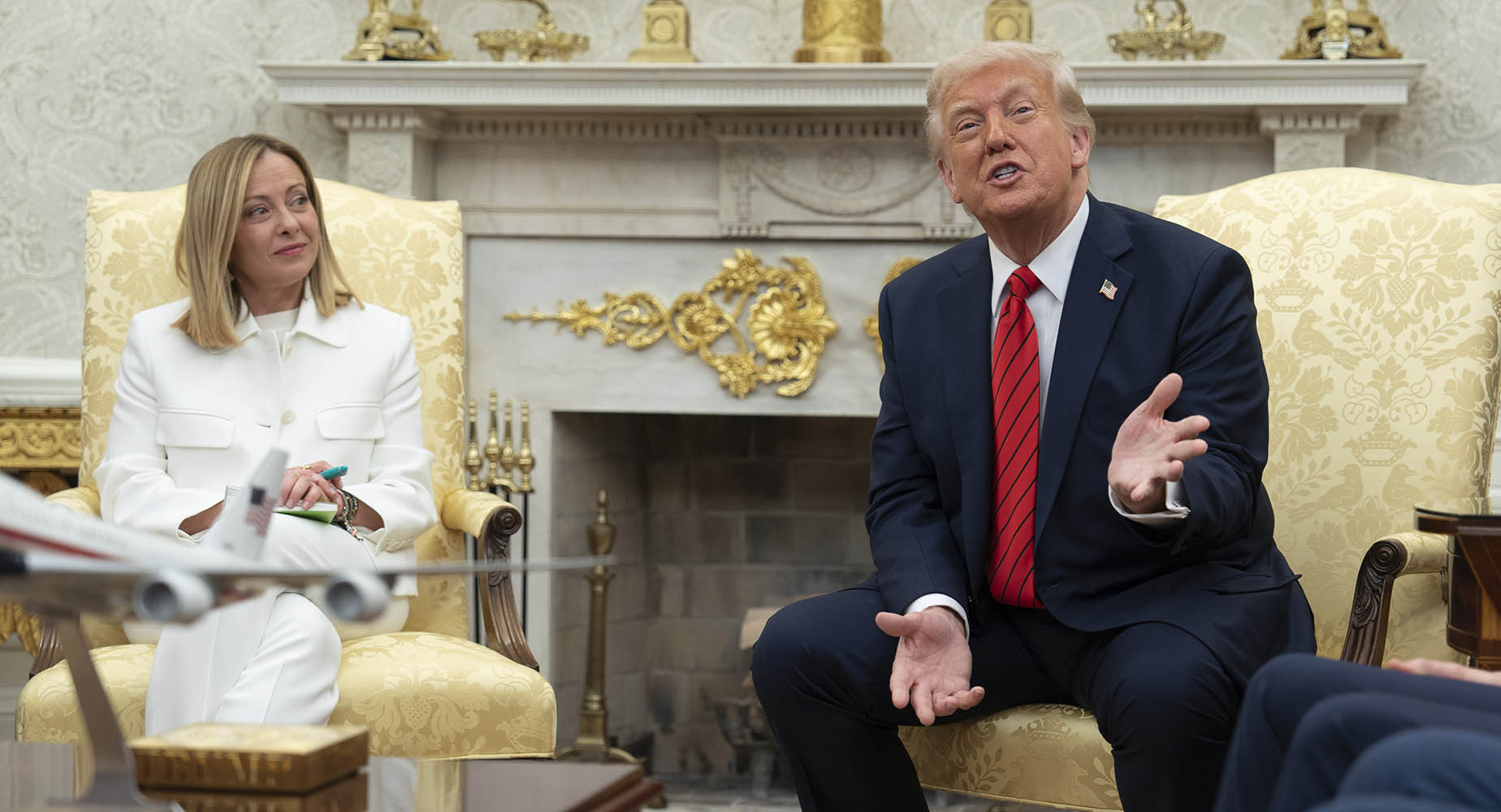
Politically, Prime Minister Giorgia Meloni’s government has aligned firmly with transatlantic priorities. Italy has delivered 12 aid packages to Ukraine worth over €3 billion, supported NATO deterrence efforts, and backed sanctions regimes against Moscow.
Mediterranean Security and the Middle Eastern Link
Italy’s strategic posture also intersects directly with Middle Eastern stability.
Rome participates in Operation Aspides to secure commercial routes in the Red Sea against Iranian-backed Houthi attacks — a mission that safeguards global energy flows and maritime trade. Italy has maintained a firm stance against Iran’s nuclear ambitions and has supported diplomatic efforts aimed at preventing escalation.
In the Eastern Mediterranean, energy cooperation between European and regional actors further reinforces Italy’s relevance. As energy diversification away from Russia accelerates, Mediterranean gas corridors linking North Africa and the Levant to Europe increase Italy’s role as both transit hub and political mediator.
This is not merely European security — it is the southern flank of the transatlantic system.
Italy Beyond the Mediterranean
Italy’s strategic repositioning extends beyond its immediate geography.
Rome withdrew from China’s Belt and Road Initiative in 2023, signaling a decisive pivot away from strategic ambiguity. It has deepened defense cooperation with Japan and the United Kingdom through the Global Combat Air Programme (GCAP) to develop sixth-generation fighter aircraft. Italian delegations have engaged Taiwan on semiconductor cooperation, and Rome has strengthened rare earth and technology partnerships with Indo-Pacific democracies.
Simultaneously, Italy’s Mattei Plan seeks to recalibrate European engagement in Africa in ways that reduce dependency on Chinese state-driven investment models.
These actions suggest not only alignment with US interests, but convergence in worldview.
Strategic Selectivity in an Era of Constraints
Even if Washington reduces its military footprint in Europe, it cannot disengage from the Mediterranean. Energy security, Russian naval access, North African migration flows, undersea infrastructure, and the Red Sea corridor all converge in this basin.
In such a scenario, the United States will depend increasingly on bilateral anchors capable of sustaining strategic continuity.
Turkey will remain important — but unpredictable.
France is powerful — but often strategically autonomous.
Greece is reliable — but geographically narrower in reach.
Italy combines geography, alignment, operational infrastructure, and political will.
In an era defined by resource constraints and alliance recalibration, Rome is not simply another Mediterranean partner. It is the most structurally aligned strategic anchor available to Washington.