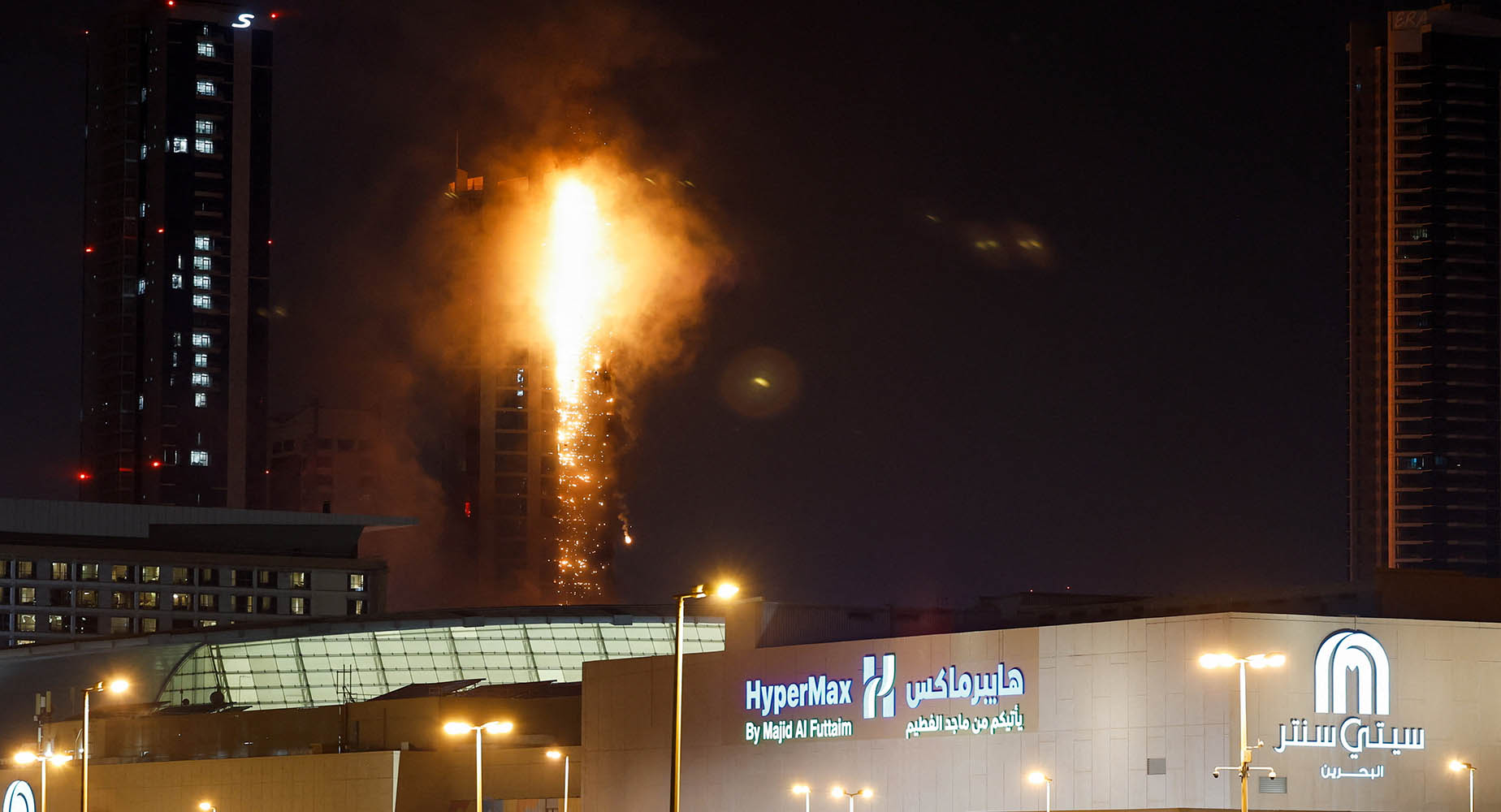
Recent Iranian missile and drone attacks on civilian infrastructure across the Gulf have transformed the regional strategic landscape. For years, Gulf states pursued a careful policy of de-escalation, economic modernization, and selective hedging among major powers in order to preserve stability and protect their development agendas. They were not the authors of war, but the advocates of order. Yet Iran’s willingness to threaten and strike Arab states directly has exposed the limits of that approach and is now compelling a reassessment of regional defense, alliances, and the future architecture of deterrence.
From Strategic Vacuum to Hedging
To understand the Gulf’s dilemma today, one must look back at how intensifying competition between the United States and China reshaped the Middle East over the past fifteen years. The turning point came in 2011, when Washington began shifting its strategic focus toward the Pacific, creating in the eyes of many regional actors a perception of reduced American centrality. Beijing moved swiftly to expand its role. In 2013, China launched the Belt and Road Initiative, positioning the Middle East as a critical hub for trade, connectivity, and energy security. By 2016, Beijing had published an official Arab policy paper and established Comprehensive Strategic Partnerships with key regional states.
When the trade and technology war between Washington and Beijing escalated in 2018, the Middle East quickly became a theater of geo-economic, geopolitical, and technological competition. Washington pressed Gulf states to distance themselves from Chinese technology, particularly in telecommunications and digital infrastructure, while promoting American alternatives. At the same time, the strategic contest extended beyond technology into diplomacy and infrastructure. The Abraham Accords of 2020, followed by frameworks such as I2U2 and the India-Middle East-Europe Economic Corridor, reflected an American effort to consolidate a new regional architecture. China, for its part, deepened its links with Tehran and elevated its political role through the 2023 Saudi-Iranian rapprochement.
Caught between two major powers, Gulf states adopted a hedging strategy rooted in a deliberate division of reliance. Security remained anchored primarily in the American orbit, while economic, technological, and infrastructural ties increasingly expanded toward China. This balancing act gave Gulf capitals room to maneuver and helped them avoid being forced into an immediate binary choice.
That strategy was rational. It reflected not indecision but prudence. It allowed Gulf states to protect their sovereignty, diversify partnerships, and maintain the strategic flexibility necessary in a period of global transition.
The Abraham Accords and Israel’s Broader Appeal
Parallel to this balancing act, another relationship was taking shape: a growing strategic convergence with Israel. This did not begin suddenly in 2020, nor was it limited to a single country. It developed gradually, and in different forms, across a number of states whose leaders were confronting similar structural challenges.
What made Israel increasingly relevant was not security alone, but the breadth of its contribution to the transition toward knowledge-based economies. Across the Gulf and beyond, states seeking to reduce dependence on hydrocarbons required innovation ecosystems, digital infrastructure, cybersecurity, advanced agriculture, water technology, renewable energy solutions, and scientific partnerships. Israel emerged as a natural partner in many of these fields.
This is what made the Abraham Accords strategically significant. They were not simply diplomatic gestures. They represented a calculated and courageous investment in regional modernization, integration, and long-term stability. The states that chose this path took real political and strategic risks in the hope of building a more secure and prosperous regional order.
That choice should be understood clearly: the Gulf states did not create the current war. They sought to prevent a wider one. Their pursuit of normalization, dialogue, and development was a responsible effort to shield their societies from permanent confrontation.
Beyond Symbolism: A Structural Partnership
The Gulf’s relationship with Israel differs in important ways from its ties with Washington or Beijing. With the United States, the relationship has traditionally centered on hard security. With China, it has centered largely on economics and infrastructure. With Israel, however, economic and security interests increasingly reinforce each other.
Innovation partnerships, intelligence coordination, technological exchange, and practical security concerns have become part of the same strategic equation. Gulf states see in Israel not only military capability, but also a partner in national transformation. This gives the relationship unusual depth. It is not merely transactional; it is increasingly structural.
At the same time, the region is not monolithic. The UAE, Bahrain, Saudi Arabia, Qatar, and Oman do not share identical threat perceptions, domestic constraints, or diplomatic styles. Their policies differ in pace, in public presentation, and in strategic emphasis. But taken together, a broader trend is visible: Iran’s escalation is narrowing the political and strategic space for older assumptions about how regional stability can be preserved.
The Limits of Containment
For years, many Gulf states combined strategic openness to Israel with efforts to reduce friction with Tehran. This was not appeasement in any simplistic sense, nor was it moral or strategic surrender. It was a responsible attempt to lower the temperature of the region while creating the conditions for growth, reform, and internal development.
The 2023 Saudi-Iranian normalization brokered by China was one expression of that logic. So too were efforts across the region to compartmentalize differences, avoid direct military entanglement, and prioritize domestic transformation. These were understandable policies adopted by states that had every reason to protect their populations and economies from another cycle of endless war.
But recent events have demonstrated that diplomatic management alone cannot guarantee immunity from direct aggression. Iran has shown that it is willing to test the region’s deterrence thresholds in increasingly open ways. This has not invalidated the Gulf states’ search for stability; rather, it has revealed the limits of stability without sufficient deterrence.
That distinction matters. The lesson is not that the Gulf was wrong to seek peace. The lesson is that peace requires stronger strategic foundations than de-escalation alone can provide when facing an adversary prepared to exploit restraint.
Toward a New Regional Security Logic
A new regional reality is therefore coming into view. The old model of hedging is not disappearing overnight, but it is being recalibrated by force. Direct threats to civilian infrastructure, maritime security, economic corridors, and national sovereignty are pushing regional actors toward a more integrated security framework.
This does not mean every Gulf state will move at the same speed or with the same public posture. Some will remain more cautious, others more forward-leaning. Some will continue to privilege diplomatic language, while others will invest more visibly in military and intelligence coordination. But the overall direction is increasingly clear: stronger air and missile defense, deeper strategic coordination with the United States, and a greater recognition that Israel is part of the region’s long-term deterrence architecture.
This emerging framework is not ideological. It is pragmatic. It is being shaped not by abstract alignment, but by the basic imperatives of survival, sovereignty, and modernization.
The Strategic Meaning of the Present Moment
The present moment should therefore be understood not as a repudiation of Gulf policy, but as the next stage in its evolution. Gulf leaders took risks for peace, for economic transformation, and for regional integration. They chose the path of construction over destruction. They invested in diplomacy, development, and new partnerships because they believed the Middle East could move beyond permanent crisis.
Iran’s actions have not discredited that vision. They have made its defense more urgent.
The strategic question now is no longer whether the region wants stability. It does. The question is what kind of regional architecture can actually secure it. Increasingly, the answer points toward a layered order built on deterrence, interoperability, strategic clarity, and cooperation among the United States, Israel, and key Arab partners.
The Gulf’s recalibration is therefore not a retreat from prudence. It is prudence adapting to a harsher reality.