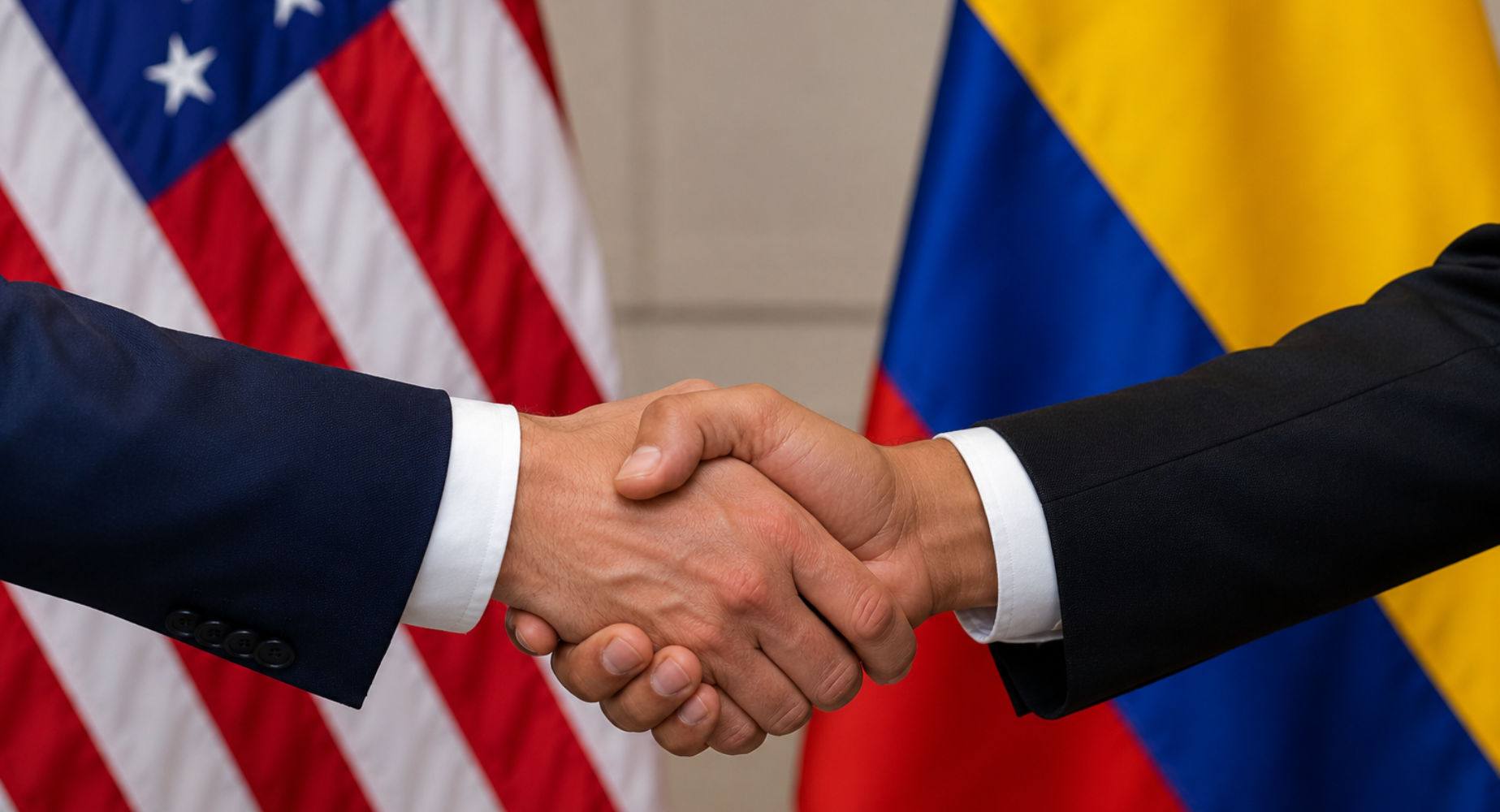
After Abelardo De La Espriella’s victory this past weekend, the United States and Colombia have an opportunity to reset one of the most important relationships in the western hemisphere.
For more than two decades, the U.S.-Colombia partnership has been anchored by security cooperation and counter-narcotics efforts. A De La Espriella administration presents an opportunity to broaden that relationship and build a deeper partnership centered on security, energy, critical minerals, infrastructure, investment, and economic growth.
The relationship was transformed by Plan Colombia, launched in 2000, which helped Colombia improve security, strengthen institutions, and create the conditions for sustained economic growth. The U.S.-Colombia Free Trade Agreement further deepened commercial ties, while Colombia’s accession to the OECD reflected its growing integration into the global economy. In recognition of Colombia’s strategic importance and longstanding partnership with Washington, Colombia became the only country in South America designated as a Major Non-NATO Ally of the United States. That status facilitated deeper defense cooperation, enhanced intelligence sharing, and expanded access to U.S. security assistance.
But this should not be called Plan Colombia 2.0. The world has changed. The original Plan Colombia was principally about security and counter-narcotics. The next phase of the relationship should reflect today’s realities: migration, strategic competition with China, energy security, critical minerals, organized crime, and economic growth.
A new U.S.-Colombia bargain should be built around three Colombian commitments and three American commitments.
Colombia should commit to restoring serious counter-narcotics efforts, including aerial eradication; cooperating on migration and repatriation issues; and taking concrete steps to reduce dependence on China in strategic sectors. This does not require unwinding every existing Chinese investment. It does mean ensuring that future telecommunications networks, strategic infrastructure, energy projects, logistics facilities, and critical mineral developments are built primarily with trusted partners from the United States and allied nations.
The United States should respond with enhanced intelligence sharing, expanded military cooperation, increased security assistance, targeted economic support, and a concerted effort to mobilize private investment through institutions such as the U.S. International Development Finance Corporation, EXIM Bank, and allied investors. The objective should be to make Colombia America’s principal strategic and economic partner in South America.
Despite the enormous progress achieved under Plan Colombia, the relationship lost momentum over the past four years. The Petro administration created uncertainty for investors, slowed development of the energy and mining sectors, and presided over worsening security conditions, rising coca cultivation, and the growing influence of criminal organizations.
The new administration is expected to prioritize restoring security and reestablishing state authority in areas where illegal armed groups have expanded their influence. This will require stronger intelligence cooperation, renewed security assistance, and closer coordination with the United States. Washington should welcome these efforts.
Security matters not only because it reduces violence, but because it creates the conditions for economic growth.
Over the past two decades Colombia emerged as one of Latin America’s most stable and promising economies. Its success was built on a combination of improved security, responsible macroeconomic management, and the development of key sectors including oil, mining, agriculture, and services. More recently, investor confidence weakened as uncertainty surrounding regulatory, environmental, and pension reforms increased, along with growing concerns about security.
A De La Espriella administration is expected to pursue a strongly pro-business and pro-investment agenda. If implemented effectively, such reforms could attract new capital, accelerate growth, and strengthen Colombia’s position as one of the most attractive investment destinations in the region.
Critical minerals offer one particularly important opportunity. Colombia possesses significant untapped mineral resources, including copper, that could become increasingly important as global demand rises. A more predictable regulatory environment could unlock substantial new investment.
Energy represents another major opportunity. Colombia remains an important oil and natural gas producer, and a more supportive policy environment could help increase production, improve energy security, and generate additional export earnings. Colombia could realistically aspire to produce well over one million barrels of oil per day while expanding natural gas production.
Agriculture may be an even bigger long-term opportunity. Colombia’s geography and climate allow for year-round production of a wide variety of crops. Combined with abundant water resources and access to major markets, Colombia could become a significantly larger agricultural exporter.
Tourism, forestry, logistics, and infrastructure development also offer substantial room for growth. Colombia’s proximity to the United States, natural beauty, and improving connectivity position it well to attract additional investment and visitors.
Much of this potential, however, depends on security. As criminal organizations lose territory and the Colombian state reasserts control over regions long dominated by illegal armed groups, large parts of the country that have remained underdeveloped could become attractive destinations for investment in agriculture, mining, energy, tourism, forestry, and infrastructure. Greater security will unlock economic opportunity and create the conditions for investment and growth.
The United States has a strong interest in the success of the De La Espriella administration not only for Colombia itself, but for the broader region. Colombia hosts millions of Venezuelan migrants and refugees and shares one of the most important borders in the hemisphere with Venezuela. A stronger, more prosperous Colombia will increase pressure for positive change in Venezuela while providing a model of democratic governance and economic opportunity for the region.
If De La Espriella succeeds in restoring security and growth, Colombia will become an even stronger anchor of stability in northern South America. His success will matter not only for Colombia, but for the future trajectory of the region.
This would not be a return to the past. It would be an investment in a shared future. The burden of Colombia’s development must primarily be carried by Colombians themselves, but the United States can be an indispensable partner. Rather than another massive aid package, Washington should focus on targeted security cooperation, development finance, institution building, and mobilizing private capital.
The goal should not be to recreate the Colombia of 2000. The goal should be to build the Colombia of 2035.
A generation ago, Plan Colombia helped Colombia avoid becoming a failed state. The next chapter should be about making Colombia the United States’ principal strategic and economic partner in South America. If both governments seize this moment, the partnership can evolve from a security alliance into a broader economic and strategic partnership.
The question is not whether the United States can afford to help Colombia succeed. It’s whether it can afford not to.