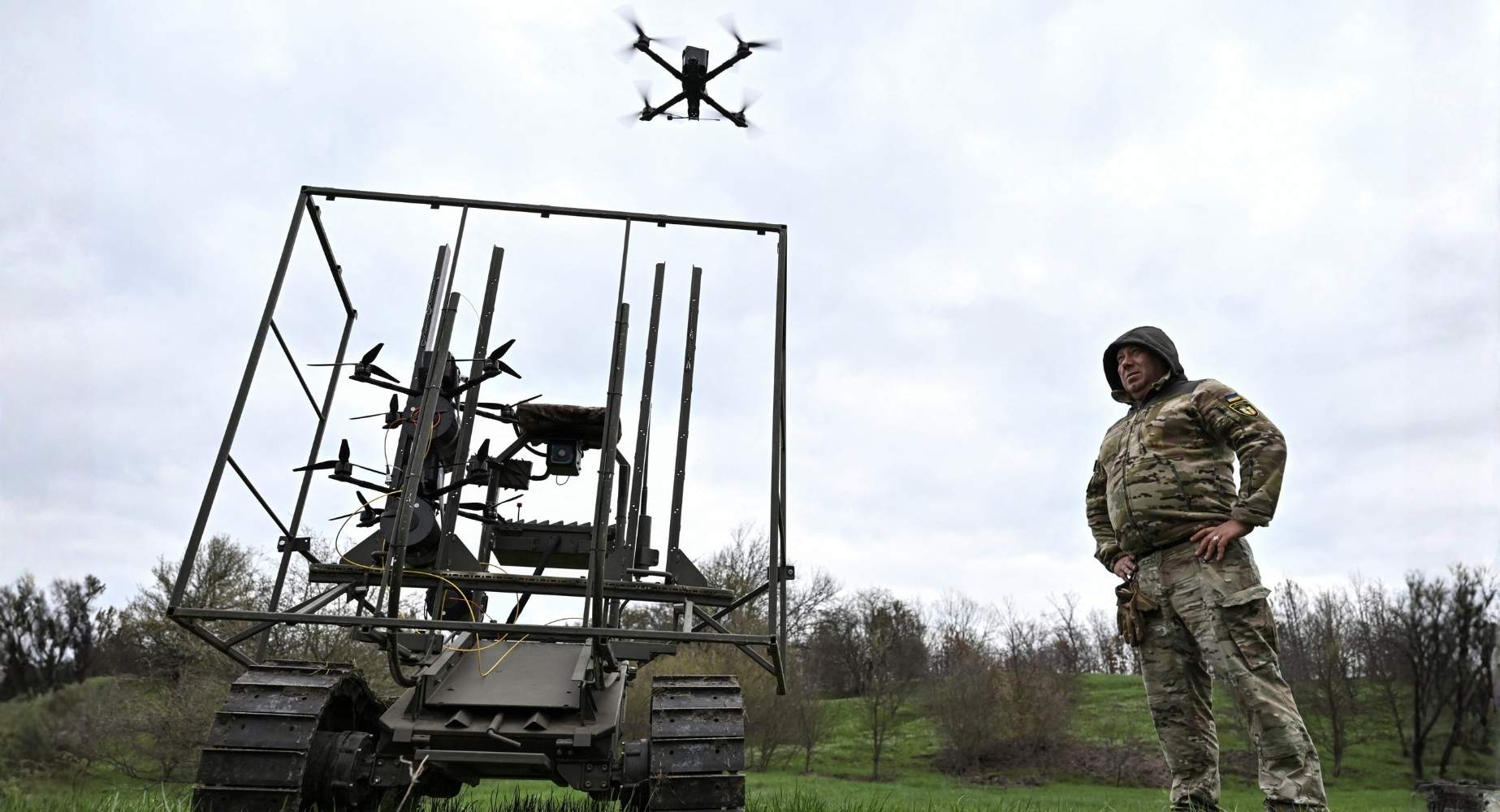
The United States risks falling behind in the most important military learning environment of our time: Ukraine’s drone-interceptor battlefield. Ukrainian forces are refining AI-enabled targeting, autonomous interception, electronic warfare resilience, and battlefield tactics, techniques, and procedures at a pace unmatched anywhere else in the world. While the United States continues to learn from Ukraine through intelligence sharing, after-action reporting, and close partner engagement, it lacks the routine, on-the-ground exposure that produces the fastest operational learning. Meanwhile, America’s strategic competitors—including China, Iran, North Korea, and Russia—are aggressively collecting and incorporating lessons from Ukraine into their own military modernization efforts.
This gap is dangerous—and entirely fixable.
The Department of Defense should explore mechanisms for expanding military-to-military observation and technical exchanges while also broadening opportunities for qualified American defense-industry teams to work alongside Ukrainian counterparts under carefully controlled, non-combat conditions. No American personnel would participate in combat. Their mission would be to observe, learn, test, maintain, and integrate technology alongside the world’s most experienced drone-interceptor operators.
This is particularly important because the United States cannot realistically replicate Ukraine’s operating environment at home. FAA regulations, spectrum restrictions, safety requirements, and the absence of sustained high-intensity drone warfare make realistic testing difficult. Ukraine has become the world’s premier laboratory for autonomous systems operating under combat conditions. American engineers and military professionals should have greater opportunities to learn directly from that experience to strengthen the capabilities of U.S. warfighters.
President Trump has consistently argued that American foreign policy should deliver measurable benefits for the American people. Strengthening the U.S. defense industrial base, accelerating American innovation, and ensuring American companies—not strategic competitors like China—lead the next generation of autonomous warfare fits squarely within that vision.
Expanding opportunities for American defense contractors to operate inside Ukraine is not mission creep. It is strategic self-interest. It strengthens American companies, improves military readiness, and ensures that American engineers—not America’s adversaries—are the ones learning from the fastest-moving defense technology revolution in decades.
Late in the previous administration, the United States took an important first step by permitting limited contractor activity inside Ukraine to maintain and sustain U.S.-provided military equipment. The Trump administration now has an opportunity to build on that foundation by establishing a more durable framework that enables qualified American companies to provide maintenance, technical support, engineering collaboration, and technology integration under strict security guidelines.
This is not about expanding America’s military role in the conflict.
It is about expanding America’s competitive advantage.
Ukraine has become the world’s foremost laboratory for autonomous systems, AI-enabled targeting, electronic warfare, battlefield software, rapid manufacturing, and counter-drone operations. Technologies that traditionally required years of development are evolving in months. American companies need greater opportunities to observe, adapt, and incorporate these lessons into next-generation U.S. systems. If the United States fails to remain closely connected to this innovation ecosystem, our competitors will not.
This is fundamentally an America First economic opportunity. The future of America’s defense industrial base will depend not only on traditional weapons platforms but increasingly on software, autonomy, artificial intelligence, and advanced drone systems. American firms have historically maintained their competitive advantage by learning faster than their competitors. Remaining connected to the world’s fastest-moving defense innovation ecosystem helps preserve that edge while creating new opportunities for American investment, manufacturing, and exports.
The strategic benefits are substantial:
* Accelerate innovation across America’s defense industrial base.
* Improve drone-interceptor and counter-UAS capabilities through real-world operational insights.
* Strengthen U.S. manufacturing and defense supply chains.
* Increase the survivability and effectiveness of American warfighters.
* Preserve America’s technological edge over China, Russia, Iran, and North Korea.
Every lesson learned in Ukraine ultimately benefits the American taxpayer. Better drone defenses reduce future procurement costs, shorten development timelines, strengthen domestic manufacturing, and help ensure that American service members enter future conflicts equipped with the best available technology. The goal is not simply to help Ukraine win today’s war. It is to help America deter tomorrow’s wars.
Greater collaboration between American and Ukrainian defense industries would also accelerate technology transfer, strengthen research partnerships, improve supply-chain resilience, and expose U.S. engineers to operational innovations that cannot be replicated in laboratories or test ranges. Those lessons will ultimately strengthen America’s own military capabilities while creating commercial opportunities for American companies that are positioned to lead the next generation of defense technology.
President Trump has consistently emphasized that economic strength and national security are inseparable. Few sectors illustrate that relationship more clearly than the defense industrial base. Policies that strengthen American defense companies strengthen America itself. Expanding carefully managed opportunities for qualified American defense contractors, engineers, and technical experts to operate inside Ukraine should therefore be viewed not primarily as assistance to Ukraine, but as an investment in America’s long-term military superiority, technological leadership, and economic competitiveness.
As the administration continues to reshape America’s foreign policy around tangible national interests, expanding this framework would represent a natural next step. It would strengthen American industry, deepen U.S. technological leadership, provide our military with invaluable operational insights, and ensure that the United States—not its strategic competitors—captures the benefits of the most significant defense innovation revolution of the twenty-first century.
This is the next logical step in an America First strategy.
Strengthen American business.
Reinforce American technological leadership.
Increase the survivability and effectiveness of American warfighters.
Ensure that the United States leads the future of warfare—not merely watches it.