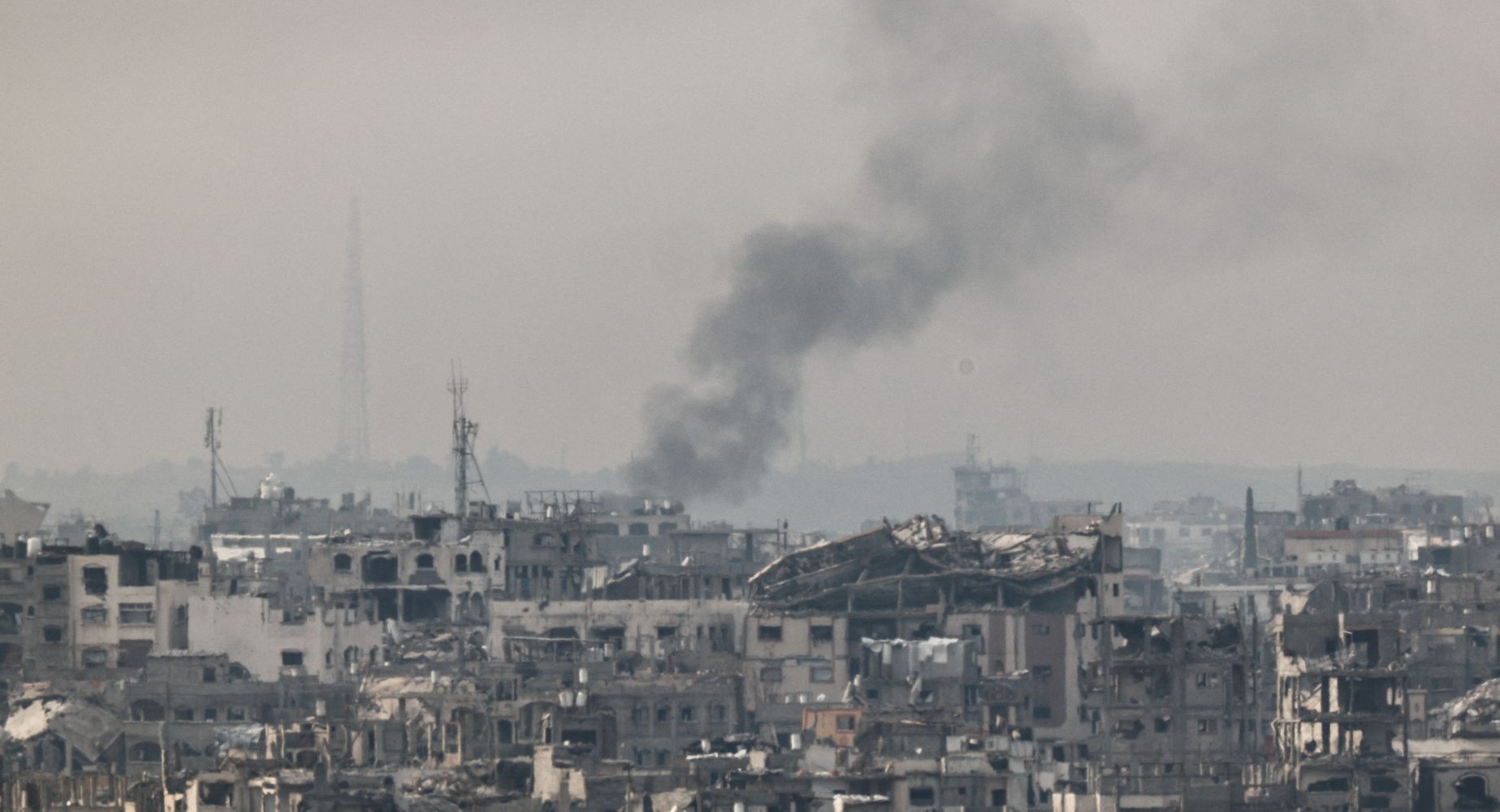
From the start, Donald Trump’s plan for peace in the Middle East was headed for trouble. Among other things, the US president’s proposals failed to understand jihadi notions of death and time. Fortunately, Trump’s plan for Gaza, first announced in September 2025, was rejected by Israel’s prime minister Benjamin Netanyahu on August 9, 2026. Though this rejection was necessary from the standpoint of meeting Jerusalem’s strategic objectives, it also rested on variously false premises that Hamas and its allies could be “disarmed.” In essence, even if the Trump plan has now been correctly tossed aside, jihadi fighters and their mentors in Iran, Turkey, Qatar and elsewhere will continue preparations for divinely mandated violence. In a worst case but still-plausible narrative, such preparations could produce sudden or incremental escalations to chemical, biological or nuclear conflict.
Truth can be counter intuitive. Any future war between Israel and its jihadi adversaries would have little or nothing to do with Palestinian sovereignty. To wit, the October 7 massacre of Israeli civilians was clearly detached from any rational plans for achieving a Palestinian state. Prima facie, the jihadists’ only true motive that day was lascivious satisfaction.
Truth is exculpatory. While veiled from ordinary assessments of politicians, pundits and strategists, the most fundamental motives for jihadi terror stem from primal needs to overcome personal mortality. Accordingly, the visible struggles between Israel and Hamas et. al. are generally just reflections of deeper Islamist urgings.
Having rejected the banal syntax of Trump’s “Board of Peace” – a jumbled architecture of delusions and contrivances – Israeli planners now need to inquire as follows: What exactly are discernible jihadi goals? If Hamas and kindred terror groups seek nothing less than “power over death,” how should Israel respond? This query is urgent because the jihadist path to immortality is expressly linked to “terror-sacrifice” and “martyrdom.” Instructs Sura 2:154: “Do not think that those who are killed in the way of Allah are dead, for indeed, they are alive, though not aware.”
For Israel, the core existential threat stems from a many-sided adversary that regards violence against Jews and the Jewish State as “sacred.” Today, in the aftermath of a demonstrably false Trump peace, Jerusalem should finally distinguish Middle Eastern conflict realities from their reflections. To accomplish this goal, three basic concepts will need to be examined in tandem: death, time and war.
What can these interrelated concepts teach Israeli planners about the force-multiplying perils of erroneous peace plans? To answer thoughtfully, refined thinkers should commence disciplined inquiries at the individual level, the level of microcosm. Though an invisible and illogical assurance, any promise of “power over death” offers jihadists the ultimate reward for faith-based destructiveness. Ironically, this is the case both as victim and as perpetrator,
There will be a prior order of business. First. a two-part question will need to be posed and answered:
How can any one individual, terror group or state gain “power over death,” and what can any such presumed gain have to do with Israel’s fate?
As Jerusalem ought already to have learned, the search for “power over death” demands a religion-confirming end to the jihadist’s life on earth. While publicly revered by Hamas et. al. as “martyrs,” jihadi leaders still strive mightily to avoid personal death. In times past, these “heroic” commanders have sought to by-pass Israeli military retaliations by staying in Qatari five-star hotels.
There is more. Jihadists have no problem with “allowing” the “martyrdom” of despised “unbelievers.” Many would-be Islamist terrorists oblige the rape, torture and murder of designated foes as a religious imperative. To enable these “battles,” jihadi leaders in absentia send large sums of money to “martyr families.” As correlative benefit, these families are gifted personal immortality or “power over death.”
Could there possibly be any more seductive “gift?” To reply helpfully, history will deserve conspicuous pride of place. In his Lecture on Politics (1896), German historian Heinrich von Treitschke observed: “Individual man sees in his own country the realization of his earthly immortality.” Earlier, German philosopher Georg Friedrich Hegel opined in Philosophy of Right (1820) that the state represents “the march of God in the world.” Such widely-ingrained views link loyalty to the state or equivalent public authority with a promise of “power over death.”
Though it is certainly a grand promise, personal immortality represents an unseemly and disfiguring goal. This judgment owes both to the promise’s calming reassurance of nonsense (“An immortal person is a contradiction in terms,” reminds philosopher Emmanuel Levinas) and the fact that a search for life everlasting can foster war, terrorism, and genocide. Looking beyond vacuous remedies, Israel’s task should not be to eliminate adversarial hopes for personal immortality (that would be a fool’s errand), but to “de-link” this search from grievously barbarous behaviors.
In Reason and Anti-Reason in our Time (1952), Karl Jaspers comments: “There is something inside all of us that yearns not for reason but for mystery – not for penetrating clear thought but for the whisperings of the irrational….” The most seductive of these irrational whisperings are those that offer to confer some otherwise inaccessible “power over death.” It is somewhere within the twisted criteria of such “selection” (a term made infamous at Auschwitz) that force-multiplying acts of jihadi violence are spawned. This is because any enemy promise of power over death may require the “sacrifice” of certain specifically designated “others.”
To deal satisfactorily with both its immediate and long-term security threats, Israel will first have to understand the true sources of adversarial war and terror. Portentously, these sources remain rooted in variously complex intersections of death and time. Adapting classical Chinese military thinker Sun-tzu to current security issues in the Middle East, any serious peace plan for Israel should be based on the ancient axiom, “Know the enemy.”