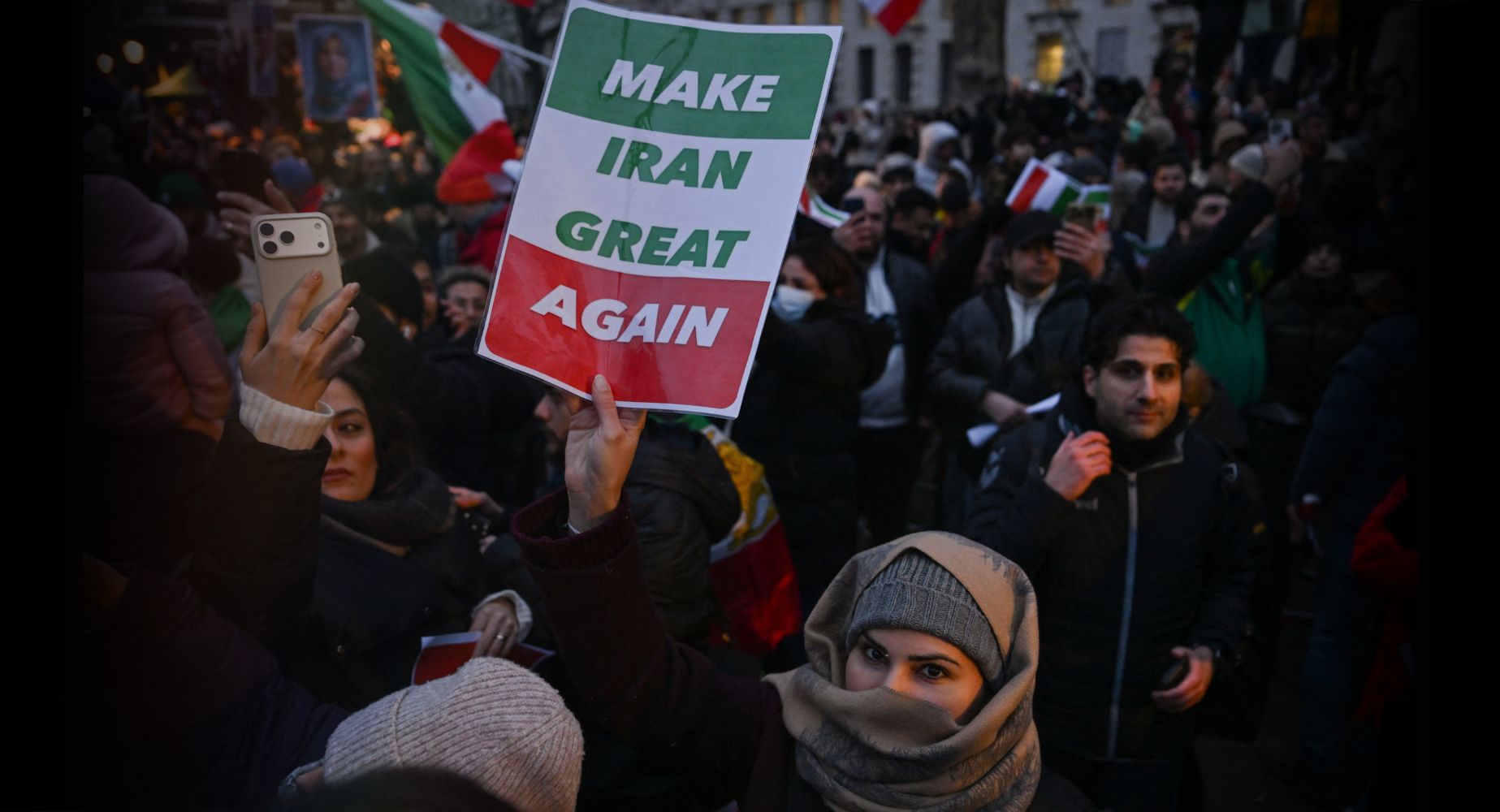
There are moments when abstraction collapses under the weight of lived reality—when a single human voice compels strategy to confront morality.
Such a moment emerged when a letter written by an Iranian father, living inside Iran and addressed to Jared Kushner, circulated widely across the Abraham TV platforms, reaching more than 27 million viewers. Devoid of slogans and free of ideological posture, the letter articulated a truth that decades of propaganda have attempted—and failed—to obscure.
The author did not write as a dissident intellectual, a political activist, or a partisan figure. He wrote as a father—a man anxious about rising prices, unavailable medicine, exhausted hospitals, and a future that feels increasingly foreclosed. His words carried no call for vengeance, no appeal for chaos, no revolutionary rhetoric. They carried something far more unsettling for an authoritarian system: quiet honesty.
That is precisely why the letter matters.
For decades, the Islamic Republic of Iran has projected an image of strength, resistance, and moral certainty. Its leaders speak fluently of sacrifice, ideology, and regional influence. Yet beneath this carefully maintained narrative lies a society drained by repression, corruption, and economic failure. The father’s letter exposes not only material hardship, but a deeper affliction: the erosion of hope.
When silence becomes the primary means of survival, the crisis is no longer economic alone—it is existential. This is the true cost of authoritarian rule. It does not merely govern behavior; it suffocates aspiration.
It is not incidental that this father chose to address his letter to Jared Kushner. In his eyes, Mr. Kushner represents more than a former American official. He symbolizes a generational shift in Middle Eastern thinking—one that prioritizes economic opportunity over ideological rigidity, coexistence over perpetual confrontation, and prosperity over indoctrination.
The Abraham Accords marked a conceptual break with the past. They demonstrated that peace could be pursued through shared interests rather than enforced silence, and that regional stability need not be built on fear. For an Iranian father trapped in a system sustained by slogans and repression, this vision represents an alternative future—one where leaders speak the language of jobs, education, dignity, and normal life.
In invoking Jared Kushner, this father is not expressing envy of power or privilege, but of something far rarer: normality — a life in which one can plan, build, and hope without fear.
The letter reminds us of a truth that must remain central: the Iranian people are not the regime. They are its first and greatest victims.
This recognition carries strategic implications. It is no longer sufficient to ask whether the current regime can endure. The more urgent question is whether Iranians—and those who engage with Iran—are prepared for what follows its eventual collapse.
History is unforgiving to those who postpone the “day after.”
Revolutions that succeed in dismantling tyranny but fail to prepare governance often give rise to new forms of authoritarianism, fragmentation, or prolonged instability. Iran’s future cannot be improvised. It must be contemplated with seriousness, sobriety, and urgency.
Iran is not a minor or homogeneous state. It is a major civilization—territorially vast, socially complex, and demographically diverse. Persians, Kurds, Arabs, Christians, Jews, and others have coexisted within its borders for centuries. Any post-revolutionary order that ignores this diversity risks either fragmentation or the emergence of a new, perhaps even harsher, authoritarianism.
Nor can Iran’s internal transformation be separated from its regional role. For years, the regime has relied on proxies, militias, and ideological confrontation as instruments of influence. A future Iran will face a strategic choice: to continue exporting instability, or to become a stabilizing actor that reduces tensions, respects sovereignty, and contributes constructively to regional order.
Who, then, can guide such a transition—and under what political framework? These questions are uncomfortable, but unavoidable.
One option merits serious and immediate examination: a constitutional monarchy rooted in the Pahlavi framework, adapted to the realities of the twenty-first century. This is not an appeal to nostalgia, nor a call to restore absolute rule. Rather, it is a proposal for institutional balance during a fragile national transition.
In such a framework, the monarch’s role would be to represent the nation in its entirety—not a faction, not an ideology, not a past, but the collective continuity of Iran itself. His responsibility would be to safeguard unity during transition and to ensure that a new constitutional order enshrines freedom, dignity, and justice for all Iranians, without distinction.
This approach is neither theoretical nor unprecedented. Constitutional monarchies have demonstrated resilience precisely because they separate symbolic authority from political power.
Yet no political system—monarchical or republican—can succeed without legitimacy. The Iranian people must not be instructed; they must be convinced. Convinced that unity will be preserved. That freedoms will be guaranteed. That prosperity is attainable. That peace—internally and regionally—is not an illusion.
The father who wrote that letter is not asking for a crown or a constitution. He is asking for dignity—for a system that allows him to work honestly, care for his parents, educate his children, and sleep without fear. Any political vision that fails to meet this fundamental human demand will fail, regardless of ideology.
His letter is more than an emotional appeal. It is a strategic warning. Hope, once destroyed, is difficult to restore. Ignoring such voices would be moral blindness—and geopolitical folly.
History rarely offers clean transitions. But it does offer moments of clarity. This letter is one of them.
Listening to it is not merely an act of compassion.
It is an act of strategic wisdom.