In 1817 David Ricardo, an English economist and politician, changed the world. In his treatise On the Principles of Political Economy and Taxation, he demonstrated that free trade between and among countries always benefits all of them, because of the principle of comparative advantage: even if country A can produce every product and commodity more efficiently than country B, it is in the interest of both of them for A to specialize in areas in which its advantage is greatest, leaving other areas of economic activity to B. Each can then sell the other what it produces, and both are wealthier than either would be under any other arrangement.
The world paid heed Ricardo and reaped the benefits. Everywhere that barriers to trade in the form of tariffs have been reduced – in Great Britain in the nineteenth century, in Europe, Japan, and North America after 1945, and throughout the world after the collapse of communism in the process known as globalization – increased prosperity has followed. Prosperity has many causes, but history strongly suggests that freeing trade is one of them. Yet the post-Ricardian world has not always and everywhere practiced free trade, for both economic and political reasons.
Ricardo’s conclusions did not gain universal acceptance. The contrary, “infant industry” approach to trade, which originated in Germany in the nineteenth century, asserts that surrounding a country’s manufacturing sector with protective tariff walls when it is born will allow it, free of foreign competition, to grow and thrive. That is important, its adherents have often contended, because a robust manufacturing sector holds the key to national wealth.
Free trade has also aroused opposition because it distributes its benefits unevenly within countries, and indeed actually makes some people poorer. The losers – firms whose profits foreign competitors erode, workers who lose their jobs to foreign competition – regularly organize and press their governments to protect them, usually with tariffs, against the competition that has injured them personally. Foreign products benefit the vast majority of people in the country that imports them through higher quality and lower prices, but the benefits, spread out as they are among many people, do not inspire the beneficiaries to organize to preserve them.
Political considerations also generate skepticism about, sometimes outright opposition to, free trade. Some countries practice what is widely seen as unfair trade by helping their domestic industries – often through subsidies of one kind or another – in ways that give these industries advantages in international commerce. Other countries tend to regard such help as acts of international economic aggression although by Ricardian logic those others nonetheless gain from trading with the aggressor. Relatedly, trade balances between trading partners are never perfectly equal, and when balances are negative some free-trade skeptics take this as evidence of economic aggression, or at least of unfair trade.
In addition, trade can jeopardize national security when one country depends heavily on imports from another for an economically or militarily crucial product or commodity. This creates the potential for imposing political demands on the dependent country.
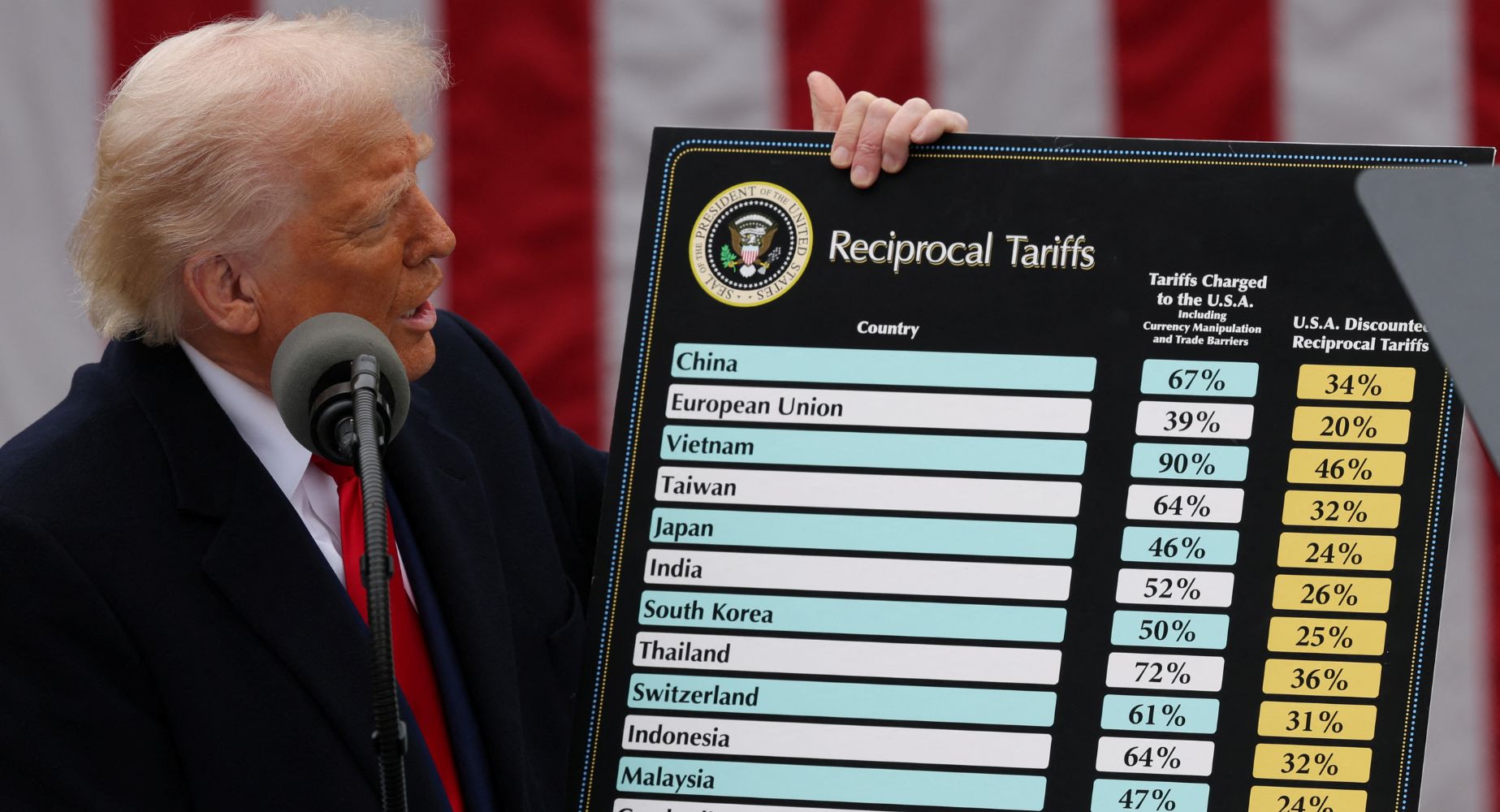
Perhaps no political leader of the last 200 years has rejected Ricardian principles as emphatically as has the current American president, Donald Trump. He has asserted that the policies of free trade that the United States pursued after World War II hollowed out the American manufacturing base, leading to major adverse economic consequences, not least of which has been the serious harm inflicted on American workers. Where Ricardo’s analysis leads to the conclusion that tariff barriers against imported goods are the epitome of economic irrationality, Trump has declared “tariff” to be “the most beautiful word in the dictionary.”
True to his beliefs, he imposed, in the first year of his second presidential term, significant tariffs against most other countries, thereby raising the average tariff level of the United States to heights not seen for a century. The Supreme Court struck down some of them, but last month the Trump Administration reimposed many of those tariffs, using a different law as justification. In this way, the 47th president has had a powerful impact on the American and the global economies
Alas, that impact has been a negative one. The Trump trade policies have made America, and America’s friends and allies abroad, poorer and weaker. Those policies will not achieve the goals the president has set for them and have actually reduced the American capacity to address some of the problems that trade has created.
The tariffs will not increase the number of manufacturing jobs in the United States. Since 2025, that number has fallen. Nor will the tariffs make American workers better off because they are in fact taxes and are paid chiefly by consumers. They compel Americans to spend more for a wide variety of products, reducing their spending power and overall economic well-being. Nor will the tariffs make an appreciable difference in the overall American trade balance, even supposing that to be an important and worthy goal, a contention for which Mr. Trump has offered no real evidence.
Trade does generate losers, and the United States has not devised a satisfactory method of compensating them. Most job losses, however, come not from foreign competition but from technological change, something that has been taking place for more than two centuries. Indeed, the world stands, by some accounts, on the verge of the largest-scale occurrence of technologically-driven economic dislocation in history, with the advent of Artificial Intelligence having the potential to destroy hundreds of millions of jobs. As a response to such a development, tariffs will be useless.
The administration’s trade policy is destined, in short, to be ineffective; but it is even worse than that: it is counterproductive. The Trump tariffs make it more difficult than it would be without them to address effectively the political problems that do arise from the trade patterns of the twenty-first century.
Those problems stem from the large and growing international economic role of the People’s Republic of China. China engages in unfair trade practices on a massive scale. Its communist government heavily subsidizes a variety of industries – electric cars are a good example – that then sell their products at low prices that the recipient countries’ domestic industries cannot match because they have to make profits while their government-subsidized Chinese counterparts do not. Other countries also provide subsidies, but China’s, by one report, are six times higher than those that industries in other countries receive.
These Chinese practices threaten the viability of domestic industries of different kinds around the world. True, China’s subsidies also penalize Chinese consumers; but the communist government in Beijing, unlike democratically elected governments elsewhere, can readily ignore consumers’ wishes.
The injured countries have a common interest in protecting themselves against China’s trade tactics, and tariffs, or the threat to impose them, on heavily-subsidized Chinese products may make sense for this purpose. No countervailing policy has any chance of success, however, unless those countries act in concert with one another. Persuading China to change its industrial and trade policies, which have deep roots in the Chinese political system, will be difficult in the best of circumstances; but any effort to do so is bound to fail without cooperation among the many affected countries. Instead of recruiting these countries as American allies in such an effort, however, the Trump administration has, metaphorically, turned its guns on them. The economic conflicts it has inaugurated with Europe and the non-Chinese countries of Asia not only fail to bring any benefits to Americans, but they also weaken the capacity to address a genuine problem.
Similarly, China poses a national security threat to the United States and other countries through its crucial role in global supply chains for many products as well as its control of a few vital products, notably rare earth minerals that are indispensable for certain kinds of manufacturing. The Chinese government has already used this control as a weapon to gain concessions from other countries by withholding the minerals. The rest of the world has an interest in reducing China’s leverage as far as possible, by wielding comparable leverage through its own control over materials and products that China needs and by breaking China’s monopolies by developing alternative sources of products and commodities in which the People’s Republic has a dominant position. This, too, requires wide international cooperation, and the United States is unlikely to secure it while it is waging trade wars against the countries whose cooperation it needs.
In the world of the twenty-first century, Ricardo’s insight remains valid: cross-border trade enriches countries that take part in it. In today’s world, however, the economic and political challenges China presents may well mean that a perfectly Ricardian trade policy is not, all things considered, optimal at all times for all countries. To cope effectively with those challenges, the United States may need a tariff policy, but not the one it has now.