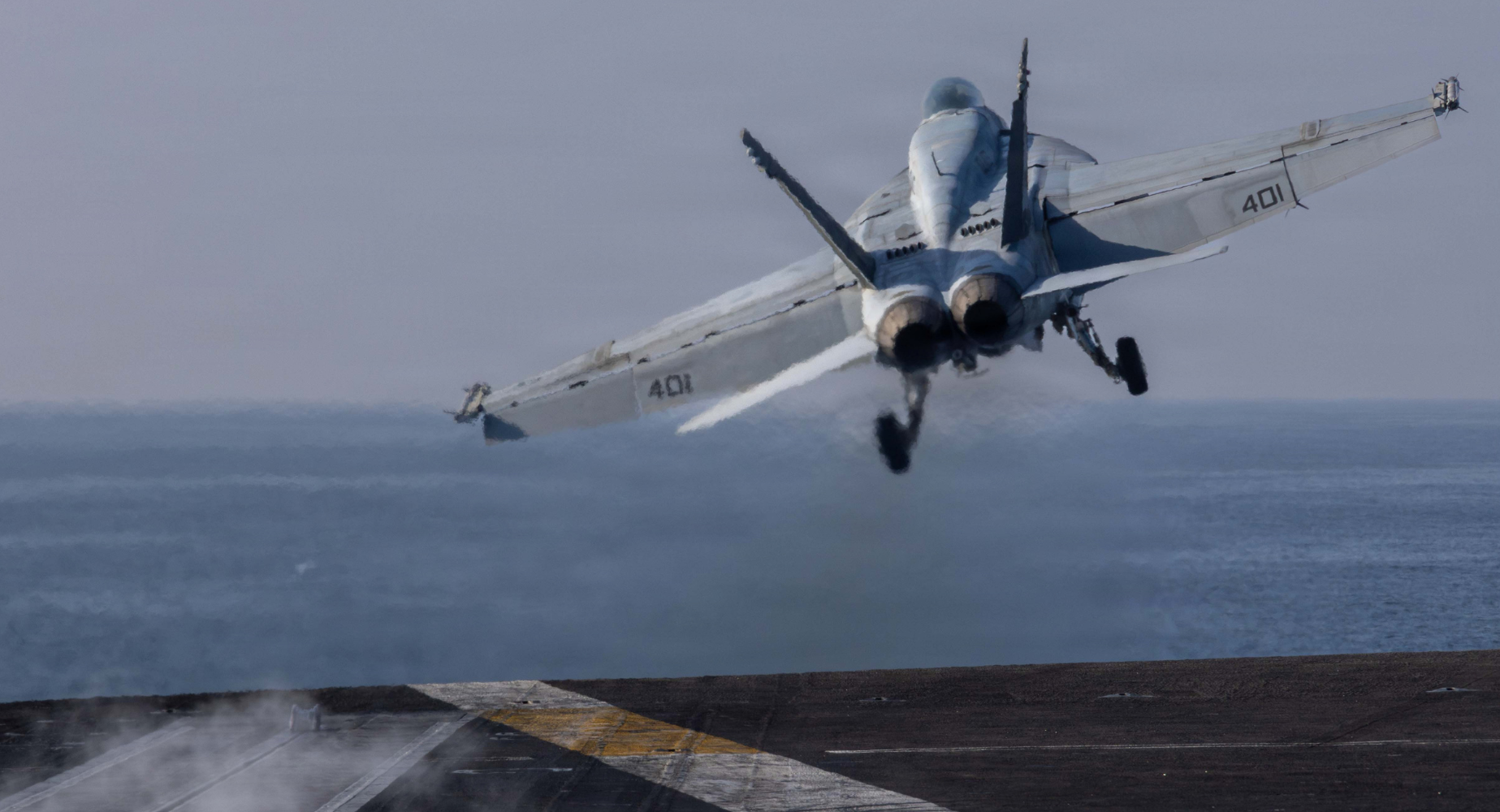
The April 8 ceasefire between Iran, the United and Israel provides an opportunity to take stock of the degradation to Iran’s core capabilities following more than five weeks of sustained airstrikes by the Israeli and American air forces, and Iranian ballistic missile attacks on Israel, US bases in the Gulf, and Gulf countries themselves.
Recent Israeli military assessments indicate that Israeli and American efforts destroyed and neutralized between 70% to 75% of Iran’s ballistic missile launchers – a combination of destroying assets outright and temporarily disabling others, requiring continuous, 24/7 air superiority by the Israeli Air Force to ensure that the disabled systems remained offline.
Nearly all of Iran’s missile production sites, and most of its missile storage sites have also been hit, according to IDF data.
The Israeli Air Force had been working according to an operational tempo that set new records in terms of quantities of ordinance targeting Iranian capabilities. In a single 24-hour period just prior to the ceasefire, for example, the IAF struck 170 distinct targets belonging to the Islamic Republic, including UAV engine factories and critical weapons research and development facilities.
Iran’s nuclear program, while presenting a secondary family of targets (as opposed to the June 2025 war that primarily targeted Iranian uranium enrichment sites), was also struck throughout the war, including the Arak heavy water plant (for the plutonium route to nuclear weapons), and, earlier in the war, the Parchin nuclear site southeast of Tehran was hit, where the regime had been digging a reinforced site assessed to be a nuclear research and development site for testing nuclear explosive devices. A site at Isfahan was also hit linked to uranium conversion and uranium storage. In addition, the IAF struck a secret Iranian nuclear site on the outskirts of Tehran that it said was used by Iranian nuclear scientists to develop capabilities for nuclear weapons following the June 2025. Israel targeted two nuclear scientists during the strikes as well, eliminating them.
A massive strike was launched against the Imam Hussein University in the heart of Tehran. Ostensibly a civilian academic institution, it served as a central research hub for the Islamic Revolutionary Guard Corps (IRGC). The strike devastated wind tunnels used for ballistic missile testing, a chemical weapons research center, and a central engineering complex. Simultaneously, Israel struck the IRGC Naval Industries headquarters, neutralizing capabilities that threaten vital waterways like the Strait of Hormuz.
To paralyze the regime’s command and control, Israel executed high-level targeted eliminations throughout the war, including, of course, Supreme Leader Khamanei, the Iranian military chief of staff, the IRGC commander, minister of defense, head of the SPND Organization of Defensive Innovation and Research), head of the Basij, senior commanders in the IRGC Air Force, chief of staff of Iran’s emergency central headquarters (Khatam-al Anbiya), the secretary general of the Supreme National Security Council, minister of intelligence, commander of the IRGC Navy, head of the IRGC’s naval intelligence, and many additional high-ranking critical personnel.
The list also includes head of IRGC intelligence who gathered intelligence for the regime and orchestrated global terror operations, and a Quds Force Special Operations Commander who smuggled weapons across the Middle East to proxy forces.
The IAF struck critical Iranian petrochemical facilities responsible for some 8% of Iran’s petrochemical exports, and targeted Iran’s steel industry, knocking out some 70% of Ira’s ability to produce the mat
According to IDF assessments, the Iranian regime planned to be able to kill thousands of Israeli civilians with indiscriminate mass missile launches, but most of that intended missile fire was repressed by aerial operations. Israel’s air defense systems intercepted over 90% of the approximate 540 missiles fired by Iran.
Iran’s strategy of intentionally targeting civilian population centers resulted in the deaths of 21 Israeli civilians during the offensive.
The Lebanese Vanguard: Eliminating the Forward Base
While the operations in Iran represent an unprecedented attack on the head of the octopus, the Israeli campaign in Lebanon is a systematic dismantling of its most potent tentacle. Since choosing to join the conflict to ease pressure on Tehran, Hezbollah has fired over 6,000 projectiles at Israel, including rockets, mortars, and UAVs. Crucially, approximately 50% of these were launched from south of the Litani River, a glaring indictment of the failure of the international community and the Lebanese Armed Forces to enforce UN Resolution 1701, which bans Hezbollah from operating in southern Lebanon.
The IDF’s response has been to inject five divisions inside Lebanon (the 36th, 98th, 91st, 146th, and 162nd), and to launch major air strikes throughout Lebanon targeting Hezbollah nodes.
Israeli ground forces have engaged in fierce, face-to-face combat to push Hezbollah back and establish secure defense lines. The toll on the terror organization has been major: over 1,400 Hezbollah operatives have been killed since early March, including 230 members of the elite Radwan force.
The military achievements extend deep into Hezbollah’s strategic arsenal. The IDF has dismantled hundreds of Hezbollah rocket launchers and command centers, and over 120 Iranian regime-linked targets in Lebanon. In a massive display of coordinated firepower, the IDF recently executed 100 strikes within a 10-minute window across the Beqaa Valley, southern Lebanon, and Beirut. This operation targeted headquarters, aerial units, and ground force assets, specifically designed to exploit Hezbollah’s attempts to disperse and hide among civilian populations.
The challenge of human shielding remains a defining feature of the Lebanese theater. Hezbollah has systematically embedded its operations within civilian infrastructure. For example, IDF troops, including the elite Shayetet 13 naval commandos, uncovered a massive weapons cache and an active tunnel system beneath a church compound in Al-Khiam, just miles from the Israeli border, as well as weapons stored at Beint Jbil’s hospital.
Other raids revealed military equipment hidden inside schools.
Israel’s strategic targeting also aims to sever the connective tissue of the Iranian axis. A recent strike in Beirut eliminated senior members of Hezbollah’s Unit 1800, the critical hub responsible for coordinating operations between Hezbollah and Palestinian terror groups across Gaza, Syria, and the West Bank.
Additionally, the IDF eliminated key members of the Iranian Quds Force’s Lebanon and Palestine Corps, which coordinate between Tehran and Hezbollah and Palestinian terror factions.
The sheer incompetence of international mechanisms has also been starkly exposed. The IDF documented over 160 Hezbollah rockets fired from positions adjacent to UNIFIL bases, underscoring the reality that international observers have served more as human shields for Hezbollah than as peacekeepers.