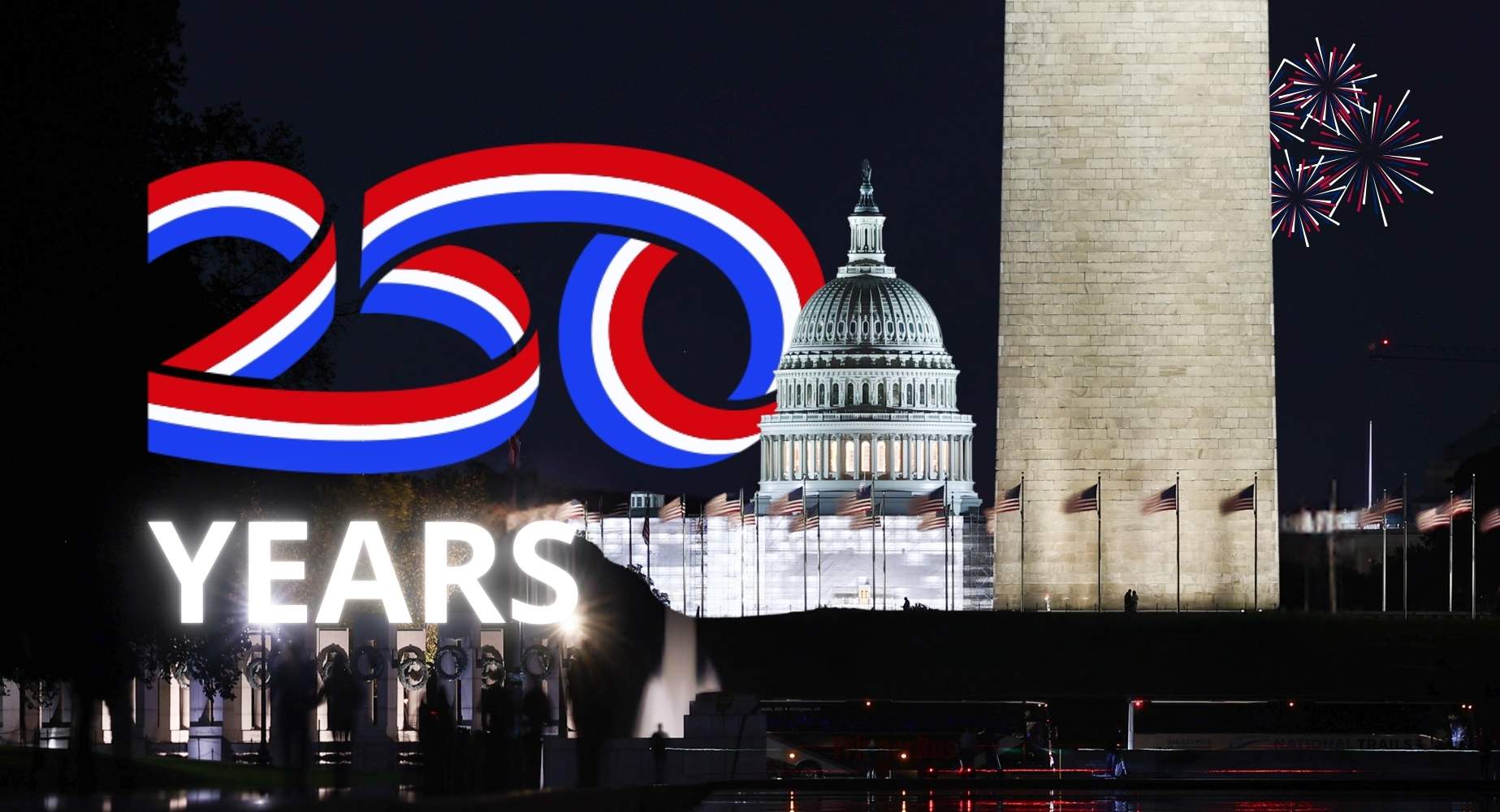
As the United States marks the 250th anniversary of its independence, this historic moment offers an occasion for pride, gratitude, and reflection—not only for Americans, but for all those across the world who have been inspired by the American experiment and who continue to believe in the promise of freedom, opportunity, and human progress.
For two and a half centuries, the United States has demonstrated a remarkable ability not simply to endure, but to grow stronger, renew its purpose, and expand the possibilities of what a nation and its citizens can achieve.
America was founded as more than a territory or a government. It was founded as an idea: that free citizens, sustained by resilient institutions and protected by law, could shape their own future.
That idea has survived wars, economic crises, moments of division, and profound transformations in the international system. Through every generation, the United States has adapted to new challenges while preserving the principles that have given it strength and meaning.
America’s achievement has never rested on perfection. It has rested on resilience, initiative, creativity, innovation, and an enduring confidence in the future.
In 1862, during one of the most consequential moments in American history, Abraham Lincoln reminded Congress of the responsibility carried by the United States:
“We shall nobly save, or meanly lose, the last best hope of earth.”
Lincoln’s words were not an expression of national vanity. They reflected a profound understanding of what the American experiment represented. He recognized that the United States mattered not only because of its power, but because of the hope it offered—to its own citizens and to generations far beyond its borders.
That hope remains alive today.
America’s leadership rests on a unique combination of strengths: the vitality of its institutions, the initiative of its citizens, the scale of its economy, the excellence of its armed forces, the depth of its alliances, and its extraordinary capacity for creation and innovation.
From aviation and space exploration to medicine, communications, digital technology, and artificial intelligence, American creators have repeatedly transformed the world. The visionary spirit of its scientists, entrepreneurs, engineers, universities, and companies continues to expand the boundaries of what humanity believes possible.
This extraordinary record gives the United States every reason to celebrate its 250th anniversary with confidence and pride.
But for a great nation, pride also carries responsibility.
The responsibility of the United States is not to impose its will upon the world or to attempt to resolve every dispute alone. It is to remain confident in the values, capabilities, and leadership that have allowed it to guide coalitions, support allies, deter aggression, encourage innovation, and create opportunities for peace and prosperity.
For decades, the United States has built alliances with nations that share these aspirations. These partnerships are not burdens inherited from another era. They are among America’s greatest strategic achievements.
They have helped protect peace, strengthen deterrence, expand economic cooperation, and create a network of nations committed to a more stable and prosperous international order. They have also enabled the United States to multiply its influence by leading with others rather than acting alone.
Allies must continue to strengthen their capabilities and assume their responsibilities. But the value of an alliance cannot be measured only through immediate costs. Its greater value lies in the confidence it creates, the dangers it deters, and the crises it can help prevent.
American leadership is strongest when it inspires confidence, encourages responsibility, and brings nations together around common objectives.
That leadership remains essential because the United States is repeatedly called upon to help confront crises far beyond its borders— from Iran and Yemen to Libya, and other nations affected by conflict and instability.
America cannot determine every outcome, nor should it be expected to bear every burden. Yet the world continues to look to Washington for leadership: to convene allies, open diplomatic possibilities, deter aggression, protect international commerce, support stability, and help prevent local conflicts from becoming wider catastrophes.
Each American decision therefore carries meaning beyond the immediate crisis. American action—or inaction—shapes the confidence of allies, the calculations of adversaries, the credibility of deterrence, and the prospects for diplomacy.
It can influence whether a conflict remains contained or spreads across borders, whether a political vacuum is filled by responsible institutions or exploited by hostile powers, and whether future crises become less dangerous or more difficult to resolve.
Leadership must therefore consider not only what American decisions represent for countries in conflict today, but also what precedents they establish for the international order tomorrow—and what they ultimately mean for the security, prosperity, influence, and credibility of the United States itself.
This responsibility is especially important at a moment of profound strategic transformation. From Kyiv to Hormuz, from Gaza to Ankara, the question is no longer simply whether the old international order is under pressure. It is who will help construct the next one—and according to which principles.
Europe is being called upon to develop greater strategic capacity while preserving the transatlantic partnership that has supported peace and prosperity for generations.
Israel is confronting immediate security challenges while also considering the strategic foundations of its long-term regional future.
Across the Middle East, nations face a choice between continued confrontation and a new era of integration, technological advancement, economic opportunity, and shared prosperity.
In each of these arenas, American engagement remains indispensable—not because Washington should dictate every outcome, but because no other nation possesses the same combination of diplomatic reach, economic influence, military capability, technological leadership, global alliances, and power to convene.
American leadership must also remain firm in confronting authoritarian regimes that seek to replace cooperation with coercion and freedom with repression.
Iran, North Korea, Cuba, and other authoritarian systems differ greatly in their power, geography, and strategic importance. Yet each offers a political model fundamentally different from the American example—one based on restricted choice, centralized control, and fear of individual freedom.
The United States should continue to confront these challenges with clarity, strength, discipline, and confidence in its own model.
Leadership does not require intervention in every crisis. Nor does restraint require withdrawal, indifference, or the abandonment of allies. Between overreach and retreat lies the path that has defined America at its best: principled diplomacy, credible deterrence, economic strength, technological leadership, and the patient construction of lasting coalitions.
This is the strategic architecture required for the next era.
At 250, the United States is not simply commemorating what it has accomplished. It is demonstrating that the principles, ambitions, and creative energy that shaped its first two and a half centuries remain capable of guiding the future.
America’s leadership has endured because it has never been static. It has continually evolved, adapted, and found new ways to transform power into possibility and moments of uncertainty into opportunities for renewal.
In this summer of strategic decision, the world once again looks to the United States—not for perfection, and not for answers to every problem, but for confidence, vision, and the capacity to bring others together.
The American dream must not simply be remembered. It must continue to inspire, to create, and to lead.