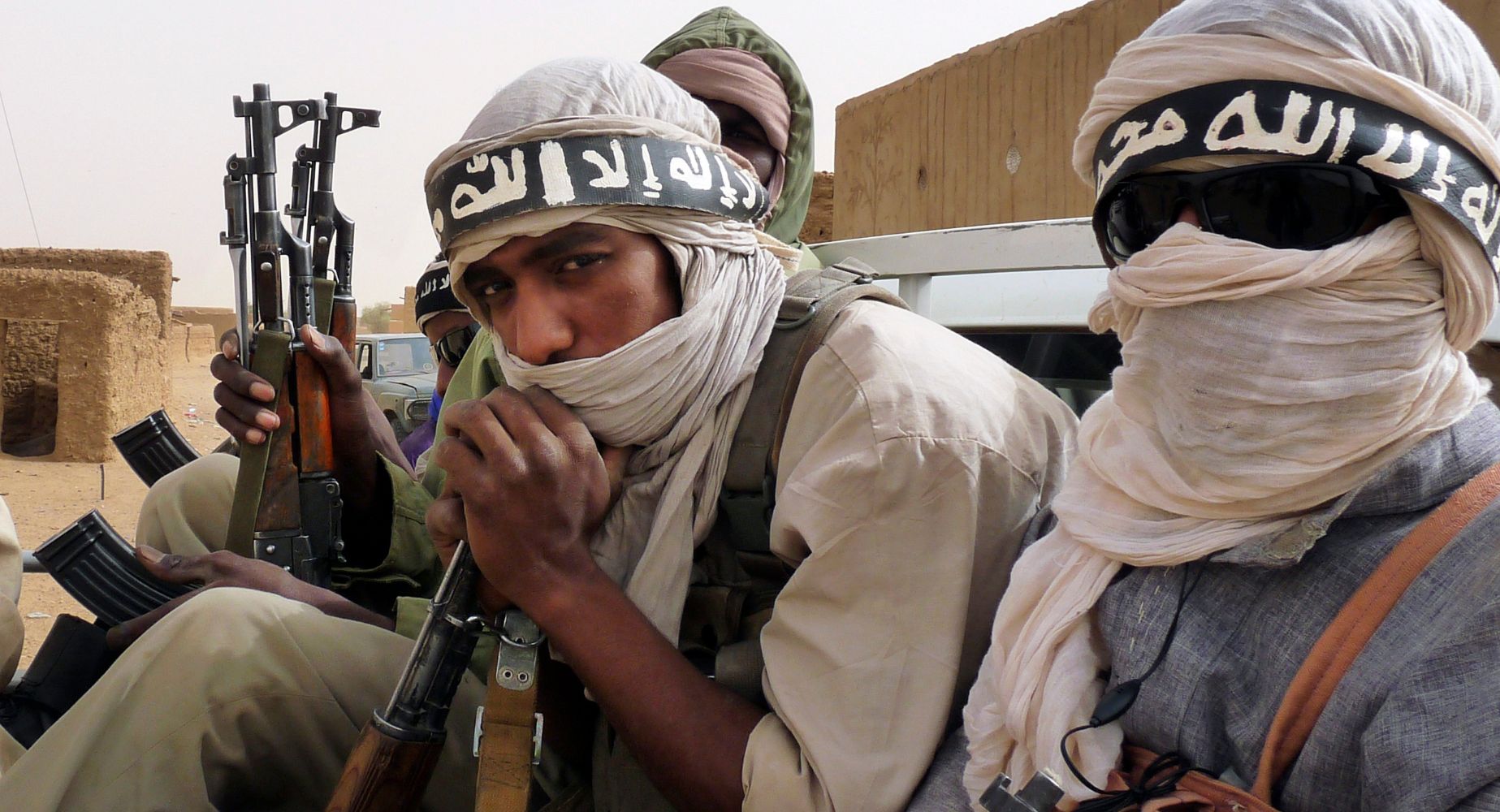
On April 26, 2026, Jama’at Nusrat al-Islam wal-Muslimin (JNIM), an affiliate of Al-Qaeda in the Islamic Maghreb (AQIM), in coordination with the Azawad Liberation Front, launched a large-scale offensive against government institutions across several regions in Mali, culminating in the assassination of the country’s Minister of Defense. This attack was not an isolated incident. Rather, it reflects the maturation of a long-term strategic plan developed over more than a decade, aimed at transforming Mali into the geopolitical center of gravity of jihadist activity in the Sahel.
The absence of a robust counter-terrorism force, the withdrawal of foreign military contingents, and the region’s transformation into an arena for great-power competition have further exacerbated the situation. At the same time, the exploitation of natural resources, deepening humanitarian crises, and persistent governance failures continue to fuel instability. Against this backdrop, jihadist organizations are consolidating their presence and expanding their operational reach.
This raises a central question: does 2026 mark a turning point toward a strategic breakthrough for Al-Qaeda in the Sahel?
Defining “Strategic Victory” in the Sahel
To assess the trajectory accurately, it is essential to clarify what constitutes a “strategic victory” in this context. In the Sahel, such a victory does not necessarily require full territorial control. Rather, it would involve the sustained erosion of state authority across large areas, the establishment of durable jihadist governance structures, the normalization of jihadist actors as de facto political authorities, and the ability to project instability beyond the region. By these criteria, Al-Qaeda has not yet achieved a definitive victory, but it is closer than at any point in the past decade, and the developments of 2026 suggest the region is approaching a critical threshold.
The Sahel as a Global Security Arena
The Sahel, a semi-arid belt stretching across Africa south of the Sahara, has become the world’s most lethal epicenter of terrorism. In recent years, the scale and intensity of violence have increased dramatically, with Mali, Burkina Faso, and Niger at the forefront of this trend, and with the expansion of attacks into coastal West African states signaling a widening geographic scope of instability.
Beyond the statistics, the strategic importance of the Sahel lies in its broader implications. Its proximity to Europe makes it a critical corridor for migration flows and a potential vector for instability that can directly affect European security environments. At the same time, the decline of jihadist strongholds in the Middle East has shifted the center of gravity of global jihad toward Africa, where operational space is less constrained and governance is weaker. In parallel, the region’s natural resources, including gold, minerals, and energy assets, are increasingly embedded in both local conflict dynamics and global economic competition.
As a result, the Sahel can no longer be viewed as a peripheral crisis. It is emerging as a central front in global security, with consequences that extend far beyond the African continent.
The Sahel Through the Lens of Global Jihadist Organizations
Global jihadist organizations, particularly Al-Qaeda and the Islamic State, perceive the Sahel as an ideal operational environment. Weak governance, systemic corruption, economic hardship, and intercommunal tensions create conditions that facilitate their expansion. These groups are able to exploit vast ungoverned spaces, porous borders, and limited state capacity to entrench themselves across large territories.
At the same time, they have developed adaptive and resilient financial structures. In several areas, jihadist groups control or influence gold mining operations, impose taxation on local populations, and rely on smuggling networks to sustain their activities. Environmental pressures, including climate change and resource scarcity, further intensify these dynamics by driving displacement, deepening socio-economic grievances, and expanding the pool of potential recruits.
Mali as the Strategic Core
Within Al-Qaeda’s long-term strategic framework, Mali occupies a central position. Early operational concepts emphasized a gradual approach to establishing a jihadist entity, relying on alliances with local actors and avoiding direct confrontation with populations in order to build legitimacy over time.
This approach has evolved significantly with the creation of JNIM as an umbrella organization, which enabled the consolidation of multiple factions and the strengthening of ties with local ethnic groups, particularly the Tuareg and Fulani. By integrating local leadership, mediating disputes, and providing limited services, the organization has embedded itself deeply within the socio-political fabric of the region.
Over time, JNIM has expanded its operations beyond Mali into neighboring countries, taking advantage of weak governance structures and porous borders to extend its influence across the Sahel and into coastal West Africa.
From Insurgency to Governance
A defining feature of the current phase is JNIM’s transition from guerrilla warfare to a more sophisticated strategy centered on governance and territorial influence. Beginning around 2022, the organization shifted toward tactics aimed at isolating urban centers by disrupting transportation routes, restricting access to essential goods such as food and fuel, and targeting critical infrastructure.
The objective is not only to weaken the state militarily, but to undermine its legitimacy and its ability to function. In parallel, JNIM has expanded its role in local governance by mediating disputes, providing services, and incorporating local populations into its operational structures. This dual approach allows the organization to position itself as an alternative authority rather than merely an armed group.
This evolution reflects a broader transformation in which jihadist organizations are increasingly acting as proto-state entities, capable of sustaining influence over both territory and population.
ISIS in the Sahel: Rivalry and Coexistence
Alongside Al-Qaeda, the Islamic State in the Sahel Province has established a significant presence, particularly in the tri-border region of Mali, Niger, and Burkina Faso. While rivalry between the two organizations persists, particularly in relation to recruitment and resource control, the relationship between them is complex and cannot be reduced to simple competition.
In certain areas, direct confrontation is limited, and both organizations appear to tolerate each other’s presence in order to preserve operational capacity against common adversaries. This dynamic raises the possibility that their coexistence may contribute to a more diversified and resilient jihadist ecosystem, rather than leading to mutual weakening.
Counter-Terrorism Efforts: A Fragmented Landscape
Efforts to counter the growing threat have been largely ineffective. The withdrawal of foreign forces and the end of international stabilization missions created a significant security vacuum that has not been adequately filled. Subsequent attempts by alternative actors to assume this role have produced limited results.
At the regional level, fragmentation remains a major obstacle. Multiple security frameworks operate simultaneously, often without sufficient coordination or shared strategic direction. This lack of unity undermines the effectiveness of counter-terrorism efforts and creates opportunities for jihadist groups to exploit institutional gaps and expand their reach.
In addition, non-military initiatives aimed at addressing root causes, including economic development and governance reform, have remained insufficient in scale and have struggled to keep pace with the rapid deterioration of the security environment.
Geopolitical Competition Without Strategic Coherence
The Sahel has increasingly become a theater of geopolitical competition, with external actors seeking to advance their interests in the region, particularly in relation to security and natural resources. However, this competition has not translated into effective stabilization.
France’s influence has declined significantly, while other actors have struggled to provide viable alternatives. The United States remains relatively disengaged at the strategic level, and China’s involvement is largely economic, without a corresponding security role. This has resulted in an environment characterized by overlapping interests but a lack of coordination, further complicating efforts to address the underlying drivers of instability.
Strategic Implications and Policy Considerations
The trajectory of the Sahel highlights the need for a more coherent and coordinated approach. Regional security frameworks must be better aligned, and key regional actors need to be integrated into a unified strategy capable of addressing the cross-border nature of the threat. Counter-terrorism efforts must extend beyond military operations to include the systematic disruption of jihadist financial networks, particularly those linked to natural resources and illicit trade. At the same time, a sustainable response requires combining security measures with governance reform, economic development, and stronger engagement with local populations. Finally, international actors must move away from reactive and fragmented involvement toward a more consistent, long-term strategic commitment to regional stability.
Conclusion
The intensification of jihadist activity in the Sahel is no longer a localized phenomenon. It reflects a broader transformation with significant regional and global implications.
While Al-Qaeda has not yet achieved a full strategic victory, the developments observed in 2026 indicate that it is approaching a critical threshold. The shift toward governance, territorial influence, and regional expansion suggests a level of operational maturity that could have long-term consequences.
If current trends persist, the Sahel risks evolving into a durable hub of instability, capable of projecting threats far beyond Africa.
The window for effective action is narrowing. Without a coordinated regional and international response, the consequences will extend well beyond the Sahel.