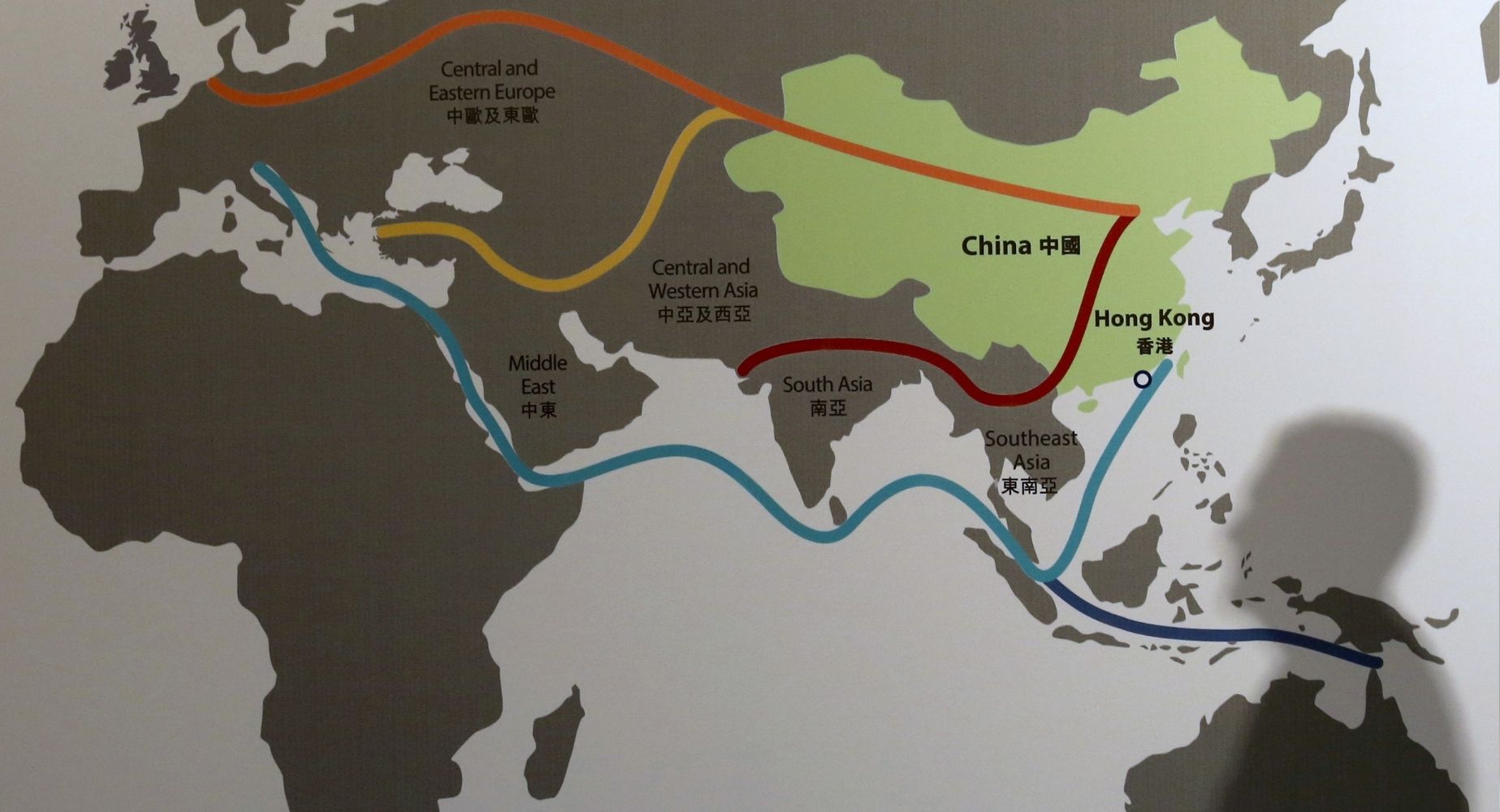
President Trump’s decision to launch Operation Epic Fury, alongside Israel’s Lion’s Roar campaign against Iran, was driven by considerations extending far beyond the immediate threat that pre-war Iran posed to American interests in the Middle East and the rest of the world. It was also shaped by the broader strategic competition between the United States and China for global primacy in the 21st century.
Prior to the conflict, Iran was poised to serve as a critical land and maritime hub within the Belt and Road Initiative (BRI)—China’s far-reaching effort to consolidate global economic influence. A core assumption behind RBI is that economic connectivity can be insulated from geopolitics. The war with Iran strikes at the structural heart of the BRI vision by showing that the corridors built by the BRI are deeply impacted by regional security shocks.
The BRI is an ambitious, multi-year Chinese program involving up to 150 countries in Asia, the Middle East and Africa that aims at securing stable flows of goods and services to and from China. Launched in 2013 with a baseline investment of $1 trillion dollars that is expected to grow overtime to $4-$5 trillion, the BRI was designed to pave the road for China to become the leading superpower of the 21st century.
Pre-war Iran was a central hub in the BRI China-Middle East corridor where it served both as a land bridge linking Central Asia to the Middle East and Europe and a maritime hub for energy supplies and other materials. The BRI investments in Iran and other key countries in this corridor (Saudi Arabia, Qatar, UAE, Egypt) spread across oil and gas infrastructure, ports, railways, industrial zones, logistic hubs, etc., providing critical energy for the entire network while serving as a keystone for China’s westward expansion.
The war with Iran is affecting the BRI at three levels. First, it directly disrupts a key node (Iran). Chinese projects in Iran face uncertainty, suspension or destruction and infrastructure facilities in the corridor tied to Iran are now high-risk or unusable. Second, China depends heavily on Gulf energy, much of it passing through the Strait of Hormuz which has been blocked by Iran. This hits the economic foundation of BRI (cheap energy combined with trade stability). Third, the war creates a spillover of instability across other countries involved in the BRI. Chinese investments in the Gulf states (ports, smart cities, LNG, infrastructure) are now exposed to military escalation risk and energy shortages due to disruptions linked to the war affect the entire Southeast Asia region. The war also makes the alternative land and ocean routes that pass-through Pakistan and India more important and that increases the pressure that already exists between these countries leading to potential renewal of military conflicts between them.
The strategic consequence of the war is the collapse of core BRI assumptions. It shows that security risks threaten infrastructure, that neutrality is hard to maintain and that investments are exposed to military escalation. While the war is not expected to totally derail the BRI, it will certainly have some major implications for it. Early signs already indicate that China is trying to mitigate the threat caused by the war. China usually prefers to avoid playing a role as a mediator in international conflicts. This time, however, it joined Pakistan (another important link in the BRI network) in trying to broker a ceasefire and protection of shipping lanes through the blocked strait. In Early March China imposed a ban on exporting fertilizers and fuel causing much anxiety among neighboring countries in Southeast Asia that were expecting China to deliver on its pledges of closer energy security cooperation and reports that surfaced during the month indicate that CK Hutchison, a major conglomerate based in Hong Kong, is negotiating selling a large portion of its global port business (their portfolio includes ~40 ports in ~20 countries, most of them along BRI corridors).
These early signs indicate that BRI architects may shift their focus from expansion to risk management. China is already stockpiling energy, restricting exports and reducing exposure to unstable regions. The war weakens the “Iran corridor” since Iran can no longer function as a stable anchor and the overland routes that goes through it to the Middle East has become unreliable. Instead, the BRI is likely to increase its reliance on alternative routes through Central Asia and Russia (despite the complications caused by the war in Ukraine) and maritime routes via Southeast Asia. Instead of one integrated system, the BRI is likely to experience increased fragmentation into regional “mini corridors” with more selective investments. Thus, the war doesn’t just slow BRI—it forces China to rethink the entire concept from expansion to resilience.