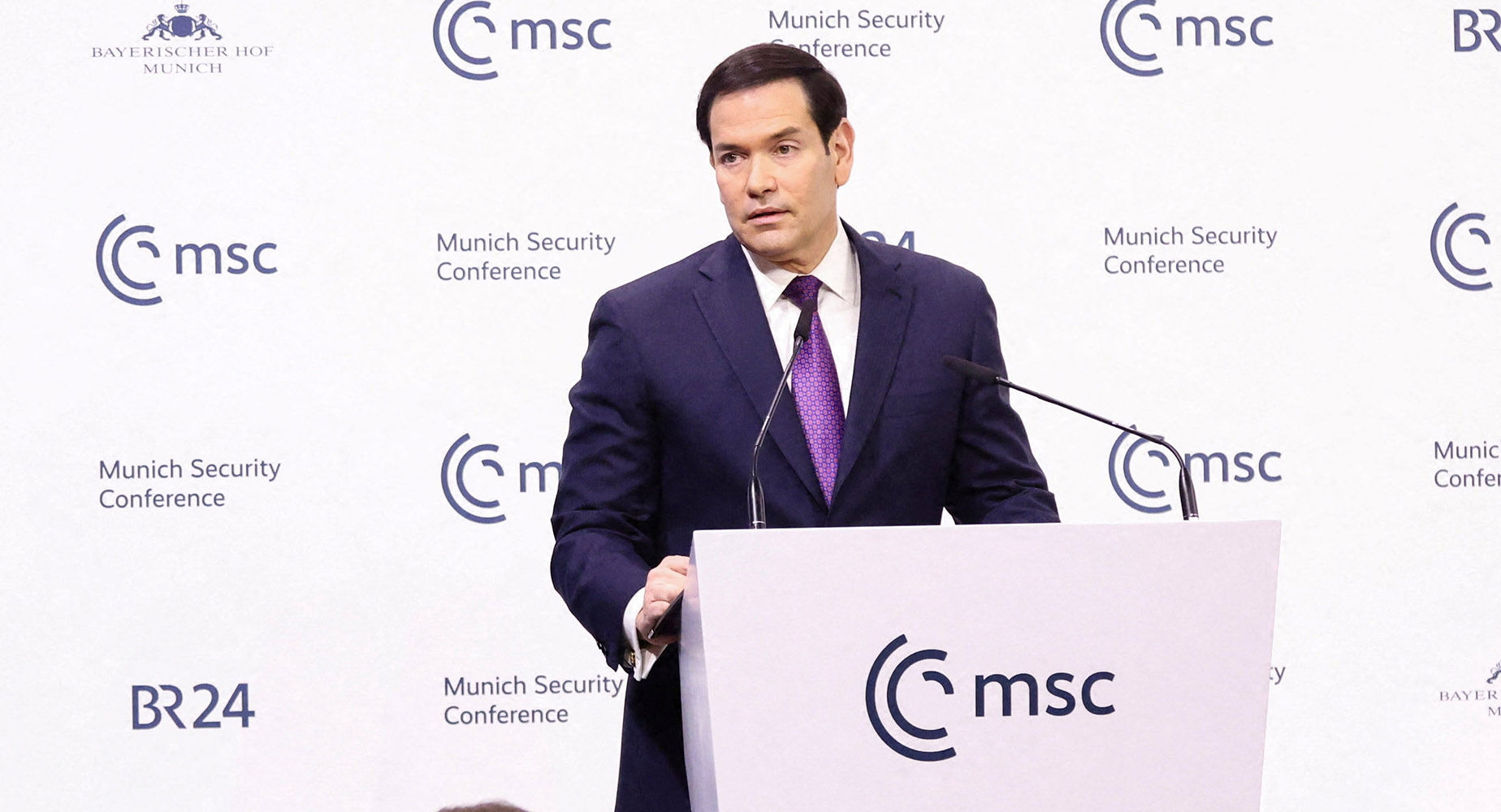
At the 62nd Munich Security Conference, U.S. Secretary of State Marco Rubio delivered a speech that signaled not merely rhetorical reassurance, but a strategic recalibration of transatlantic expectations.
Rubio’s central message was grounded in sovereignty and deterrence. While reaffirming that “the United States and Europe belong together,” he made clear that partnership must be anchored in seriousness, reciprocity, and national renewal. The alliance, in his formulation, is strongest not when it is comfortable, but when it is strategically disciplined.
Under President Trump, Rubio argued, American foreign policy will pursue restoration at home and strength abroad. Yet he emphasized that Washington’s preference remains collective action with Europe — provided that Europe is prepared to defend its own security architecture and civilizational inheritance.
The speech framed deterrence not simply as military capability, but as political will. Rubio called for allies who are confident in their heritage and prepared to defend it — an implicit recognition that strategic credibility depends as much on internal cohesion as on defense budgets. In an era defined by revisionist powers, fractured institutions, and prolonged conflict on Europe’s periphery, he positioned sovereignty as the prerequisite for stability.
Munich has historically been a forum for defining transatlantic purpose in moments of uncertainty. Rubio’s intervention suggested that the next phase of Western alignment will be less about preserving a “status quo” and more about restructuring it — toward a model rooted in national resilience, burden-sharing, and credible deterrence.
The address did not abandon alliance politics; it reframed them. The United States, Rubio made clear, prefers partnership. But partnership must reinforce strength, not substitute for it.
The full speech is presented below.