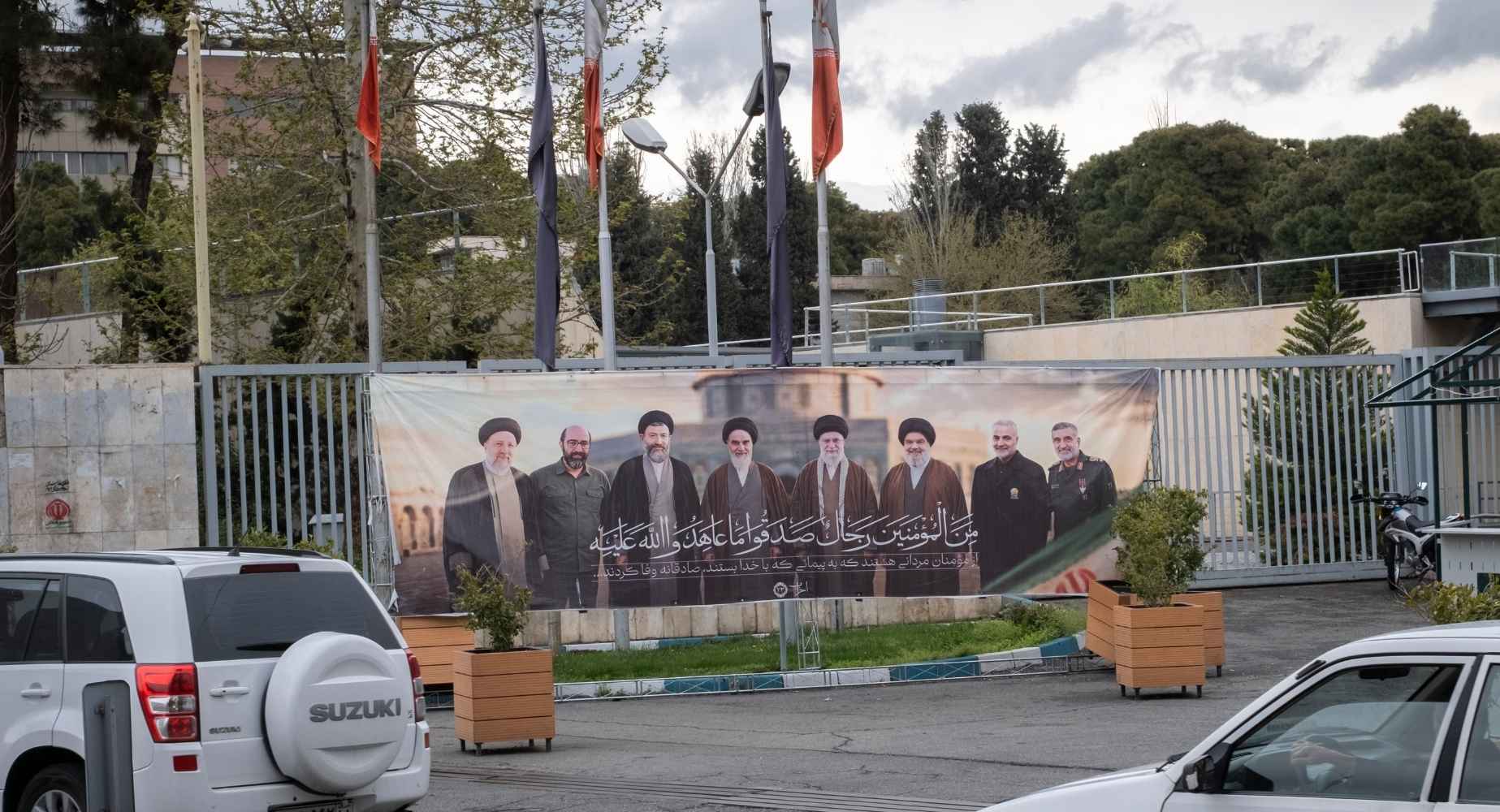
The U.S. and Israeli decapitation of Iran’s senior political leadership in 2026 failed to produce regime change. The clerical regime and the Revolutionary Guard Corps remain in power. But does this failure mean the strategy of decapitation never has any utility? This essay examines the historical record to identify the conditions under which political decapitation may topple a regime.
Our scope is narrow. Decapitation can serve as an military tool for degrading command and control, but that is a different objective with a distinct logic. Our question is: when can killing an adversary’s leadership cause the regime itself to fall?
The identity of a nation’s leader can absolutely change the course of history. Lenin’s personal leadership was essential to the Bolshevik seizure of power in 1917, and the replacement of the liberal German Emperor Frederick III by his lunatic son Wilhelm II after only 99 days set the stage for Germany’s misfortunes during the First World War. But changing history and collapsing regimes are different things. To understand when leader removal threatens the regime itself, let’s turn to some historical analogies based on different regime types.
Democracies
Democracies distribute authority across institutions and have routine, tested mechanisms for succession. This makes them structurally resilient to regime change through leader removal. Athens after the death of Pericles in 429 BC illustrates both that resilience and its limits. Pericles had sustained a defensive strategy built on restraint: Athens would not fight Sparta’s superior army in the field but would withdraw behind the Long Walls, surrender the countryside, and rely on naval superiority and financial reserves to outlast its adversary. The strategy was unpopular, requiring Athenians to exchange their farms for overcrowded streets to achieve long-term positional advantage. The overcrowding behind the “Long Walls” created the conditions for a plague that killed a significant proportion of the population, including Pericles himself.
Despite losing a significant proportion of Athens’ population, the Athenian regime did not collapse. It elected a new leader, Cleon, who promised to wage the war more vigorously. But Pericles’ defensive strategy, which required his personal authority to sustain, did not survive him. According to Thucydides’ classic history, after Pericles’ death, no successor had the political standing to enforce that discipline. Athenian politics fractured, and Pericles’ strategic framework gave way to a series of increasingly risky and escalatory decisions, culminating in the catastrophic Sicilian Expedition of 415 BC, a massive amphibious campaign that Pericles’ framework would never have sanctioned. Its destruction in 413 BC created many of the conditions for Athens’ eventual surrender, but that occurred only after the destruction of Athens fleet in 404 BC due to the failures of Athens’ collective leadership rather than the absence of any specific leader. In democracies, therefore, decapitation does not threaten the regime, but it can remove a leader whose authority sustains a particular strategic course.
Authoritarian Regimes with Institutional Depth
The Soviet Union and post-Mao China suggest that authoritarian, specifically Marxist-Leninist regimes can absorb leader removal. Joseph Stalin dominated the Soviet system as thoroughly as any dictator in history, yet his death in 1953 produced a durable transition: first a troika, then the elimination of Beria, and eventually Nikita Khrushchev’s rise to power, all without significant bloodshed. The regime survived because the Communist Party had institutional depth, the security services maintained order, and elites were committed to the survival of the system even in Stalin’s absence.
But survival and continuity are not the same. Within three years, Khrushchev had denounced Stalin, reversed major policies, and released prisoners. The regime’s label persisted, but its character changed substantially. This raises a measurement problem: over what time horizon do we judge the effects? A regime that survives in the short term may transform significantly over the medium term.
China’s post-Mao transition was rougher than a tidy narrative of collective leadership suggests. Under Deng, Mao’s successor as Chairman, Hua Guofeng, was sidelined early; Hua’s successor, Hu Yaobang, was later purged; and Hu’s successor, Zhao Ziyang, was placed under permanent house arrest after he declined to squash the Tiananmen Square protests Hu’s death triggered. Deng Xiaoping exercised paramount authority informally while successive designated successors were removed when they deviated. The Chinese Communist Party provided enough institutional scaffolding to manage each crisis.
What these cases share is that, despite the leader’s dominance, authority was not solely concentrated in one person. The party had institutional depth. Elites were committed to the system’s continuation. And a mechanism, tacit or explicit, for transferring power existed. These features appear to be what determines whether a regime absorbs the blow.
When the Leader Is the System
Adolf Hitler’s Germany lacked all three features. As Ian Kershaw described, the “Fuehrer myth” meant the German people and even some regime leaders ascribed all successes to Hitler personally. This myth had a concrete origin: it was Hitler’s personal insistence that Germany abandon the predictable Schlieffen Plan in 1940 in favor of Erich von Manstein’s offensive through the Ardennes. The resulting, almost miraculous, victory over France, hard on the heels of his diplomatic triumphs at Munich and through the Nazi-Soviet Pact, solidified his reputation as a “genius” and discouraged anyone, including the military leadership, from challenging him. The competing fiefdoms of the Nazi state – the Wehrmacht, the SS, the party bureaucracy, and the regional Gauleiter – operated through access to Hitler rather than through independent institutional authority. He was not merely the leader but also the system’s organizing principle. Elite commitment was eroding by 1944, as the July 20 plotters concluded that Hitler was leading Germany to destruction. The Nazi Party’s reputation for corruption and incompetence meant that loyalty to the regime, as distinct from loyalty to Hitler, was thinning. His designated successor, Hermann Goering, lacked any credibility or even the inclination to continue fighting.
When Hitler committed suicide in April 1945, resistance collapsed almost immediately. The successor regime under Admiral Karl Doenitz sought only to end the war. Regime officials who had executed soldiers and civilians for attempting to surrender now gave up, fled, or committed suicide en masse. Over half of all Germans who died during the war perished during its last year, when defeat was evident to everyone who cared to look, yet no guerrilla resistance materialized against the Allied occupiers. The man who had been the system’s sole legitimating basis was gone, and nothing remained to sustain the fight.
The July 20 plot case adds an important qualification. It was not a pure decapitation. It was an assassination combined with an organized coup: Reserve Army mobilization, SS disarmament in Paris and Prague, and a prepared alternative leadership. The assassination was the trigger, but the coup infrastructure was the mechanism. Even in a maximally vulnerable regime, decapitation may require an internal actor prepared to exploit the opening.
The phase of conflict also mattered. The same assassination in 1940, after the fall of France, might not have produced regime change. Elite commitment was high and the regime appeared to be succeeding. By 1944, years of losing had eroded the conditions sustaining the regime. Vulnerability to decapitation is not fixed; the state of the war itself can enhance or reduce it.
Iran: Engineered Resilience
Iran is striking because it represents a regime that studied the vulnerability the historical cases reveal and built against it. The IRGC formally outlined its “mosaic defense” doctrine in 2005 and restructured into 31 provincial commands in 2008, deliberately designed to prevent the rapid collapse that followed Saddam Hussein’s centralized command in 2003. The 2006 Israel-Hezbollah War provided further validation, demonstrating that a decentralized, cell-based structure could withstand Israeli targeting of senior leaders. Each provincial command operates as an independent entity with its own intelligence capabilities, logistics chains, and pre-delegated authority for contingency operations.
The regime’s design addresses each vulnerability. Authority is distributed across IRGC, Artesh, Basij, clerical networks, and provincial authorities. The Supreme Leader functions/ed less as the sole hub of the system than as an arbiter among competing power centers; remove him, and the institutions retain the capacity to function. Elite commitment is high: the IRGC, Basij, and others have material and ideological stakes in the regime’s continuation that are inseparable from their own institutional survival and they have developed the tools to suppress recalcitrant elites including potentially the President. Unlike the Wehrmacht in 1944, whose officer corps had concluded the regime was destroying Germany, there is no institutional constituency within Iran’s power structure that would benefit from the regime’s collapse. Succession capacity exists through the Assembly of Experts and Khamenei’s son is now the Supreme Leader (though his authority relative to the IRGC remains unclear). The 2026 decapitation failed to produce regime change to date and the regime appears more robust than assumed at the outset of the campaign.
The Framework
The cases point toward three variables that influence whether decapitation can produce regime change.
The first is authority concentration: the degree to which the regime depends on the leader as its coordinating hub. This maps onto Max Weber’s typology of legitimate authority. Regimes resting on charismatic authority are inherently vulnerable because the source of legitimacy dies with the leader. Regimes that have routinized their authority through institutional, traditional, or rational-legal structures can survive leader removal. Hitler never routinized his charisma. The Communist parties in the Soviet Union and China did (at least for a time). Iran combines some traditional authority (the clerical hierarchy) with some rational-legal authority (the constitutional structure), giving it two sources of legitimacy independent of any single leader and with well-honed tools of suppression where those two fall short.
The second is elite commitment: whether a sufficient collection of the people controlling the instruments of power have independent reasons to sustain the regime. Elite defection, not popular uprising, is the proximate mechanism of collapse. Commitment can rest on material interest, ideology, absence of alternatives, or complicity. These anchors reinforce each other when the regime is functioning and erode simultaneously when it begins visibly failing.
The third is succession capacity: whether authority can transfer through a tested mechanism. Tested succession is the strongest resilience indicator; absent succession is a critical vulnerability.
Two contextual modifiers affect these variables. The phase of conflict matters because war degrades all three: it erodes elite commitment, tests succession mechanisms, and can undermine authority concentration. The follow-through of either external or internal actors matters because even a vulnerable regime may survive if no one exploits the disruption. The July 20 plotters had prepared internal follow-through; the external Allies, committed to unconditional surrender, had not.
A further limitation: every case where decapitation plausibly produced regime collapse involved total or existential war. In limited wars, the calculus differs. Elites are less likely to defect, authority concentration matters less because the full state apparatus is not mobilized, and the leader may be less identified with the war effort. Iran 2026 was an unlimited war for Iran, compounding the structural reasons decapitation failed.
Conclusions
Decapitation can produce regime change, but only when authority is concentrated in the leader, elite commitment is eroding, and no tested succession mechanism exists, amplified by severe military pressure and attacker follow-through. This combination is historically rare. The single clear suggestive case, Hitler’s Germany, is an extreme outlier on every dimension. The rarity is itself a finding.
The conditions are observable in advance, which makes decapitation assessable rather than a pure gamble. It also means regimes can engineer against it. Iran spent two decades doing exactly that. Contemporary China presents an interesting counter-trajectory. Under Xi Jinping, authority has been reconcentrated, alternative power centers purged, and no visible successor designated. If the framework is correct, these developments have increased China’s structural vulnerability relative to the collective leadership era, though the military and party’s institutional depth still provide significant resilience.
For nations contemplating decapitation as a path to regime change, the framework suggests diagnostic questions: Is authority concentrated in the leader or distributed? Are elites committed to the system or the leader? Is there a tested succession mechanism? What is the phase of conflict, and who is prepared to exploit the disruption? Only when these answers align does decapitation offer a plausible path to regime change. In all other cases, it may disrupt, delay, or degrade, but it will not deliver the decisive political result its proponents seek.